

 English
 中文
 日本語
 한국어
 العربية
 Русский
 Português
 Türkçe
 हिन्दी
 Tiếng Việt
 ไทย
 Indonesia
 Melayu
 ខ្មែរ
 ລາວ
 မြန်မာ
 Afrikaans
 Hausa
 Igbo
 Sesotho
 isiXhosa
 Yorùbá
 isiZulu
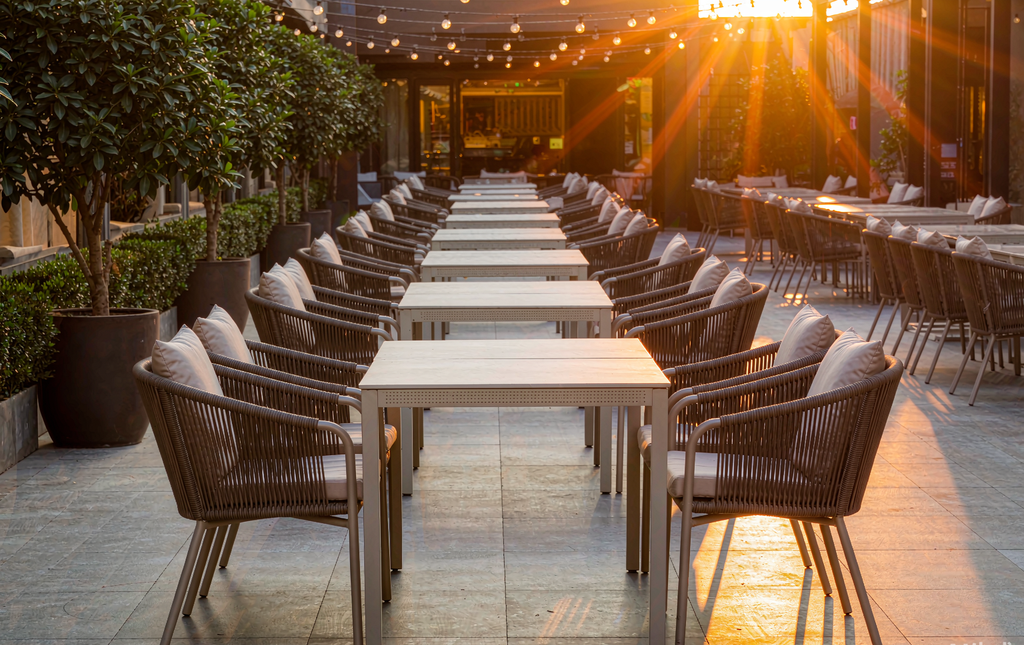
Commercial outdoor furniture materials decide how long a patio keeps earning. Indoor dining chairs can last years in a climate-controlled room. Move the same chair outside and it faces UV rays, afternoon storms, spilled cocktails, and in coastal cities, salt in the air every single day. A seat that looks fine in week one can fade, rust, or split before the end of its first season.
Most restaurant patios end up choosing between three materials for seating and tables: woven rattan (usually synthetic PE rattan over a metal frame), aluminum, and teak wood. Each behaves differently under sun, rain, and daily service. Here is how they actually compare, so the choice matches your climate, your service style, and your budget.
What a Patio Does That a Dining Room Never Will
Before comparing the three materials, it helps to be precise about what an outdoor dining environment actually puts furniture through:
- UV exposure fades fabric, dries out natural fibers, and chalks cheap plastics
- Rain and humidity swell wood, corrode bare steel, and trap moisture inside cushion cores
- Temperature swings expand and contract joints, loosening screws and glue lines season after season
- Salt air attacks unprotected metal fast, often eating the frame from the inside out
- Daily service adds its own wear: chairs dragged across concrete, trays set down hard, guests leaning back on two legs
Indoor-grade furniture fails outdoors not because it is badly made, but because none of these conditions were part of its design brief. Commercial outdoor furniture is specified differently from the frame outward.
PE Rattan: The Default for a Reason
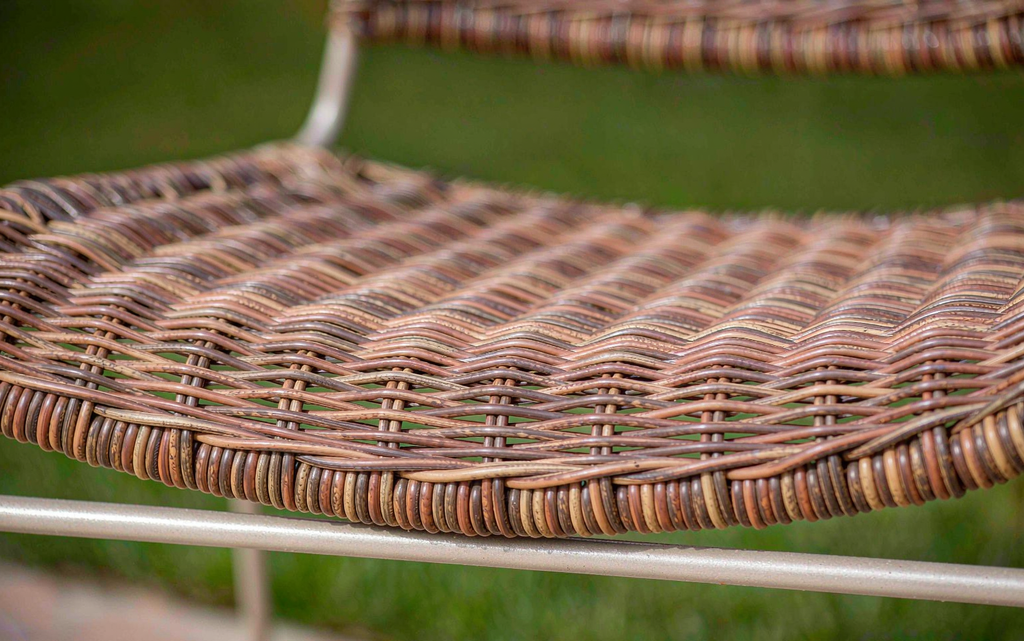
Walk past a busy outdoor dining strip and most of the chairs you see are woven rattan, or more precisely, PE rattan: a synthetic polyethylene weave wrapped around a metal frame. Natural rattan is a lovely indoor material, but it absorbs moisture and turns brittle outdoors, so serious outdoor restaurant furniture uses the synthetic version.
Where It Wins
- Quality PE rattan handles rain and UV without cracking or fading for years, and shrugs off chlorine splashes near poolside dining
- The weave has a slight flex that feels more forgiving than a hard shell, and the texture reads warm and relaxed, which suits cafes, garden restaurants, and resort decks
- Weave density, color, and pattern are all adjustable, so the same material covers everything from a Scandinavian bistro to a tropical terrace
Where Buyers Get Burned
- The frame underneath matters more than the weave. Rattan wrapped over softwood or thin steel fails at the joints long before the weaving wears out. Insist on a powder-coated aluminum frame: light enough for staff to rearrange nightly, and it will not rust
- Weave quality varies widely. Cheap PVC weave turns chalky and brittle after one or two summers. Ask for UV-stabilized PE and get the expected outdoor lifespan in writing
- Woven seats cannot be re-upholstered the way fabric ones can, so plan cushion replacement as its own budget line
What This Means in Practice
For most patios, a PE rattan dining chair on an aluminum frame is the most balanced choice: comfortable, light, weatherproof, and priced well below teak. Our outdoor rattan chair with armrests and aluminum-frame handwoven PE wicker chair are both built to this specification.
Aluminum: The Frame Doing the Hidden Work
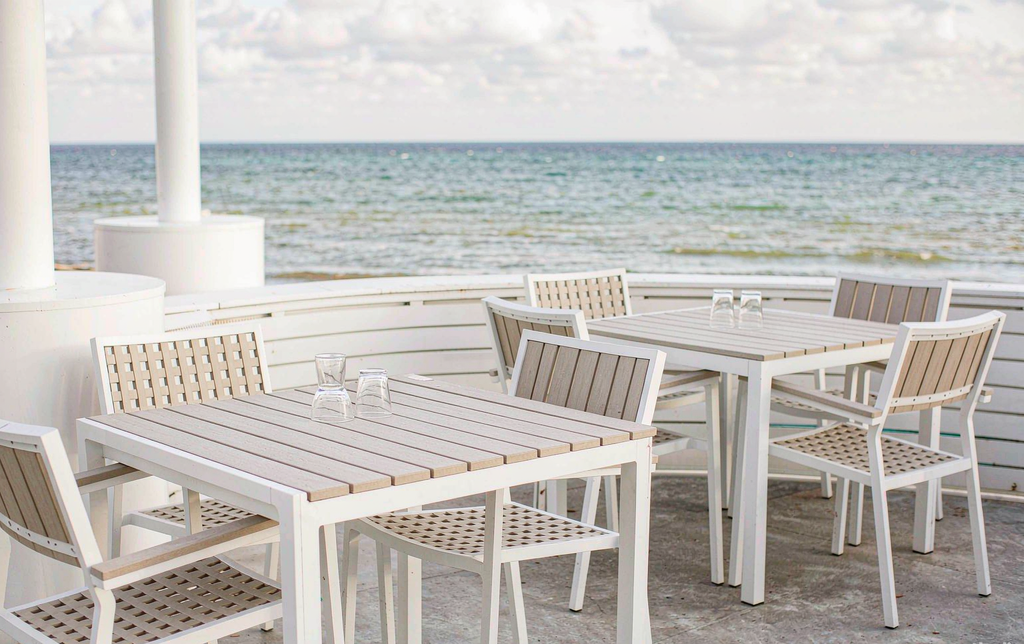
Aluminum is the most practical structural material for commercial outdoor use, and in many projects it carries the load even when the visible surface is rattan, WPC, or stone.
Why It Leads in Coastal Projects
Its biggest advantage is simple: aluminum does not rust. It forms its own protective oxide layer, which makes it the default for coastal restaurants where steel frames corrode within a season or two. It is also the lightest option here, so seating gets stacked, rearranged, and stored nightly without damage. For venues that clear the patio for events or cleaning, that alone settles the decision.
The Two Trade-Offs
Bare aluminum transfers heat, so in full sun a metal seat becomes untouchable by midday; aluminum chairs therefore usually pair with a woven seat, textile sling, or cushion. And thin-wall extrusions wobble under heavy use. Wall thickness and joint construction are where manufacturers cut costs, and the difference shows within months.
Powder coating bonds well to aluminum in any RAL color, so frames can match a brand palette or disappear into the interior scheme, a flexibility neither wood nor rattan offers at the same cost.
The Hybrid Build Pattern
A configuration that works well in practice pairs aluminum structure with WPC or synthetic slats for seats and tops. Our WPC slatted outdoor table with aluminum X-base is a typical example, matching a rust-proof frame with a slat top that sheds rain and stays cooler than stone in direct sun.
Teak: Paying for the Next Fifteen Years
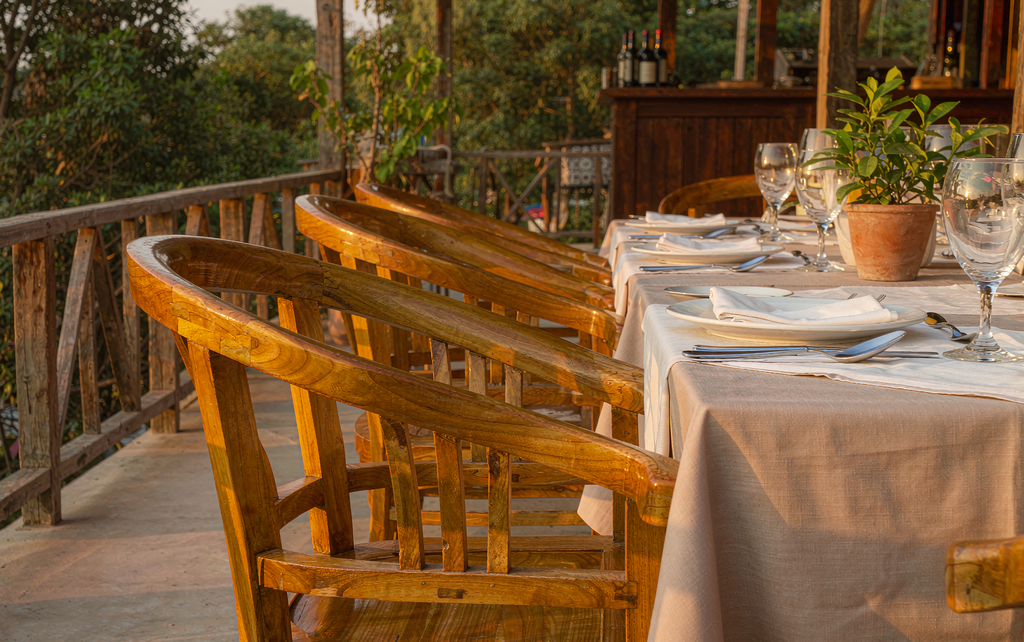
Teak is the material guests notice. Golden tone, tight grain, real weight: the signals read as quality, which is why teak dominates high-end resort and fine-dining terraces.
Why It Earns the Price
Teak contains natural oils and rubber that repel water and insects, so left untreated it weathers to a soft silver-grey without rotting, a patina many upscale venues prefer. Well-made teak is the only option in this comparison routinely expected to last 15 to 25 years in outdoor commercial service, and it repairs: scratches sand out, joints re-glue, a weathered set gets restored instead of replaced.
What the Price Costs Beyond the Invoice
Genuine plantation teak runs several times the price of aluminum or rattan equivalents, and supply keeps tightening, so demand FSC or verified plantation certification rather than taking the word “teak” at face value. The chairs are heavy, which slows nightly resets and raises freight. And maintenance becomes a yearly decision: keep the honey-gold with oiling or sealing once or twice annually, or accept the silver-grey. Either is legitimate, but decide before the first season, not after.
How Restaurants Typically Deploy It
A sensible pattern is to spend teak money on the signature pieces, the statement dining chairs and host tables, and use aluminum or rattan for high-turnover seating. Budget concentrates where guests actually look.
Side by Side
| Okunfa | PE Rattan (aluminum frame) | Aluminiomu | Teki |
| Weather resistance | Excellent | Excellent | Excellent |
| Coastal / salt air | Very good | Ti o dara ju | Very good |
| Itunu | High, natural flex | Needs sling or cushion | Firm, classic |
| Iwọn | Imọlẹ | Lightest | Eru |
| Itoju | Kekere | O kere pupọ | Alabọde si giga |
| Commercial lifespan | 5-8 ọdun | 8-12 ọdun | 15-25 ọdun |
| Upfront cost | $$ | $$ | $$$$ |
| Best fit | Cafes, garden dining, resorts | High-turnover patios, coastal venues | Fine dining, resorts, signature spaces |
Let Your Climate Cast the Final Vote
The same chair performs differently in Dubai and in Vancouver, so local conditions should make the last call.
Coastal Cities
Aluminum frames first, PE rattan second, and no unprotected steel anywhere, fasteners included.
Hot, High-UV Climates
UV-stabilized PE rattan and light powder coats. Dark metal surfaces in direct sun are unusable at midday.
Humid, Rainy Climates
Quick-drying construction wins: open weaves, slat tops, cushions with drainable cores. Water trapped inside a frame does more damage than rain on the surface.
Cities with Real Winters
Plan for storage. Stackable aluminum and rattan seating moved indoors each winter will outlast heavier furniture left out year-round.
The Parts That Fail Before the Chairs Do
Seating gets the attention, but tabletops and soft goods usually fail first in outdoor service.
Tabletops
Sintered stone resists scratches, heat, and UV with almost no upkeep, which makes it the strongest choice for unshaded patios. Our outdoor garden dining table with sintered stone top is specified for exactly that exposure. WPC and HPL cost less and suit covered terraces.
Awọn ijoko
Specify outdoor-grade foam with drainable cores and solution-dyed acrylic or olefin covers. Interior-grade foam held moisture and grew mold within a single rainy season in more than one project we have been asked to fix.
The Fastener Detail Nobody Checks
Confirm the fasteners are stainless or coated. Connectors rust before frames do, and a wobbly chair on a brand-new table is an entirely avoidable sight.
Getting the material decision right up front costs less than rebuilding a patio every second summer. If you are planning an outdoor dining project and want the specification reviewed against your climate and service model, our team works on custom outdoor furniture for commercial use every day.


