

 English
 中文
 日本語
 한국어
 العربية
 Русский
 Português
 Türkçe
 हिन्दी
 Tiếng Việt
 ไทย
 Indonesia
 Melayu
 ខ្មែរ
 ລາວ
 မြန်မာ
 Afrikaans
 Hausa
 Igbo
 Sesotho
 isiXhosa
 Yorùbá
 isiZulu
In the hospitality industry, outdoor dining spaces are significant revenue generators. However, the furniture selected for these areas must withstand rigorous daily use and unpredictable weather conditions.
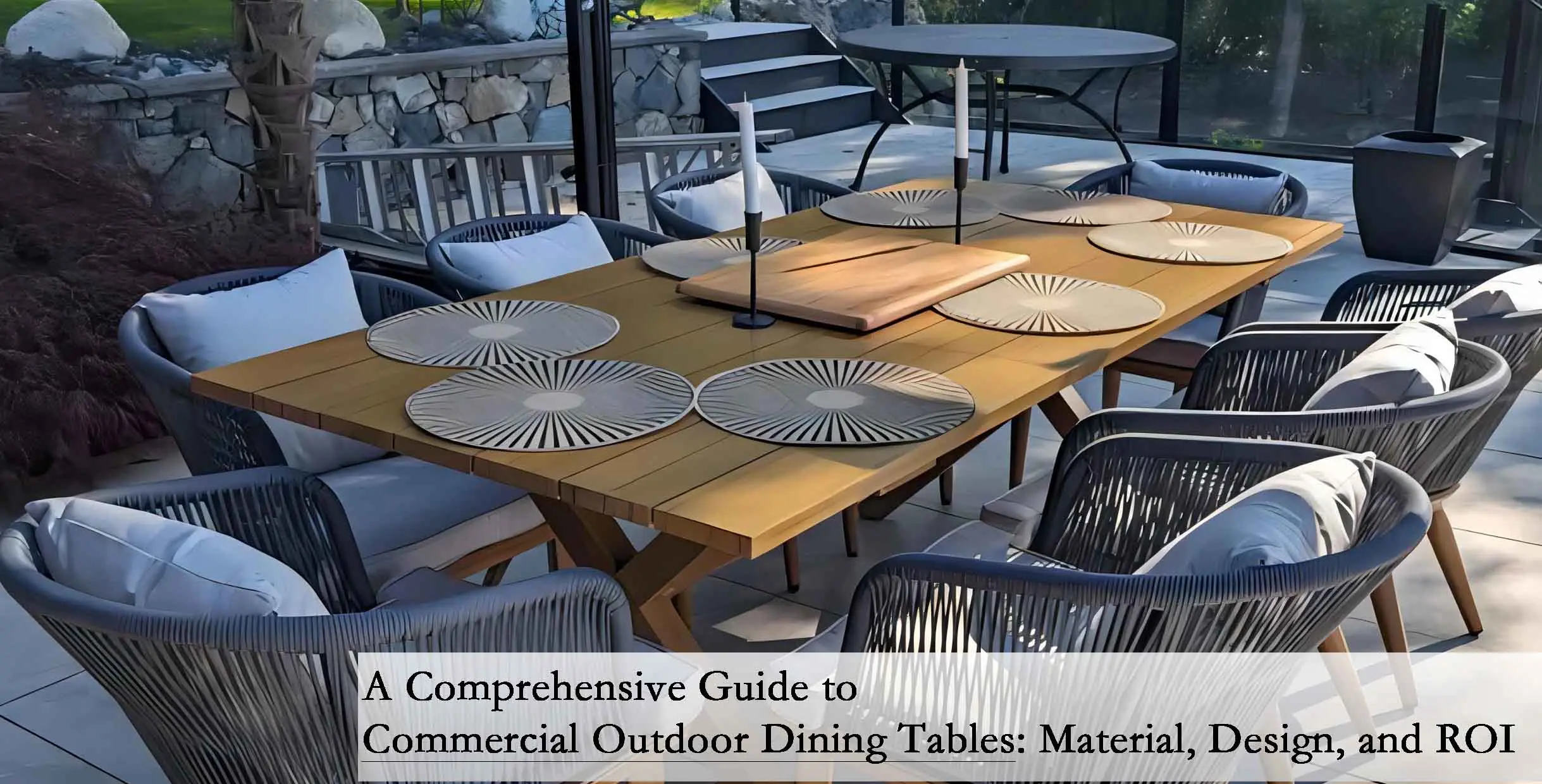
การเลือกสิ่งที่ถูกต้อง commercial outdoor dining tables is not merely an aesthetic choice; it is an operational decision that affects maintenance costs, guest safety, and long-term Return on Investment (ROI). This guide provides a detailed analysis of materials, sizing standards, and stability technologies to assist procurement managers in making informed decisions.
1. Material Analysis: Balancing Durability and Environment
Different climates require different material specifications. Choosing the wrong material for your location is the leading cause of premature furniture replacement.
Metal Options: Aluminum vs. Steel vs. Wrought Iron
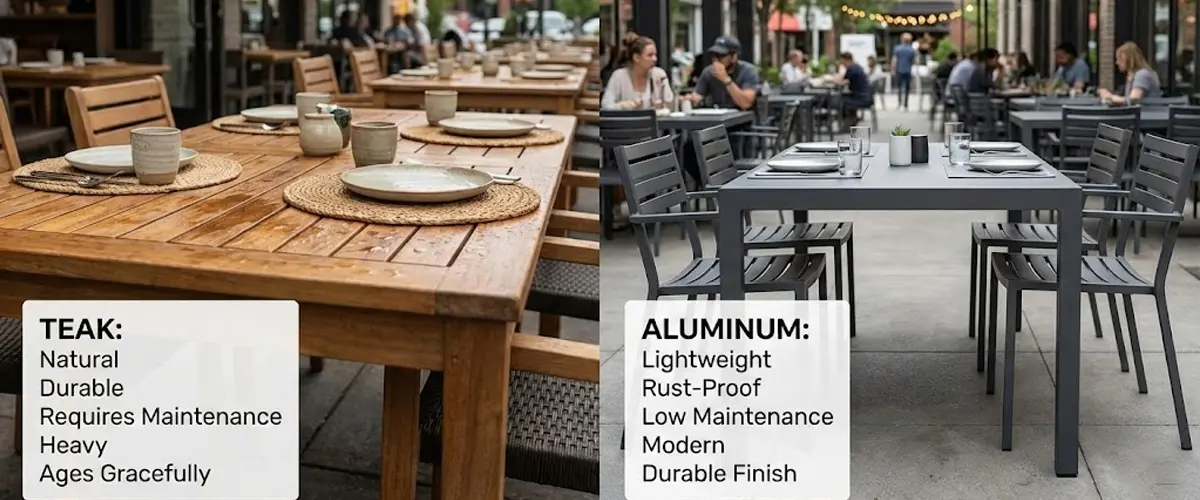
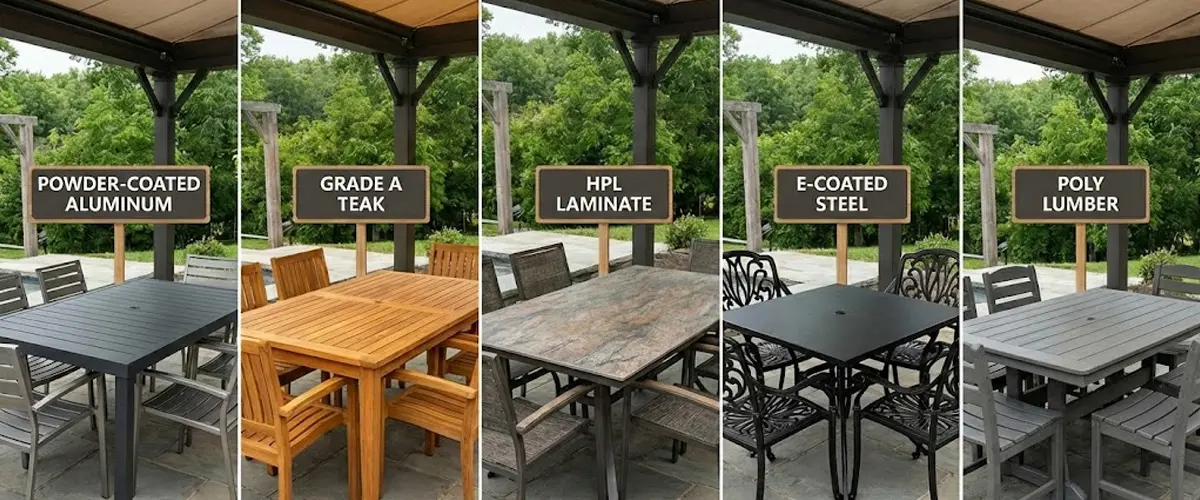
- อลูมิเนียม: The industry standard for a reason. It is lightweight and naturally rust-resistant. For coastal areas, powder-coated aluminum is essential to prevent oxidation from salt air.
- Steel: Heavier and stronger than aluminum, making it wind-resistant. However, it requires a rigorous E-coating (electrophoretic deposition) process to prevent rust.
- Wrought Iron: Offers a classic look but is high-maintenance and prone to heat absorption, which can be uncomfortable for guests in direct sunlight.
Synthetic & Natural Options
- High-Pressure Laminate (HPL): Increasing in popularity for modern venues. HPL is non-porous, resistant to cigarette burns, and easy to sanitize—a critical factor in post-pandemic operations.
- Teak (Grade A): A dense tropical hardwood with high oil content that naturally repels water. While durable, it requires periodic oiling to maintain its golden color, otherwise, it patinates to a silver-grey.
- Recycled Plastic (Poly Lumber): An eco-friendly choice made from HDPE. It is impervious to moisture, insects, and splintering, making it ideal for high-humidity environments.
Comparison Chart: Material Performance
| ประเภทวัสดุ | ความต้านทานสนิม | ระดับการบำรุงรักษา | UV Resistance | ดีที่สุดสำหรับ |
| อลูมิเนียมเคลือบผง | สูง | ต่ำ | สูง | Coastal resorts, Cafes |
| Grade A Teak | Medium (Needs Oil) | สูง | ปานกลาง | Luxury dining, Gardens |
| ลามิเนตแรงดันสูง (HPL) | สูง | ต่ำมาก | สูง | High-traffic urban bistros |
| Steel (E-Coated) | ปานกลาง | ปานกลาง | สูง | Windy rooftops (Weight advantage) |
| Poly Lumber (HDPE) | สูง | ต่ำ | สูง | Boardwalks, Casual dining |
2. Stability and Engineering: Solving the “Wobbly Table” Issue
Customer complaints often stem from unstable tables causing spilled drinks. In a commercial setting, stability is non-negotiable.
Self-Leveling Technologies
Uneven pavers and decking are common in outdoor spaces. We recommend commercial outdoor dining tables equipped with hydraulic or mechanical self-leveling glides (such as FLAT® technology). These systems automatically adjust to the terrain, locking the table in place without the need for manual adjustment or “wedges.”
Base Weight and Wind Ratings
For rooftop bars or high-wind areas, the weight of the table base is critical.
- Standard Base: Suitable for protected courtyards.
- Weighted/Bolt-Down Base: Essential for high-rise balconies or coastal areas to prevent tipping during gusts.
3. Planning Your Layout: Sizing and Capacity
Optimizing your floor plan is a balance between maximizing cover counts and ensuring operational flow.
Standard Commercial Dimensions
- 2-Top (Bistro Style): 24″ x 24″ (60cm) or 30″ Round. Efficient for coffee or drinks.
- 4-Top (Dining Style): 30″ x 48″ (76cm x 122cm) or 36″ Square. Required for full dinner service to accommodate plates and glassware.
Accessibility and ADA Compliance
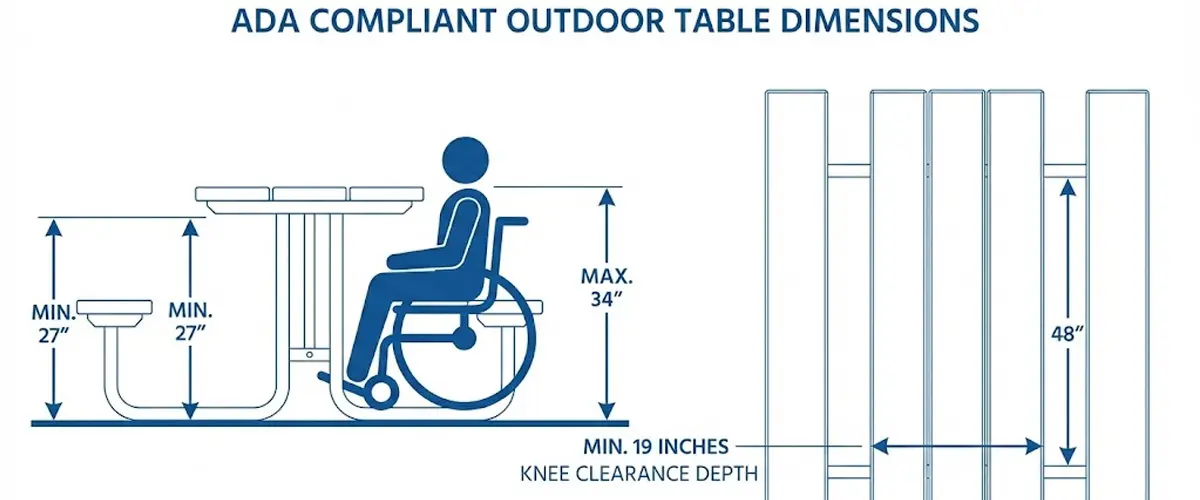
An inclusive venue must adhere to accessibility standards. In the US, the Americans with Disabilities Act (ADA) requires:
- ความสูง: Table surface must be between 28″ and 34″ high.
- Knee Clearance: At least 27″ of clearance underneath the table.
- Aisle Width: Main paths must be at least 36″ wide to accommodate wheelchairs.
4. Sustainability: The Growing Demand for Eco-Friendly Furniture
Modern consumers and corporations prefer brands that demonstrate environmental responsibility.
- Recyclability: Aluminum tables are 100% recyclable at the end of their lifecycle.
- FSC-Certified Wood: Ensure any wood furniture (Teak, Eucalyptus) is certified by the Forest Stewardship Council, guaranteeing it is sourced from responsibly managed forests.
5. Maintenance Protocols for Longevity
To maximize ROI, a proactive maintenance schedule is required.
- รายวัน: Wipe down surfaces with mild soap and water. Avoid abrasive scrubbers on powder-coated finishes to prevent micro-scratches.
- รายเดือน: Inspect all hardware. Screws and bolts can loosen due to thermal expansion and contraction or dragging. Tighten as needed.
- ตามฤดูกาล: Application of protective wax on metal frames can provide an additional barrier against oxidation.
- Storage: If the venue closes for winter, use breathable furniture covers or stack tables in a dry, indoor area.
คำถามที่พบบ่อย
Q: What is the most durable material for commercial outdoor dining tables?
A: For most environments, High-Pressure Laminate (HPL) tops on Powder-Coated Aluminum bases offer the best balance of durability and low maintenance. They are resistant to scratching, heat, and corrosion.
Q: How much space should I allow between outdoor tables?
A: For commercial efficiency and comfort, allow at least 36 inches (90cm) between tables for service aisles. For guest comfort, allow 24 inches of table edge width per person.
Q: Why are commercial tables more expensive than residential ones?
A: Commercial tables are built to meet rigorous safety standards (like BIFMA). They use heavier gauge metals, higher quality welds, and UV-stabilized coatings designed to withstand 8-10 hours of daily use, whereas residential furniture is designed for occasional use.
Q: Can indoor table tops be used outside?
A: Generally, no. Indoor tops often have cores (like MDF) that will swell and delaminate when exposed to moisture. Always verify that the tabletop is rated for exterior use.
บทสรุป
Investing in high-quality commercial outdoor dining tables safeguards your operational efficiency and brand reputation. By prioritizing the right materials, ensuring stability, and planning for accessibility, you create an inviting outdoor environment that drives repeat business.
Need assistance with your patio layout? [Contact our commercial design team] for a consultation or [Download our 2026 Catalog].
เอกสารประกอบผลิตภัณฑ์โดยละเอียดของเฟอร์นิเจอร์กลางแจ้ง MingMeng


