

 English
 中文
 日本語
 한국어
 العربية
 Русский
 Português
 Türkçe
 हिन्दी
 Tiếng Việt
 ไทย
 Indonesia
 Melayu
 ខ្មែរ
 ລາວ
 မြန်မာ
 Afrikaans
 Hausa
 Igbo
 Sesotho
 isiXhosa
 Yorùbá
 isiZulu
In the hospitality industry, the table is the foundation of the guest experience. It’s where first impressions are formed, meals are savored, conversations flow, and lasting memories are made. For restaurant owners and operators, selecting the right စားသောက်ဆိုင်စားပွဲများ is a strategic decision that impacts everything from brand perception and guest comfort to operational efficiency and long-term profitability. A table must balance aesthetic appeal with the rigorous demands of a commercial environment—spills, heat, constant use, and daily cleaning.
This comprehensive 2026 guide is designed for restaurant owners, managers, interior designers, and procurement professionals. We provide a systematic framework for selecting စီးပွားဖြစ် စားသောက်ဆိုင် စားပွဲများ that meet the unique needs of your concept, budget, and operational reality, ensuring your investment pays dividends for years to come.
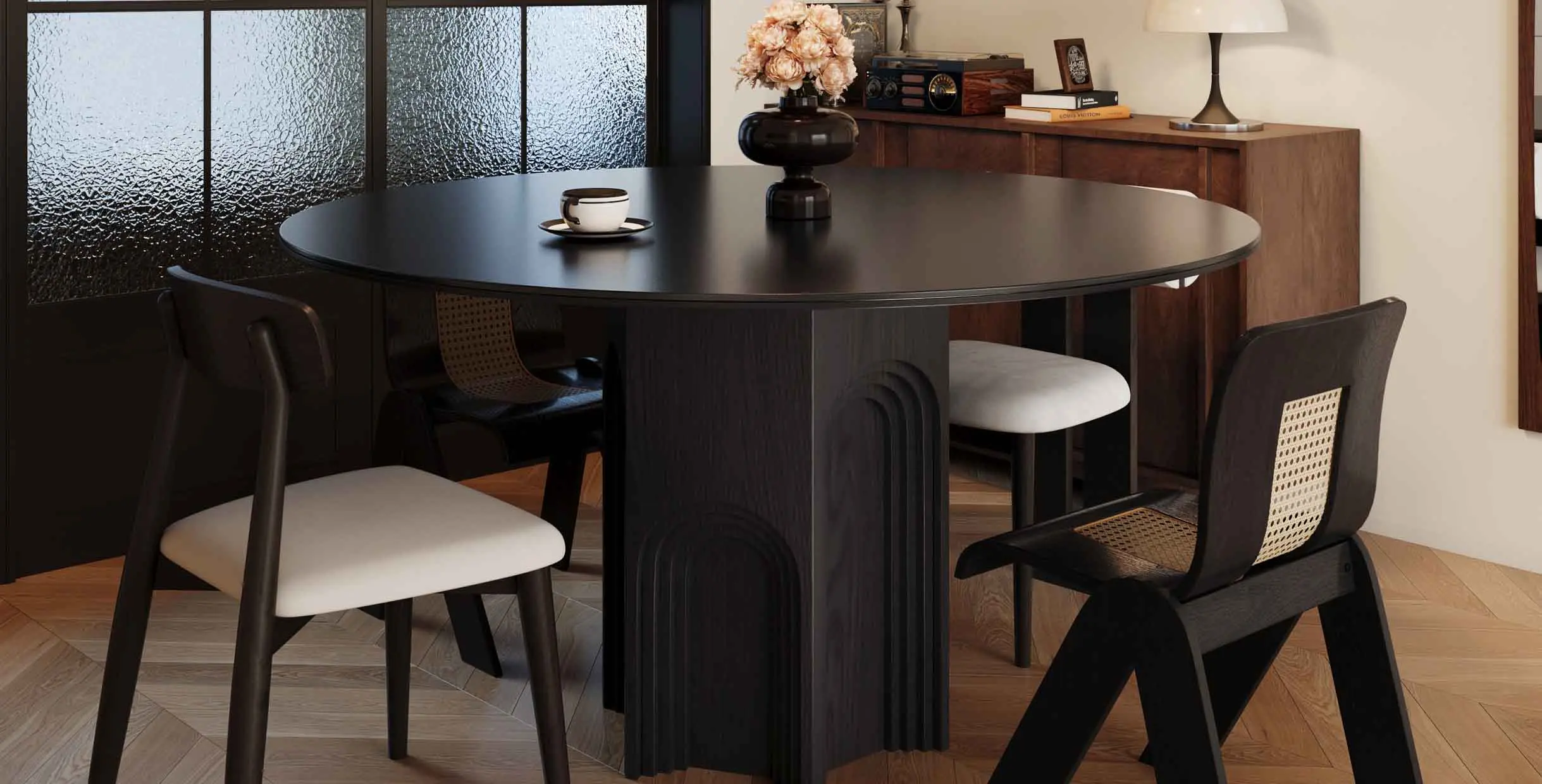
1. The Strategic Role of Tables in Restaurant Success
A well-chosen စားသောက်ဆိုင်စားပွဲ is a multifunctional asset that contributes directly to your bottom line:
- Brand Expression: The table’s material, shape, and finish communicate your restaurant’s identity—be it rustic farmhouse, sleek modern, or classic European.
- Revenue Optimization: Proper sizing and layout maximize seat turnover while maintaining guest comfort, directly impacting covers per hour[¹].
- Operational Efficiency: Tables that are the right height, durable, and easy to clean streamline service and reduce labor costs.
- Guest Satisfaction: A stable, comfortable, and aesthetically pleasing table enhances the dining experience, encouraging longer stays and repeat visits.
2. Phase 1: Defining Your Needs – Concept, Layout & Function
Before browsing catalogs, establish a clear brief:
- Restaurant Concept: Fine dining, casual bistro, fast-casual, or family-style? Each dictates different material and design priorities.
- Floor Plan Analysis: Work from CAD drawings. Map out traffic flow, service stations, and seating zones. Determine exact dimensions needed for each table, accounting for chair clearance (minimum 24-30″ between tables).
- Functional Requirements: Consider daily use patterns. Will tables need to be moved frequently? Are they for indoor or outdoor use? Do they need to accommodate wheelchair access (ADA compliance requires 27″ minimum knee clearance)?
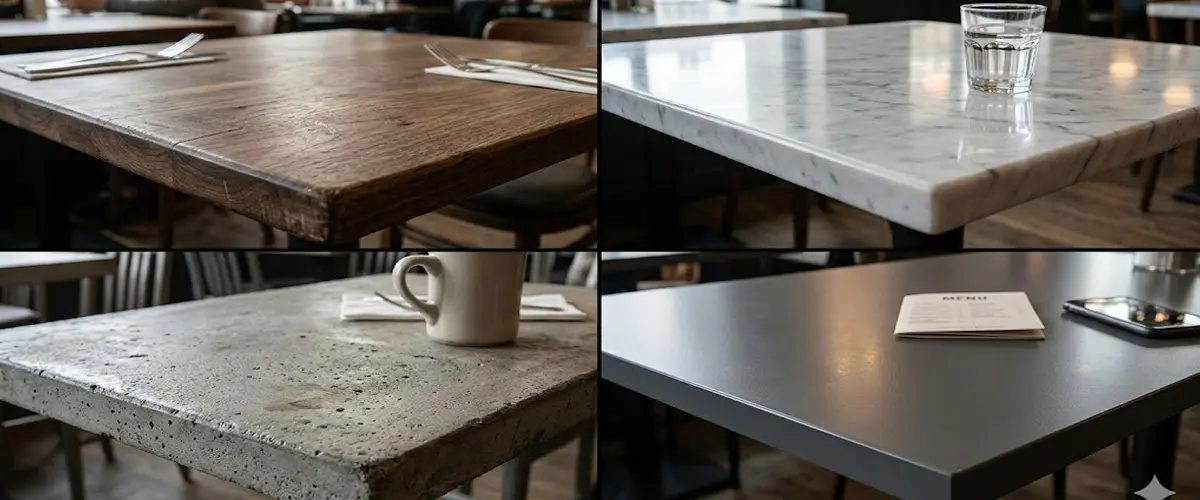
3. Phase 2: Material Selection – Balancing Beauty & Commercial Duty
The tabletop material is the most visible and most abused surface in your restaurant. Choose wisely.
| ပစ္စည်းအမျိုးအစား | အကောင်းဆုံး | Key Advantages | Commercial Considerations |
|---|---|---|---|
| High-Pressure Laminate (HPL) | High-turnover casual dining, fast-casual chains, family restaurants. | Extremely durable, scratch & stain-resistant, vast design options, budget-friendly. | Specify commercial-grade HPL (0.048″ minimum thickness). Edges must be well-sealed against moisture. |
| အစိုင်အခဲသစ်သား | Fine dining, rustic concepts, wine bars. | Unmatched warmth and character. Can be refinished over time. | Requires commercial-grade catalyzed finish. Softer woods (walnut) need more care than hardwoods (oak, maple). Higher maintenance. |
| Wood Veneer over Plywood | Mid-range to upscale concepts seeking wood look with better stability. | Warms look of wood with greater dimensional stability than solid slabs. Less prone to warping. | Critical: Must have a durable, moisture-resistant topcoat. Edge banding must be robust. |
| Laminate (Melamine) | Budget-conscious projects, back-of-house, outdoor areas. | Low cost, lightweight, easy to clean. | Less durable than HPL. Prone to chipping and edge swelling if not well-sealed. |
| Solid Surface (e.g., Corian) | High-end bars, sushi counters, modern concepts. | Seamless, non-porous, repairable, can be thermoformed into shapes. | Higher cost. Can scratch but can be sanded out. Requires professional fabrication. |
| Natural Stone (Granite, Quartzite) | High-end steakhouses, luxury hotel restaurants. | Unparalleled luxury, heat resistant, extremely durable. | Very heavy (requires robust base). Porous stones need sealing. Highest cost. |
| Metal (Stainless Steel, Powder-Coated Steel) | Industrial concepts, outdoor dining, bars. | Extremely durable, easy to sanitize, modern industrial look. | Can dent. Stainless shows fingerprints (brushed finish helps). Conducts heat/cold. |
| Concrete | Industrial-chic, rooftop bars, modern lounges. | Unique texture, extremely durable, can be cast in shapes. | Very heavy. Must be sealed to prevent staining. Can crack if not properly reinforced. |
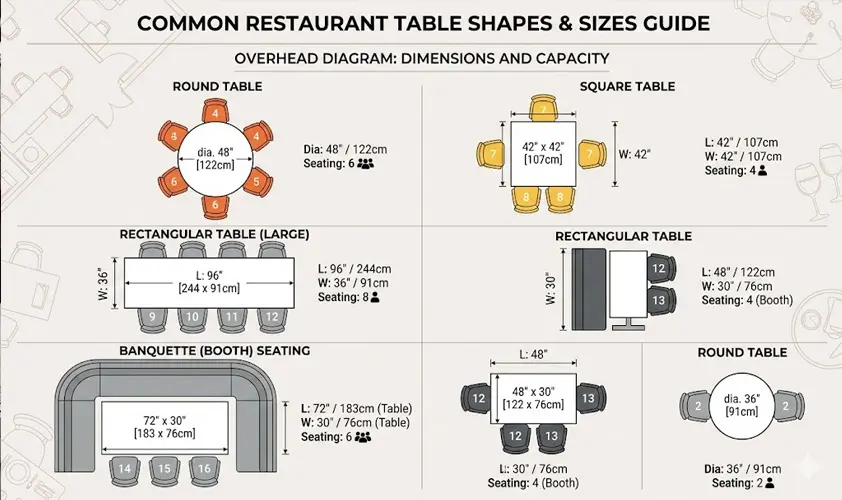
4. Phase 3: Table Shapes & Sizes – Optimizing Your Floor Plan
| ပုံသဏ္ဍာန် | အကောင်းဆုံး | Standard Dimensions (Commercial) | Space & Flow Considerations |
|---|---|---|---|
| ဝိုင်း | Intimate seating, small spaces, banquette centers. | 24″ (2 seats), 30″ (2-3 seats), 36″ (4 seats), 48″ (4-5 seats). | Encourages conversation. Efficient for tight corners. Requires less clearance space than squares for same seat count?[²] |
| ရင်ပြင် | Efficient 2-top and 4-top configurations. | 24×24″ (2-top), 30×30″ (2-3 top), 36×36″ (4-top). | Highly modular; can be combined for larger parties. Easy to arrange in grids. |
| Rectangle | Most common for 4-tops, communal tables, banquette pairings. | 30×48″ (4-top), 36×60″ (6-top), 36×72″ (8-top). | Maximizes seating along walls and in long spaces. Standard for most dining rooms. |
| Square/Rectangle (Banquette Side) | Paired with booth seating. | Depth: 24-30″. Length variable to match booth. | One side cut straight for banquette abutment. Allows seamless built-in look. |
| Organic/Freeform | High-design, statement spaces. | Custom dimensions. | Creates unique focal point. Requires custom fabrication and careful layout planning. |
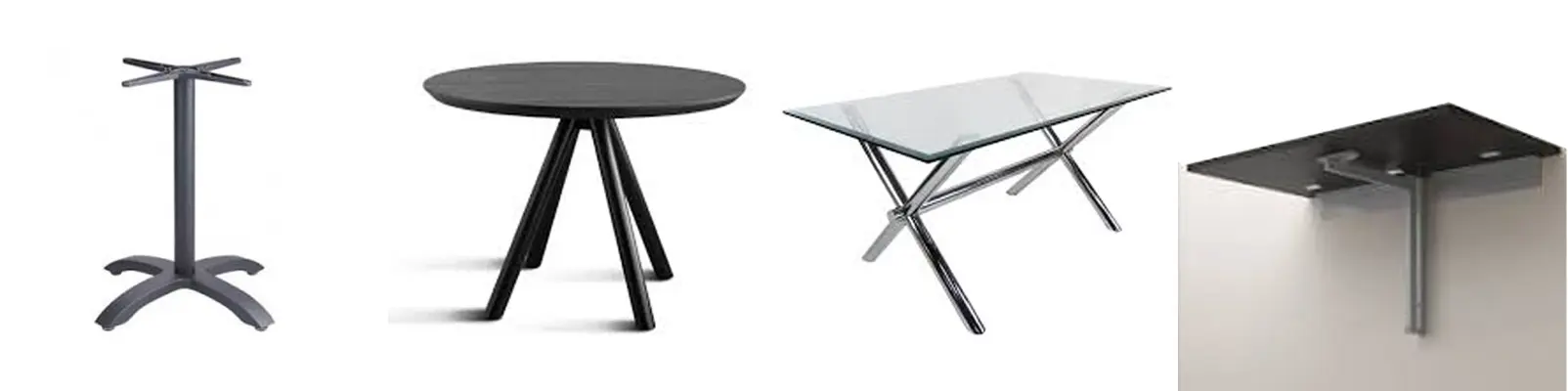
5. Phase 4: Base Styles – Stability, Aesthetics & Flexibility
The base is as important as the top for function and style.
- Central Pedestal Base:
- အားသာချက်များ Unobstructed legroom, elegant look, easy for guests to slide in/out. Ideal for round tables and fine dining.
- အားနည်းချက်များ- Less stable on uneven floors than four-leg bases. Single point of support requires robust construction.
- Spec Tip: Look for weighted, stable bases (cast iron or weighted steel) to prevent tipping. Adjustable glides are essential.
- Four-Leg Base:
- အားသာချက်များ Maximum stability, traditional look, excellent for heavy tops and high-traffic areas.
- အားနည်းချက်များ- Legs can interfere with guest seating and cleaning.
- Spec Tip: Ensure legs are set back sufficiently from the table edge to avoid knee knock. Crossbars add rigidity but may reduce legroom.
- Trestle or X-Base:
- အားသာချက်များ Industrial or rustic aesthetic, very stable, good for communal tables.
- အားနည်းချက်များ- Can limit legroom compared to pedestals. Heavy.
- Spec Tip: Ensure the central support is high enough to allow comfortable leg positioning.
- Table Tops Only (for existing bases):
- အားသာချက်များ Cost-effective refresh option if bases are still in good condition. Allows material/color update without full replacement.
- အားနည်းချက်များ- Must ensure compatibility (size, mounting pattern) with existing bases.
- Spec Tip: Provide exact mounting hole pattern to your supplier.
- Wall-Mounted / Folding Tables:
- အားသာချက်များ Maximizes flexibility in small spaces or multi-purpose rooms. Can be folded down when not in use.
- အားနည်းချက်များ- Less stable than freestanding. Requires solid wall mounting.
- Spec Tip: Ideal for cafes with fluctuating capacity or private dining rooms that convert to event space.
6. Phase 5: Coordinating Tables with Restaurant Seating
A cohesive dining room requires harmony between tables and chairs. Use this coordination guide:
| Table Type & Style | Recommended Chair Pairing | Recommended Bar Stool Pairing (for bar counters) | Design Rationale |
|---|---|---|---|
| Wood Top + Pedestal Base (Fine Dining) | Upholstered dining chairs with medium-high backs, e.g., our Contour Lounge Chair. | Backless or low-back bar stools with upholstered seats, e.g., Metro Adjustable Stool with padded seat. | Creates refined, comfortable zones. Pedestal allows easy chair movement. |
| Laminate Top + Four-Leg Base (Casual Dining) | Stackable wood or polypropylene chairs, e.g., our Bistro Classic or Utility Series. | Simple metal or wood bar stools with footrests, e.g., Industrial Utility Stool. | Durable, easy-clean, high-turnover focused. Chairs match table’s utilitarian efficiency. |
| Concrete Top + Trestle Base (Industrial) | Metal frame chairs with wood or metal seats, e.g., our Forge Series chair. | Welded steel bar stools with industrial finish, e.g., Pivot Series adjustable stool. | Raw materials speak the same industrial language. Visual weight balanced. |
| Round Marble Top + Pedestal (Luxury Lounge) | Velvet or leather armchairs, e.g., our Curve Lounge Chair. | Luxe velvet or leather bar stools with swivel, e.g., custom upholstered swivel stools. | Opulent materials paired with equally luxurious seating. Encourages lingering. |
| Out-Grade HPL Top + Aluminum Base (Patio) | All-weather resin or aluminum chairs, e.g., our Alfresco Collection dining chair. | Weather-resistant bar stools with quick-dry cushions, e.g., Coastal Breeze stool. | Both table and chair specified for all-weather endurance and easy cleaning. |
အကြံပြုချက်- When ordering စားသောက်ဆိုင် စားပွဲများ လက်ကား, request finish samples (wood stain, laminate pattern, metal powder-coat) alongside your စားသောက်ဆိုင်ထိုင်ခုံ fabric or finish samples to ensure perfect coordination under your actual lighting.
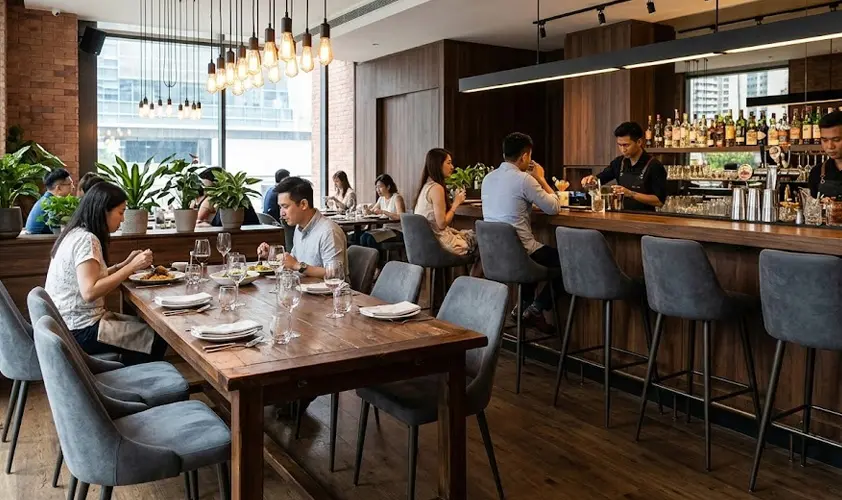
7. Phase 6: The Procurement Process – Sourcing & Specification
| Supplier Type | အကျိုးအပြစ်များ | အားနည်းချက်များ | အကောင်းဆုံး |
|---|---|---|---|
| Direct Manufacturer (e.g., Mingmeng) | Best pricing, full customization, direct quality control, dedicated project support. | Higher Minimum Order Quantities (MOQs), longer lead times for custom work. | Multi-unit chains, large projects, unique design specifications. |
| Wholesale Distributor | Lower MOQs, access to multiple brands, faster shipping on stocked items. | Less customization, markup added, potential for less technical expertise on specific products. | Smaller restaurants, projects using standard sizes and finishes. |
| Contract Furniture Dealer | Design consultation, project management, installation services. | Highest cost, limited to brands they represent. | Full-service projects requiring turnkey solutions. |
The Smart Buyer’s Checklist:
- Request Physical Samples: Never specify without seeing and touching the actual material.
- Verify Commercial Warranty: Look for 5+ years on structure, 2+ years on finish.
- Clarify Lead Times: Stock items: 4-6 weeks. Custom orders: 8-12 weeks from deposit.
- Understand INCOTERMS: Who pays for freight, insurance, customs?
- Inspect Upon Delivery: Document damage immediately (within 24-48 hours).
8. Phase 7: Maintenance & Lifecycle Management
Protect your investment with proper care:
- Daily: Wipe with a soft, damp cloth. Use appropriate cleaners for the material (e.g., mild soap for laminate, stone-specific cleaner for marble). Avoid abrasive pads.
- Weekly: Inspect all legs and bases for loose screws or glides. Tighten as needed.
- Monthly: Apply protective treatments as recommended (e.g., stone sealer, wood polish).
- Annually: Consider professional deep cleaning or refinishing for high-wear tops.
9. 2026 Trends in Commercial Restaurant Tables
- Sustainable Materials: Demand for FSC-certified woods, recycled material content in laminates, and low-VOC finishes is accelerating.
- Mixed Materials: Combining wood with metal, stone with wood, or concrete with reclaimed timber for textural contrast.
- Organic Shapes: Curved, live-edge, and freeform tabletops that break from rigid geometry, adding visual softness.
- Tech-Integrated Tops: Tables with discreet wireless charging zones built into the surface or edge.
- Indoor-Outdoor Continuity: Materials and designs that work seamlessly across both environments, using weather-resistant woods and powder-coated aluminum.
10. Conclusion: Building a Foundation for Success
ညာဘက်ကိုရွေးချယ်ခြင်း။ စားသောက်ဆိုင်စားပွဲများ is a foundational investment in your establishment’s success. By methodically working through concept definition, material selection, size optimization, and base coordination, you create a dining environment that is both beautiful and operationally sound. The perfect table is one that guests admire, staff appreciate, and that performs flawlessly through thousands of meals.
This is where a partnership with a specialized manufacturer like MingMeng proves invaluable. As a direct restaurant tables manufacturer and commercial supplier, we offer extensive customization, commercial-grade materials, and dedicated project support. Whether you need a full dining room of custom-sized tables, a statement piece for your bar, or durable outdoor tops for your patio, we collaborate with you to deliver solutions that elevate your brand and endure daily use.
Ready to build the foundation of your dream restaurant? Contact the Mingmeng commercial team today to discuss your project, request material samples, and receive a transparent, volume-based quote for your custom restaurant tables.
Commercial Buyer FAQs
1. What is the standard height for restaurant tables?
The standard dining table height is 29-30 inches from floor to tabletop. For bar-height tables (casual dining or bar areas), standard is 41-43 inches, paired with bar stools (29-31″ seat height). Always measure your specific chairs to ensure proper pairing.
2. How many tables can I fit in my dining room?
A general rule: allocate 12-15 square feet per guest for full-service dining, including circulation space. For a given floor plan, subtract space for service stations, entry, and restrooms, then divide remaining area by this per-guest allowance to estimate capacity. Professional space planning software or a designer is recommended for accuracy.
3. What is the most durable tabletop material for a busy family restaurant?
High-Pressure Laminate (HPL) is often the best choice for high-turnover, family-friendly environments. It offers excellent resistance to scratches, stains, and heat, is easy to clean, and comes in countless designs. Specify commercial-grade HPL (0.048″+) with fully sealed edges for maximum longevity.
4. Can I use wood tabletops outdoors?
Only if the wood is specifically treated for outdoor use. Options include Accoya® (modified wood with Class 1 durability), Ipe, ကျွန်းသစ်, သို့မဟုတ် Cedar. These species have natural oils or treatments that resist rot and insects. Even then, they require maintenance. For most commercial outdoor applications, powder-coated aluminum frames with HPL or solid surface tops are lower-maintenance alternatives.
5. What is the lead time for custom-sized restaurant tables?
For custom dimensions, finishes, and edge details, plan for 8-12 weeks from finalized drawings and deposit to shipment. This includes material sourcing, production, finishing/curing, and packaging. Add 2-4 weeks for ocean freight depending on destination. Stock sizes may ship in 4-6 ပတ်.
6. How do I clean different tabletop materials?
- Laminate/HPL: Mild soap and water. Avoid abrasive cleaners.
- သစ် Damp cloth (not wet). Use wood-specific cleaner periodically. Avoid excess moisture.
- Stone: pH-neutral stone cleaner. Wipe spills immediately. Reseal annually.
- သတ္တု- Mild soap and water. Stainless steel cleaner for smudges.
- Concrete: pH-neutral cleaner. Ensure sealer is intact. Avoid acidic spills (wine, citrus).
7. What tables are best for ADA compliance?
At least 5% of tables (or one per type) must provide 27 inches of knee clearance (height: 27″ min, width: 30″ min, depth: 19″ min) and a table height of 28-34 inches. Consider adjustable-height tables or tables with removable leaves for maximum flexibility.
Footnotes:
[¹] Industry studies suggest optimizing table turnover through proper sizing and spacing can increase covers by 15-25% during peak hours.
[²] Round tables typically require 4-6 inches less clearance per seat than square ta


