
 English
 中文
 日本語
 한국어
 العربية
 Русский
 Português
 Türkçe
 हिन्दी
 Tiếng Việt
 ไทย
 Indonesia
 Melayu
 ខ្មែរ
 ລາວ
 မြန်မာ
 Afrikaans
 Hausa
 Igbo
 Sesotho
 isiXhosa
 Yorùbá
 isiZulu
ການອອກແບບບູດຮ້ານອາຫານທີ່ທັນສະໄຫມ in 2026 combines minimalist comfort, sustainable materials, and modular flexibility — three priorities that matter most to restaurant owners and commercial buyers.For a B2B purchasing manager, a restaurant booth is not just a seating product. It is a cost item, a delivery risk, a maintenance variable, and a long-term part of the restaurant’s operating system.Restaurants are choosing softer geometric lines, cleaner base structures, practical upholstery materials, and layouts that make better use of wall areas, corners, and compact dining zones.

1. ການອອກແບບບູດ “ທັນສະໄໝ” ໃນປີ 2026 ແມ່ນຫຍັງ?
ບ່ອນນັ່ງບູດຮ້ານອາຫານທີ່ທັນສະໄຫມສາມາດສະຫຼຸບໄດ້ໃນຫນຶ່ງແຖວ:
ຮູບແບບຫນ້ອຍ, ຄວາມສະດວກສະບາຍສູງສຸດ, ການປະຕິບັດການວັດແທກ.
A modern booth should look clean, but not fragile. It should feel soft, but not collapse after one busy season. It should match the restaurant concept, but still survive cleaning chemicals, luggage knocks, children climbing on seats, and hundreds of seatings every week.
ອົງປະກອບອອກແບບບູດຮ້ານອາຫານທີ່ທັນສະໄຫມ 2026: ການອ້າງອີງຂອງຜູ້ຊື້
| ອົງປະກອບອອກແບບ | 2026 ທິດທາງ | ມູນຄ່າການປະຕິບັດສໍາລັບຜູ້ຊື້ B2B |
|---|---|---|
| ເລຂາຄະນິດ | ຂອບມົນ, ຮູບແບບສີ່ຫລ່ຽມອ່ອນ, silhouette ergonomic | ປັບປຸງການໄຫຼວຽນຂອງການຈະລາຈອນແລະຫຼຸດຜ່ອນຄວາມຫນັກຫນ່ວງຂອງສາຍຕາແຫຼມ |
| ຜ້າຫົ່ມ | ຫນັງ PU, fabric ການຄ້າ, vinyl ຫນັງ-texture, ທາງເລືອກ fabric recycled | ດຸ່ນດ່ຽງຮູບລັກສະນະ, ຄວາມຕ້ອງການທໍາຄວາມສະອາດ, ແລະການຄວບຄຸມຄ່າໃຊ້ຈ່າຍ |
| ກອບ | ໄມ້ອັດ, ໄມ້ແຂງ, ເຫຼັກກ້າ, ຫຼືເສີມເຫຼັກສະແຕນເລດ | ສະຫນັບສະຫນູນຄວາມຫມັ້ນຄົງຂອງໂຄງສ້າງໃນໄລຍະຍາວ |
| ໂຟມ | ໂຟມທີ່ມີຄວາມຫນາແຫນ້ນສູງທີ່ມີການບີບອັດຄວບຄຸມ | ຫຼຸດຜ່ອນການຍັບຍັ້ງກ່ອນໄວ ແລະບ່ອນນັ່ງທີ່ບໍ່ສະຫມໍ່າສະເຫມີ |
| ຖານ | plinth ປິດ, ພື້ນຖານໂລຫະຍົກ, ພື້ນຖານໄມ້, ຫຼື skirting ສະແຕນເລດ | ຜົນກະທົບຕໍ່ປະສິດທິພາບທໍາຄວາມສະອາດແລະການບໍາລຸງຮັກສາປະຈໍາວັນ |
| ສີ | Taupe, ຊາຍ, graphite, walnut, ສີດໍາ, beige, ສີນ້ໍາຕານອົບອຸ່ນ | ກົງກັບພາຍໃນທີ່ທັນສະໄຫມໂດຍບໍ່ມີການໂຫຼດເກີນພື້ນທີ່ |
| ການປະຕິບັດຕາມ | CAL TB 117-2013, BS 5852, ISO 12947, ການທົດສອບການອ້າງອິງ BIFMA ບ່ອນທີ່ສາມາດນຳໃຊ້ໄດ້ | ຊ່ວຍໃຫ້ຜູ້ຊື້ປະເມີນຄວາມຕ້ອງການຄວາມປອດໄພແລະຄວາມທົນທານ |

For public and commercial seating, many specifiers use BIFMA performance standards as an evaluation reference. ANSI/BIFMA X5.4 is specifically associated with public and lounge seating, which includes seating used in shared indoor environments such as waiting, reception, visitor, dining, and cafeteria settings.
ເປັນຫຍັງບູດຮ້ານອາຫານຈຶ່ງສຳຄັນກວ່າທີ່ເຄີຍ
ບູດຮ້ານອາຫານປັບປຸງສາມຢ່າງໃນເວລາດຽວກັນ: ພື້ນທີ່, ຄວາມເປັນສ່ວນຕົວ, ແລະຕົວຕົນຂອງຍີ່ຫໍ້.
Loose chairs are flexible, but they often make the floor plan visually noisy. Booths create order. They define wall zones, soften corners, and help guests feel settled. For operators, that means a more controlled dining environment.
ຈາກປະສົບການໂຄງການຂອງພວກເຮົາເອງ, ຜູ້ຊື້ມັກຈະສົນໃຈສີ່ຜົນໄດ້ຮັບປະຕິບັດ:
- ການນໍາໃຊ້ປະສິດທິພາບຫຼາຍຂອງກໍາແພງຫີນແລະພື້ນທີ່ແຈ
- ຄວາມເປັນສ່ວນຕົວຂອງແຂກທີ່ດີກວ່າໂດຍບໍ່ມີການສ້າງການແບ່ງປັນ
- ຄວາມສອດຄ່ອງຂອງຍີ່ຫໍ້ທີ່ເຂັ້ມແຂງກວ່າໃນທົ່ວຫຼາຍສະຖານທີ່
- ອາຍຸການບໍລິການເຟີນີເຈີຍາວກວ່າເມື່ອທຽບກັບບ່ອນນັ່ງວ່າງຊັ້ນຕ່ໍາ
For small restaurants, booth seating helps turn dead wall space into revenue-generating seats. For hotels and chain restaurants, it creates a repeatable interior identity. For contractors, it simplifies floor planning because fixed seating reduces layout uncertainty.
But there is a catch: once booths are installed, they are not as easy to move as loose chairs. That is why dimension control, frame strength, and pre-production drawings are not optional.

ສາມລາຍລະອຽດດ້ານວິຊາການຜູ້ຊື້ມັກຈະເບິ່ງຂ້າມ
After producing and reviewing restaurant booth projects for cafés, hotels, canteens, chain restaurants, and hospitality contractors, we have noticed three details that are often underestimated during procurement.
1. ໂຄງປະກອບການຮ່ວມກັນມີຄວາມສໍາຄັນຫຼາຍກ່ວາການສໍາເລັດຮູບຂອງຫນ້າດິນ
Many buyers check the upholstery first. That is understandable. The customer sees the surface.
But the real service life of a booth often depends on its internal frame and joints. A weak frame may not fail immediately. It usually starts with small symptoms: slight shaking, uneven seat lines, noisy movement, or separation between the backrest and seat deck.
ສໍາລັບບູດຮ້ານອາຫານຕາມສັນຍາ, ພວກເຮົາເອົາໃຈໃສ່ຢ່າງໃກ້ຊິດກັບ:
- ເສີມສ້າງໂຄງຮ່າງກອບພາຍໃນ
- ການຂັດຂວາງມຸມ
- Screw ຖືຄວາມເຂັ້ມແຂງ
- Tenon-and-mortise ຫຼື reinforced ການກໍ່ສ້າງຮ່ວມກັນບ່ອນທີ່ເຫມາະສົມ
- ຈຸດຮັບນໍ້າໜັກຮອບບ່ອນນັ່ງ ແລະບ່ອນຮອງພື້ນ
- ການເສີມໂລຫະສໍາລັບ benches ຍາວຫຼືເຂດການຈະລາຈອນສູງ
A long booth cannot be treated like a small household sofa. The load is distributed differently. A 2.4-meter dining booth, for example, may support multiple guests at the same time. If the internal frame is not planned correctly, the center section becomes the first weak point.
2. ຄວາມຫນາແຫນ້ນຂອງໂຟມແມ່ນການຕັດສິນໃຈຄ່າໃຊ້ຈ່າຍ, ບໍ່ພຽງແຕ່ການຕັດສິນໃຈທີ່ສະດວກສະບາຍ
Foam is one of the easiest places to reduce cost. It is also one of the fastest ways to damage the user experience.
In restaurant booths, low-density foam may feel acceptable during a showroom test. After months of daily use, however, the seat can lose resilience. The surface becomes uneven. The front edge collapses. Guests may not know the technical reason, but they feel the booth is “old.”
ສໍາລັບການນັ່ງບູດການຄ້າ, ພວກເຮົາປົກກະຕິແລ້ວແນະນໍາໃຫ້ສົນທະນາ:
- ຄວາມຫນາແຫນ້ນຂອງໂຟມບ່ອນນັ່ງ
- ຄວາມຫນາແຫນ້ນຂອງໂຟມກັບຄືນໄປບ່ອນ
- ຄວາມຕ້ານທານການບີບອັດ
- ການເສີມສ້າງຂອບບ່ອນນັ່ງ
- ໂຄງສ້າງໂຟມຊັ້ນສໍາລັບໂຄງການທີ່ນິຍົມ
- ຄວາມຕ້ອງການໂຟມທີ່ສາມາດຕ້ານໄຟໄດ້ຕາມຕະຫຼາດ
For B2B buyers, this is where a small saving can create a large replacement cost later. A cheaper booth that needs early repair is not cheaper. It is simply a delayed expense.
3. ການອອກແບບພື້ນຖານຕັດສິນໃຈປະສິດທິພາບການທໍາຄວາມສະອາດປະຈໍາວັນ
This detail is rarely shown in product photos, but restaurant operators notice it quickly.
A booth base can either help cleaning staff or create a daily problem. If the bottom structure leaves narrow gaps, exposed corners, or deep dust traps, food crumbs and dirt accumulate. In high-turnover restaurants, that becomes a hygiene and labor issue.
ທາງເລືອກພື້ນຖານທົ່ວໄປປະກອບມີ:
- ປິດຖານ plinth ເພື່ອຫຼຸດຜ່ອນການສະສົມຂອງຝຸ່ນ
- ພື້ນຖານໂລຫະທີ່ຍົກຂຶ້ນມາສໍາລັບການທໍາຄວາມສະອາດຊັ້ນທີ່ງ່າຍຂຶ້ນ
- ສິ້ນສະແຕນເລດສໍາລັບການສໍາເລັດຮູບການຄ້າທີ່ທົນທານ
- ພື້ນຫຼັງຫຸ້ມຫໍ່ຢ່າງເຕັມຮູບແບບເພື່ອການຕ້ອນຮັບທີ່ອ່ອນກວ່າ
- ພື້ນຖານໄມ້ສໍາລັບພາຍໃນຮ້ານອາຫານທີ່ອົບອຸ່ນ
In our experience, restaurant owners often choose the booth style first and only think about cleaning after installation. That is too late. Base structure should be confirmed during the design stage.
ຮູບແບບບູດຮ້ານອາຫານທີ່ທັນສະໄຫມຍອດນິຍົມສໍາລັບພື້ນທີ່ຮັບປະທານອາຫານທາງການຄ້າ
This section is important because many buyers search for different booth types before they contact a manufacturer. Instead of choosing only by appearance, you should match the booth style with your restaurant’s space, service model, and customer group.
1. ບູດຮ້ານອາຫານດຽວ
Single restaurant booths are usually placed against a wall. They are a good choice for narrow dining rooms, cafés, fast casual restaurants, and small spaces where every meter matters.
They work well with two-person and four-person dining tables. Because one side is fixed against the wall, the layout feels clean and saves aisle space.
ດີທີ່ສຸດສຳລັບ:
- ຮ້ານອາຫານຂະຫນາດນ້ອຍ
- ຄາເຟ່
- ຮ້ານອາຫານ
- ພື້ນທີ່ຮັບປະທານອາຫານດ່ວນ
- ການຈັດວາງບ່ອນນັ່ງຂ້າງຝາ

2. ໂຕະອາຫານສອງດ້ານ
Double-sided booths have seating on both sides and are often placed in the center of the dining area. They help create organized rows of seating and are common in diners, casual restaurants, hotel breakfast areas, and commercial canteens.
The key advantage is space efficiency. One shared back structure supports two dining zones, making it practical for restaurants with medium to high customer flow.
ດີທີ່ສຸດສຳລັບ:
- ອາຫານຄ່ຳ
- ຮ້ານອາຫານຄອບຄົວ
- ຫ້ອງຮັບປະທານອາຫານຂອງໂຮງແຮມ
- ຮ້ານອາຫານ
- ຮ້ານອາຫານທີ່ມີການຈະລາຈອນສູງ

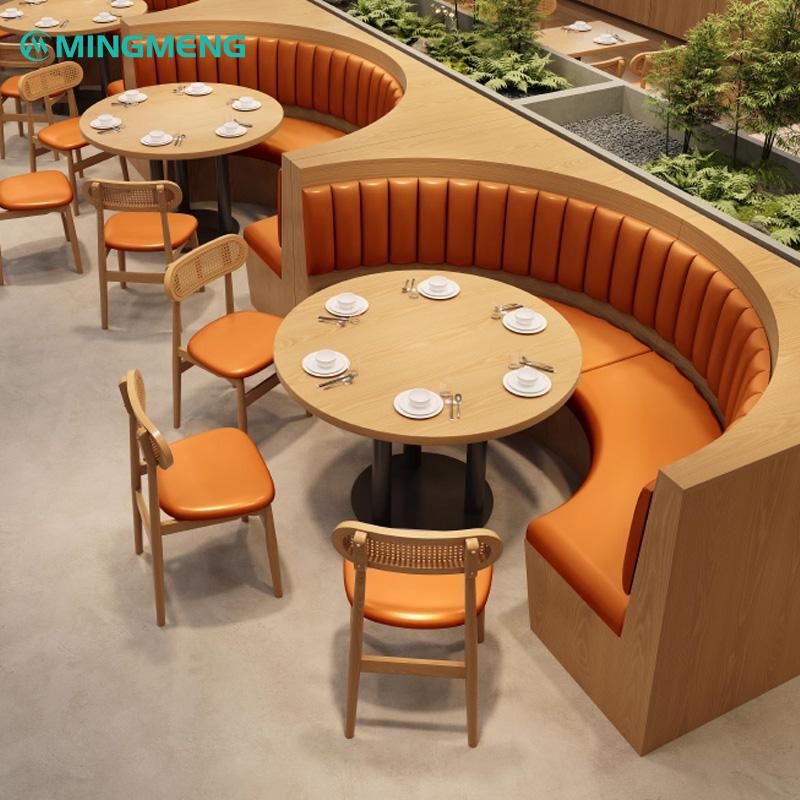
3. ຮ້ານອາຫານໂຄ້ງ
ບູດໂຄ້ງ create a softer, more premium dining atmosphere. They are often used in fine dining restaurants, lounges, hotel restaurants, and private dining corners.
The curved shape makes the seating feel more intimate. It also works well with round or oval tables.
ດີທີ່ສຸດສຳລັບ:
- ຮ້ານອາຫານອັນດີງາມ
- ຮ້ານອາຫານໂຮງແຮມ
- ພື້ນທີ່ lounge
- ສະຖານທີ່ຮັບປະທານອາຫານສ່ວນຕົວ
- ໂຄງການການຕ້ອນຮັບຟຸ່ມເຟືອຍ
4. ບູດຄວາມເປັນສ່ວນຕົວສູງກັບຄືນໄປບ່ອນ
High-back booths are designed to create a stronger sense of privacy. The taller backrest helps separate dining areas visually and can also soften surrounding noise.
This type is suitable for restaurants that want guests to stay longer, talk comfortably, and enjoy a more private dining experience.
ດີທີ່ສຸດສຳລັບ:
- ສະຖານທີ່ກິນອາຫານທີ່ດີ
- ຮ້ານອາຫານທຸລະກິດ
- ຫ້ອງຮັບແຂກຂອງໂຮງແຮມ
- ພື້ນທີ່ບູດສ່ວນຕົວ
- ສະພາບແວດລ້ອມການກິນອາຫານທີ່ງຽບສະຫງົບ

5. ບ່ອນນັ່ງບູດທີ່ທັນສະໄໝສໍາລັບຮ້ານອາຫານທີ່ມີອາຫານແຊບໆ
Fine dining booths usually focus on refined proportions, premium upholstery, elegant stitching, and comfortable seat depth. Velvet, leather-like upholstery, smooth wood veneer, and metal details are common choices.
The goal is not to make the booth look heavy, but to make it feel carefully designed and durable.
ດີທີ່ສຸດສຳລັບ:
- ຮ້ານອາຫານຊັ້ນສູງ
- ໂຮງແຮມບູຕິກ
- ບາເຫຼົ້າ
- ພື້ນທີ່ຕາຕະລາງຂອງພໍ່ຄົວ
- ຮ້ານອາຫານຊັ້ນນໍາ

6. ຕູ້ຄອນເທນເນີສໍາລັບຮ້ານອາຫານຂະຫນາດນ້ອຍ
ໂຕະກະທັດຮັດ ບ່ອນນັ່ງຖືກອອກແບບສໍາລັບພື້ນທີ່ຮັບປະທານອາຫານຂະຫນາດນ້ອຍ where the layout must be efficient. These booths often use thinner backs, straight bench lines, and simple base structures.
For small restaurants, the most important details are seat depth, table distance, aisle clearance, and easy cleaning.
ດີທີ່ສຸດສຳລັບ:
- ຄາເຟ່ຂະຫນາດນ້ອຍ
- ຮ້ານອາຫານໄວ
- ຮ້ານຊາຟອງ
- ພື້ນທີ່ນັ່ງ Bakery
- ຮ້ານອາຫານໃນຕົວເມືອງທີ່ຫນາແຫນ້ນ

7. Custom Restaurant ໂຊຟາ Booths
Custom sofa booths are suitable when the restaurant needs a stronger brand expression. Buyers can customize the size, back height, upholstery color, stitching style, base material, and shape.
For chain restaurants and project buyers, custom booths help keep the same brand image across multiple locations.
ດີທີ່ສຸດສຳລັບ:
- ຮ້ານອາຫານຕ່ອງໂສ້
- ຮ້ານອາຫານຍີ່ຫໍ້
- ໂຄງການອອກແບບການຄ້າ
- ສະຖານທີ່ກິນເຂົ້າໃນໂຮງແຮມ
- ຄໍາສັ່ງເຟີນີເຈີ OEM / ODM

ວິທີການເລືອກບູດຮ້ານອາຫານຮ່ວມສະໄຫມສໍາລັບໂຄງການຂອງທ່ານ
Choosing restaurant booths should start with the floor plan, not the product photo. A booth that looks good in a showroom may not work well if the seat depth, back height, table distance, or aisle clearance does not match the restaurant layout.
ກ່ອນທີ່ຈະວາງຄໍາສັ່ງຫຼາຍ, ພິຈາລະນາຈຸດເຫຼົ່ານີ້.
1. ຢືນຢັນການຈັດວາງບ່ອນນັ່ງ
ເລີ່ມຕົ້ນດ້ວຍການຕັດສິນໃຈວ່າຈະວາງບູດຢູ່ໃສ:
- ຕາມຝາ
- ຢູ່ໃຈກາງຂອງພື້ນທີ່ຮັບປະທານອາຫານ
- ໃນມຸມ
- ຮອບຖັນ
- ໃນເຂດອາຫານສ່ວນຕົວ
- ໃກ້ກັບປ່ອງຢ້ຽມ
- ຂ້າງແຖບຫຼືພື້ນທີ່ລໍຖ້າ
Wall-side areas usually work well with single booths. Open areas may use double-sided booths. Corners can use L-shaped booths or curved booths.
2. ເລືອກຂະຫນາດ Booth ທີ່ເຫມາະສົມ
ຂະຫນາດຂອງບູດຮ້ານອາຫານ ຄວນກົງກັບຄວາມສະດວກສະບາຍຂອງແຂກ ແລະປະສິດທິພາບການບໍລິການ.
ປັດໃຈທົ່ວໄປປະກອບມີ:
- ຄວາມສູງຂອງບ່ອນນັ່ງ
- ຄວາມເລິກຂອງບ່ອນນັ່ງ
- ຄວາມສູງຂອງຫລັງ
- ຄວາມກວ້າງຂອງບູດໂດຍລວມ
- ຂະຫນາດຕາຕະລາງ
- ໄລຍະຫ່າງລະຫວ່າງຂອບໂຕະ ແລະບ່ອນນັ່ງທາງຫຼັງ
- ການອະນາໄມທາງຍ່າງສຳລັບແຂກ ແລະເຊີບເວີ
For commercial projects, it is better to confirm booth dimensions with layout drawings before production. This reduces the risk of installation problems after delivery.
3. ຈັບຄູ່ວັດສະດຸທີ່ມີການຈະລາຈອນປະຈໍາວັນ
A high-traffic restaurant needs materials that are easy to clean and resistant to wear. A fine dining restaurant may focus more on texture, softness, and premium color matching.
ທາງເລືອກວັດສະດຸທົ່ວໄປປະກອບມີ:
- ຫນັງ PU ສໍາລັບການເຮັດຄວາມສະອາດງ່າຍ
- ຜ້າການຄ້າສໍາລັບການເບິ່ງ softer
- ໂຄງສ້າງຫນັງແບບ Nappa ສໍາລັບພື້ນທີ່ຮັບປະທານອາຫານຊັ້ນນໍາ
- ໂຄງສ້າງພາຍໃນຂອງໄມ້ແຂງຫຼືໄມ້ອັດ
- ສະແຕນເລດຫຼືພື້ນຖານໂລຫະສໍາລັບການສະຫນັບສະຫນູນທີ່ເຂັ້ມແຂງ
- ໂລຫະປະສົມຜົງເພື່ອຄວາມຫມັ້ນຄົງຂອງສີ
- ກະດານ veneer ໄມ້ສໍາລັບພາຍໃນທີ່ອົບອຸ່ນ
For restaurants with children, heavy customer flow, or quick table turnover, easy-clean upholstery and strong base structures are especially important.
4. ພິຈາລະນາທໍາຄວາມສະອາດແລະບໍາລຸງຮັກສາ
In real restaurant operations, cleaning is not a small detail. Booth bases that create dust traps can make daily maintenance more difficult.
ສໍາລັບການນໍາໃຊ້ທາງການຄ້າ, ພວກເຮົາແນະນໍາໃຫ້ພິຈາລະນາ:
- ພື້ນຖານທີ່ຍົກຂຶ້ນມາເພື່ອທໍາຄວາມສະອາດງ່າຍຂຶ້ນ
- ປິດຖານ plinth ເພື່ອຫຼຸດຜ່ອນການສະສົມຂອງຝຸ່ນ
- ພື້ນຜິວ upholstery ກ້ຽງ
- ພາກສ່ວນບ່ອນນັ່ງທີ່ຖອດອອກໄດ້ ຫຼືສາມາດສ້ອມແປງໄດ້
- ສີເຂັ້ມກວ່າສໍາລັບພື້ນທີ່ທີ່ມີການຈະລາຈອນສູງ
- ການຖັກແສ່ວທີ່ເຂັ້ມແຂງໃນພື້ນທີ່ທີ່ຖືກສໍາຜັດເລື້ອຍໆ
ບູດທີ່ສວຍງາມຄວນຈະຍັງປະຕິບັດໄດ້ຫຼັງຈາກປີຂອງການນໍາໃຊ້ປະຈໍາວັນ.
5. ການດຸ່ນດ່ຽງແບບຍີ່ຫໍ້ແລະຄວາມທົນທານ
Restaurant booths are part of the brand image. The color, shape, and material should match the dining concept.
ຕົວຢ່າງ:
| ປະເພດຮ້ານອາຫານ | ແບບບູດທີ່ແນະນໍາ | ທິດທາງວັດສະດຸ |
|---|---|---|
| ອາຫານແຊບ | ໂຄ້ງຫຼັງຄາບູດສູງ | ໂຄງສ້າງຫນັງ, velvet, ລາຍລະອຽດໂລຫະ |
| ຄາເຟ່ແບບສະບາຍໆ | ໂຕະຕ່ໍາຫຼືກະທັດຮັດ | ຜ້າ, ພື້ນຖານໄມ້, ສີທີ່ອົບອຸ່ນ |
| Bistro ອຸດສາຫະ ກຳ | ໂຕະຕັ້ງຊື່ | ກອບໂລຫະ, ໄມ້ທີ່ມີຄວາມຫຍຸ້ງຍາກ, upholstery ຊ້ໍາ |
| Minimalist ທີ່ທັນສະໄຫມ | ເບາະນັ່ງແບບບໍ່ມີຮອຍຕໍ່ | ຫນັງເປັນກາງ, stitching ເຊື່ອງໄວ້ |
| ຮ້ານອາຫານໂຮງແຮມ | ໂຕະໂຊຟາແບບກຳນົດເອງ | upholstery Premium, veneer ໄມ້, ຖານ elegant |
The best booth design should make the restaurant feel more complete, not more crowded.
ວັດສະດຸທີ່ຍືນຍົງແມ່ນບໍ່ມີທາງເລືອກອີກຕໍ່ໄປ
Sustainability has become a procurement factor, especially for hotel groups, international restaurant brands, and projects connected to green building requirements.
But sustainability should not be treated as decoration. A booth is more sustainable when it lasts longer, ships safely, and avoids early replacement.
ທີ່ MingMeng Furniture, ຜູ້ຊື້ສາມາດສົນທະນາທາງເລືອກວັດສະດຸເຊັ່ນ:
- ທາງເລືອກໄມ້ທີ່ໄດ້ຮັບການຮັບຮອງຈາກ FSC ຫຼືມີຄວາມຮັບຜິດຊອບ
- ຕົວເລືອກແຜງການປ່ອຍອາຍພິດຕໍ່າຕາມທີ່ຕ້ອງການ
- ໂຄງສ້າງພື້ນຖານໂລຫະທີ່ເອົາມາໃຊ້ຄືນໄດ້
- ເຫຼັກເຄືອບຜົງຫຼືກອບອາລູມິນຽມ
- upholstery ທົນທານທີ່ຫຼຸດຜ່ອນຄວາມຖີ່ຂອງການທົດແທນ
- ການເລືອກໂຟມແລະຜ້າໂດຍອີງໃສ່ຄວາມຕ້ອງການຂອງການປະຕິບັດຕາມໂຄງການ
ISO 14001 is often used as a reference for environmental management systems, while ISO 9001 is commonly used for quality management. For B2B furniture buyers, these standards do not replace product testing, but they help evaluate whether a supplier has a structured production and management process.At Mingmeng Furniture, material selection can be adjusted based on the buyer’s project needs, market requirements, budget, and target restaurant style.
Layout ແລະ Flow: ພະລັງງານທີ່ເຊື່ອງໄວ້ຂອງ Booth Geometry
A ຮູບແບບຮ້ານອາຫານ ເປັນທັງບັນຫາການອອກແບບ ແລະບັນຫາການເຮັດວຽກ.
Proper booth placement affects how guests sit, how servers move, how long cleaning takes, and whether the dining room feels calm or crowded. Good booth geometry can make a compact restaurant feel organized. Poor geometry can make a large restaurant feel awkward.
ກ່ອນທີ່ຈະສັ່ງໃນບູດ, ຢືນຢັນ:
- ເຂດບູດຂ້າງຝາ
- ໂອກາດບ່ອນນັ່ງມຸມ
- ຕຳແໜ່ງ booth ແຖວກາງ
- Aisle clearance
- ໄລຍະຫ່າງລະຫວ່າງຂອບຕາຕະລາງ ແລະ booth ກັບຄືນໄປບ່ອນ
- ການເຂົ້າເຖິງລໍ້ຍູ້
- ເສັ້ນທາງການບໍລິການ
- ການເຂົ້າເຖິງທໍາຄວາມສະອາດ
- ເສັ້ນທາງການເຄື່ອນໄຫວສຸກເສີນ
L-shaped booths work well in corners. Double-sided booths are efficient in central areas. Curved booths create a visual highlight in premium spaces. High-back booths define privacy zones without building permanent walls.
The best floor plan is not the one that fits the most seats on paper. It is the one that still works during Friday night service.
ສະດວກສະບາຍພົບກັບສຽງດັງ
ຄວາມສະດວກສະບາຍບໍ່ພຽງແຕ່ມີຄວາມອ່ອນໂຍນເທົ່ານັ້ນ. ມັນເປັນອັດຕາສ່ວນ.
A booth with too much foam can feel unstable. A booth with too little foam feels hard and cheap. A backrest with the wrong angle may look fine in photos but feel uncomfortable after 20 minutes.
ສໍາລັບບ່ອນນັ່ງບູດທີ່ທັນສະໄຫມ, ພວກເຮົາມັກຈະທົບທວນຄືນ:
- ຄວາມເລິກຂອງບ່ອນນັ່ງ
- ມຸມຫລັງ
- ຄວາມສູງຂອງຫລັງ
- ຄວາມຫນາແຫນ້ນຂອງໂຟມ
- ໂຟມຟື້ນຕົວ
- ຂອບດ້ານຫນ້າສະຫນັບສະຫນູນ
- ຄວາມກົດດັນຂອງ upholstery
- ຕໍາແໜ່ງການຫຍິບ
- silhouette ergonomic
Upholstered booths can also help soften the dining atmosphere. In busy restaurants, fabric and padded surfaces reduce some reflected sound and make the space feel warmer.
This does not mean every booth is an acoustic panel. It means material selection and back height can influence how the dining area feels.For cafés, hotel restaurants, and fine dining spaces, comfort should be treated as part of the business strategy, not just a design detail.
ບູດຮ້ານອາຫານຕາມໃຈມັກຈາກ MingMeng Furniture
With over 10 years of experience and more than 1,200 commercial furniture projects delivered, ເຟີນິເຈີ MingMeng ສະຫນັບສະຫນູນການຜະລິດ booth ຮ້ານອາຫານສໍາລັບຮ້ານອາຫານ, ຮ້ານ, ໂຮງແຮມ, ໂຮງອາຫານ, ບາ, ແລະໂຄງການອາຫານການຄ້າທົ່ວໂລກ.
We understand that B2B buyers do not only need attractive product photos. They need clear customization options, stable production, safe packaging, and reliable communication before bulk orders.
ທາງເລືອກບູດແບບກຳນົດເອງຂອງພວກເຮົາລວມມີ:
- ຂະໜາດຂອງບູດແບບກຳນົດເອງ ແລະການຕັ້ງຄ່າຕາມການຈັດວາງ
- ດ່ຽວ, ສອງດ້ານ, ຮູບ L, ຮູບ U, ແລະ ບູດໂຄ້ງ ໂຄງສ້າງ
- ຄວາມສູງຂອງຫຼັງ ແລະ ຄວາມເລິກຂອງບ່ອນນັ່ງທີ່ກຳນົດເອງ
- ຫນັງ PU, ຜ້າ, velvet, ແລະທາງເລືອກໃນການ upholstery ຫນັງ
- ພື້ນຖານໄມ້, ພື້ນຖານໂລຫະ, ພື້ນຖານສະແຕນເລດ, ຫຼືພື້ນຖານ upholstered ຢ່າງເຕັມສ່ວນ
- ຕົວເລືອກໂຟມທີ່ມີຄວາມຫນາແຫນ້ນສູງ
- ການຕົບແຕ່ງແບບກຳນົດເອງ ແລະ ການຈັບຄູ່ສີ
- ໂລໂກ້ ຫຼື ການປັບແຕ່ງແບບແບຣນສຳລັບລະບົບຕ່ອງໂສ້ຮ້ານ ແລະຄໍາສັ່ງໂຄງການ
For project buyers, we support layout-based customization. You can provide restaurant drawings, reference images, size requirements, and preferred materials. Our team will help match the booth structure to your commercial dining space and confirm dimensions before production begins.
ຄໍາສັ່ງຈໍານວນຫລາຍແລະການຫຸ້ມຫໍ່ສໍາລັບໂຄງການບູດຮ້ານອາຫານ
Restaurant booths are large-volume commercial furniture products, so packaging and delivery matter.
For international orders, Mingmeng Furniture focuses on protective packaging suitable for bulk shipment. Depending on the product structure and project requirements, booths can be packed with foam protection, corner protection, carton packaging, wooden frames, or reinforced wooden crates.
ສໍາລັບຜູ້ຊື້ໂຄງການ, ພວກເຮົາແນະນໍາໃຫ້ຢືນຢັນດັ່ງຕໍ່ໄປນີ້ກ່ອນທີ່ຈະວາງຄໍາສັ່ງ:
- ຂະໜາດຂອງບູດສຸດທ້າຍ
- ວັດສະດຸ upholstery ແລະສີ
- ໂຄງສ້າງບ່ອນນັ່ງແລະຫລັງ
- ວັດສະດຸພື້ນຖານ
- ປະລິມານ ແລະແຜນຜັງ
- ວິທີການຫຸ້ມຫໍ່
- ປະລິມານການໂຫຼດ
- ເວລານໍາ
- ຄວາມຕ້ອງການການຕິດຕັ້ງ
- ຄວາມຕ້ອງການອຸປະກອນການທົດແທນຫຼື spare
Good packaging reduces the risk of damage during international freight. Clear production details also reduce communication costs before delivery.
FAQ ກ່ຽວກັບການອອກແບບບູດຮ້ານອາຫານທີ່ທັນສະໄຫມ
Q1: ບູດຮ້ານອາຫານທີ່ທັນສະໄຫມໃຊ້ເວລາດົນປານໃດ?
With proper materials and maintenance, 8–10 years. Metal frames extend up to 15 years.
Q2: ບູດທີ່ເປັນມິດກັບສິ່ງແວດລ້ອມມີລາຄາແພງກວ່າບໍ?
Initially yes (≈8–12% higher), but total cost of ownership is lower due to durability and fewer replacements.
Q3: ຂ້ອຍຄວນກວດສອບການຢັ້ງຢືນອັນໃດກ່ອນທີ່ຈະຊື້?
Look for ISO 9001 (quality), ISO 14001 (environment), and ASTM durability tests for foam and coating.
Q4: ບູດສາມາດຊ່ວຍຕອບສະຫນອງການເຂົ້າເຖິງ ADA ໄດ້ແນວໃດ?
ໃຊ້ການອອກແບບ modular ເພື່ອປັບຄວາມເລິກຂອງບ່ອນນັ່ງແລະຮັກສາເສັ້ນທາງທີ່ຊັດເຈນ.
Q5: ເຄື່ອງເຟີນີເຈີ MingMeng ສາມາດຮອງຮັບຄໍາສັ່ງຂອງບູດຮ້ານອາຫານຈໍານວນຫລາຍໄດ້ບໍ?
Yes. Mingmeng Furniture supports bulk custom restaurant booth orders for restaurants, cafés, hotels, canteens, hospitality projects, and chain-store furniture programs.
ຕາຕະລາງສະຫຼຸບ — 2026 ບູລິມະສິດການອອກແບບ
| ປະເພດ | ແນວໂນ້ມປີ 2020 | 2026 ຈຸດສຸມ |
|---|---|---|
| ເລຂາຄະນິດ | ມຸມຊື່ | ອ່ອນ, ເສັ້ນໂຄ້ງອິນຊີ |
| ວັດສະດຸ | ໜັງ PU | ໜັງ ແລະຜ້າທີ່ໄດ້ຮັບການຢັ້ງຢືນແບບປະຢັດ |
| ແຜນຜັງ | ແຜນຊັ້ນທີ່ຫນາແຫນ້ນ | ການແບ່ງເຂດທີ່ສະດວກສະບາຍ, ມີຄວາມຍືດຫຍຸ່ນ |
| ເທັກໂນໂລຢີ | ບໍ່ມີ | ການສາກໄຟໃນຕົວ ແລະ IoT |
| ຄວາມຍືນຍົງ | ທາງເລືອກ | ບັງຄັບ (ໄດ້ຮັບການຮັບຮອງ ISO) |
ຄວາມຄິດສຸດທ້າຍ: ສິ່ງທີ່ເຮັດໃຫ້ບູດຮ້ານອາຫານທີ່ທັນສະໄຫມເຮັດວຽກ?
ການອອກແບບບູດຮ້ານອາຫານທີ່ທັນສະໄຫມ ໃນປີ 2026 ແມ່ນກ່ຽວກັບຫຼາຍກວ່າຮູບລັກສະນະ — ມັນເປັນປະສົບການ, ການໄຫຼເຂົ້າ, ແລະຄວາມຮັບຜິດຊອບ.
When aesthetics meet engineering and sustainability, your space not only looks elegant but also feels timeless.
ຕິດຕໍ່ MingMeng Furniture ສໍາລັບ OEM ແລະບ່ອນນັ່ງບູດ custom crafted ກັບ ISO ແລະ ASTM ມາດຕະຖານສາກົນ.
ຫມາຍເຫດອ້າງອີງສໍາລັບຜູ້ຊື້
- ANSI/BIFMA X5.4-2020(R2025): Public and Lounge Seating Standard, used as a reference for public and shared indoor seating performance.
- California Technical Bulletin 117-2013: Smolder resistance methods for upholstered furniture materials.
- BS 5852:2006: Test method for ignitability of upholstered seating by smoldering and flaming ignition sources.
- ISO 12947: ວິທີການ Martindale ສໍາລັບກໍານົດຄວາມທົນທານຕໍ່ການຂັດຂອງຜ້າແພ.