

 English
 中文
 日本語
 한국어
 العربية
 Русский
 Português
 Türkçe
 हिन्दी
 Tiếng Việt
 ไทย
 Indonesia
 Melayu
 ខ្មែរ
 ລາວ
 မြန်မာ
 Afrikaans
 Hausa
 Igbo
 Sesotho
 isiXhosa
 Yorùbá
 isiZulu
The global hospitality sector is hitting a critical inflection point heading into the 2026 fiscal horizon. For operators in the premium Asian dining segment—especially those scaling modern Chinese culinary concepts—sourcing the right modern Chinese restaurant furniture is no longer just about aesthetics; it is a fundamental driver of restaurant profitability. Global restaurant sales are projected to cross the 1.5 trillion mark by 2026, but that revenue is heavily weighted toward brands that transform a simple meal into an immersive cultural destination.
We are seeing a brutal bifurcation in the market. Restaurants stuck with dated, stereotypical decor—think loud red lanterns, plastic gold dragons, and cramped layouts—are watching their margins shrink and table turnover stall. On the flip side, brands investing in high-fidelity modern Chinese restaurant furniture, smart space planning, and commercial-grade engineering are securing 15% to 30% revenue lifts post-renovation.
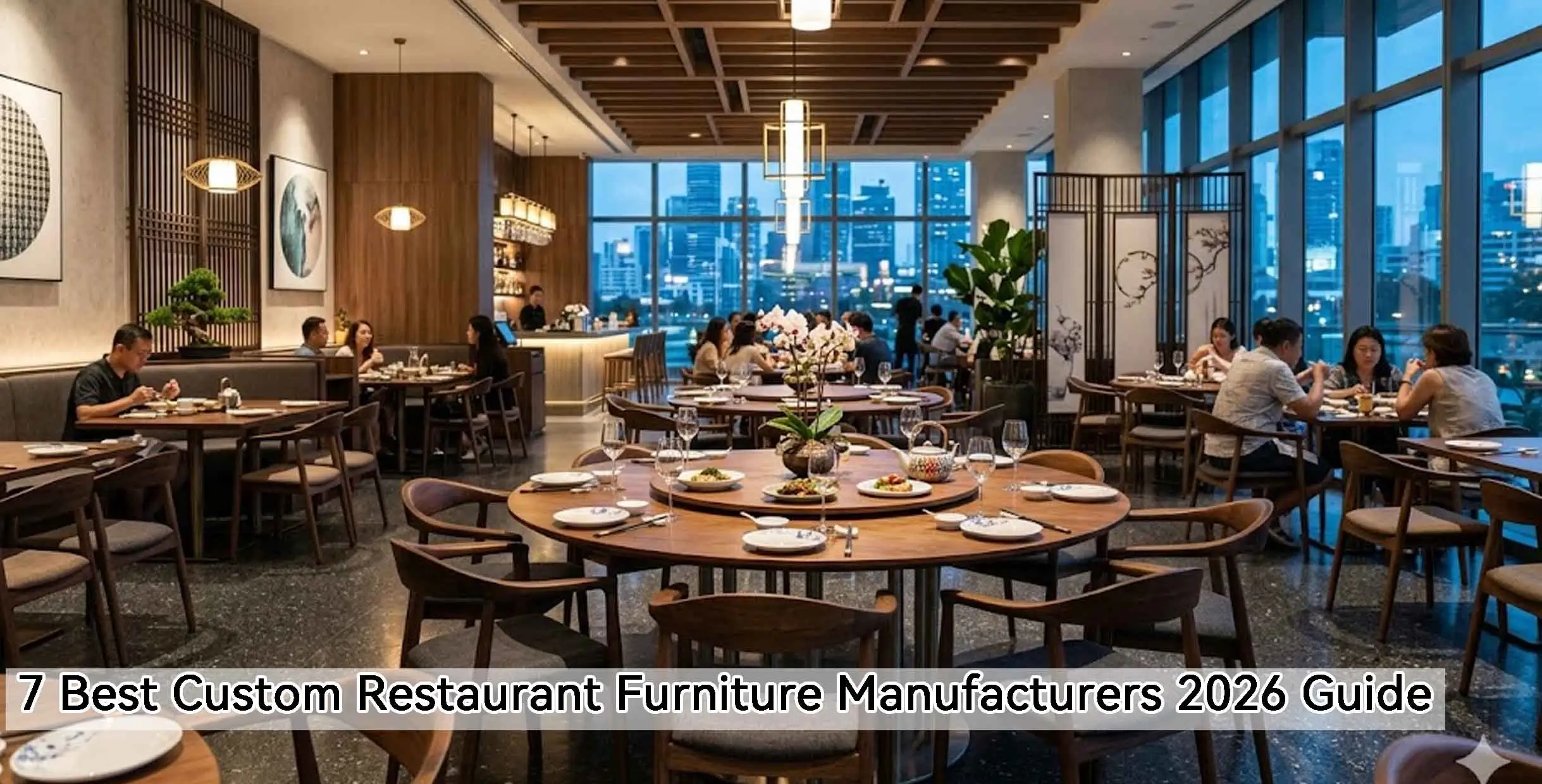
នៅ គ្រឿងសង្ហារឹម MingMeng, we live on the factory floor and manage large-scale commercial hospitality rollouts. From our production lines to global project installations, we know that furniture isn’t a decorative afterthought; it is a hard-working capital investment. Here is our pragmatic, BS-free procurement guide for navigating the 2026 market.
1. Market Evolution and the Reality of ROI
1.1 The Shift to “Neo-Chinese Luxury”
For decades, Chinese restaurant design in Western and premium metropolitan markets was artificially boxed into a “value-driven” aesthetic: tightly packed tables, cheap laminate surfaces, and literal cultural tropes. The 2026 market marks the definitive maturity of Neo-Chinese Luxury.
A new generation of restaurateurs is reclaiming the cultural narrative. They are blending traditional Eastern design philosophies—symmetry, balance, and natural elements—with the global “Quiet Luxury” movement. This means value is communicated through material authenticity rather than flashy ornamentation.
In our factory, we are processing less veneer and cheap composite boards and cutting significantly more FAS-grade imported North American Black Walnut, premium White Ash, genuine silk wallcoverings, and high-density sintered stone. High-end Chinese dining is now competing directly with French and Italian fine dining for prestige and high check averages. Your furniture choices are the physical justification for that premium pricing.
1.2 The Numbers Behind the Layout
Custom commercial furniture requires serious upfront capital, but the financial return follows a highly predictable model when executed properly:
- Check Average Expansion: Guests spend more when they are comfortable. Ergonomically sound seating cuts down on physical fatigue, directly extending dwell time and driving high-margin dessert, cocktail, and tea sales.
- Capacity and Flow Optimization: Residential or off-the-shelf furniture is incredibly inefficient. By engineering custom, slim-profile banquettes and modular booth seating, we routinely help restaurants increase their seat count by 10% to 15% without making guests feel like they are packed into an economy flight.
2. Engineering Realities vs. Aesthetic Traps
Gluing a generic bamboo pattern onto a flimsy chair does not make it “modern Chinese design.” It makes it a structural liability. The real challenge is marrying the minimalist, clean lines of traditional Eastern architecture with the punishing, high-traffic reality of a busy commercial dining room.
2.1 Translating “Hui-Style” Minimalism Without Structural Collapse
Current interior trends lean heavily into the airy, unburdened lines of Hui-style architecture. Design firms try to achieve this look by simply thinning out the timber legs and frames of dining chairs. In a commercial environment, this is a recipe for disaster; it fatally compromises the load-bearing joints.
At Mingmeng Furniture, we solve this on the engineering floor. We insist on heavy-duty, traditional double-blind mortise-and-tenon joinery, reinforced with internal structural corner blocks and industrial-grade steel-on-steel fixings.
Mingmeng Engineering Standard:
Every slim-profile chair we build undergoes brutal internal stress testing before it leaves our facility. Our baseline requirement: the frame must withstand our internal 100,000-cycle dynamic drop and impact test at a 300-pound load without a millimeter of joint separation. If a factory cannot show you rigorous internal testing data for lightweight frames, you are buying an operational liability.
2.2 The Upholstery Trap: Fire Codes and the Red Oil Nightmare
Commercial Asian dining involves heavy steam, airborne oils, high heat, and fast turnarounds. Specifying a beautiful, highly porous linen or basic cotton fabric to match a “Zen” vibe is a rookie procurement mistake. Those custom booths will look like a stained mess within a month, if they even pass your local fire inspection.
We enforce two non-negotiable standards for our hospitality textiles:
- Fire Compliance (CAL 117): Every cubic inch of high-density foam we inject into our seating (with a minimum density of 45 kg/m³) strictly complies with the CAL 117-2013 flammability standard for commercial venues.
- Abrasion and Wipeability: We do not approve fabrics that fall below a 50,000 Martindale rub count. More importantly, we treat our textiles with a nano-tech fluorocarbon stain-resistant coating, or we utilize high-spec PU leathers. If a bowl of chili oil or dark soy sauce spills on a Mingmeng booth, a server can wipe it completely clean with a damp cloth and mild detergent. No ghosting, no permanent stains.
- The Anti-Crumb Crumb-Gap: We engineer our banquette seats with a subtle, intentional pitch and a floating crumb gap between the seat cushion and backrest. This prevents rice, sesame seeds, and debris from getting trapped in hidden seams, making nightly deep-cleans incredibly fast and preventing mold or odor issues.
If you are currently evaluating global production capabilities for your next brand rollout, you can check out our comprehensive industry benchmark on the 7 Best Custom Restaurant Furniture Manufacturers (2026 Guide) to see how factory certifications and heavy-duty testing standards stack up.
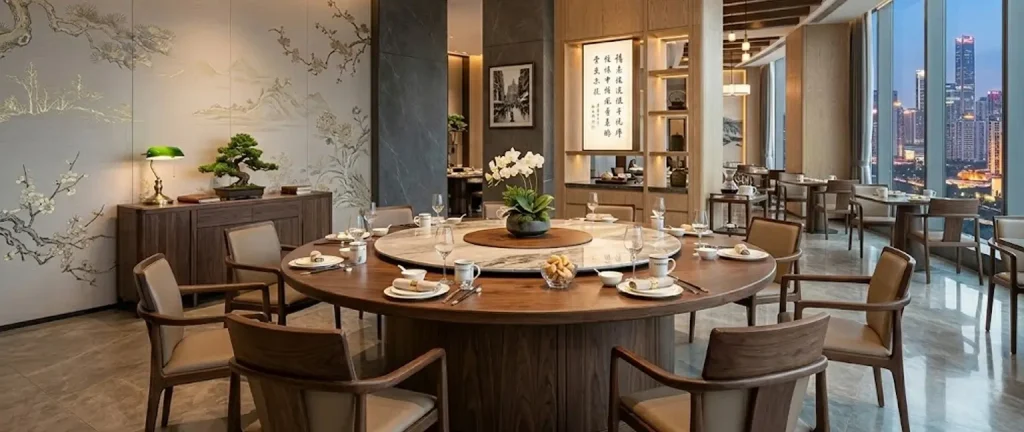
3. Mainstream Chinese Restaurant Design Frameworks for 2026
When executing a rollout, selecting durable modern Chinese restaurant furniture requires looking past the surface finish and understanding how specific styles integrate with your operational traffic.
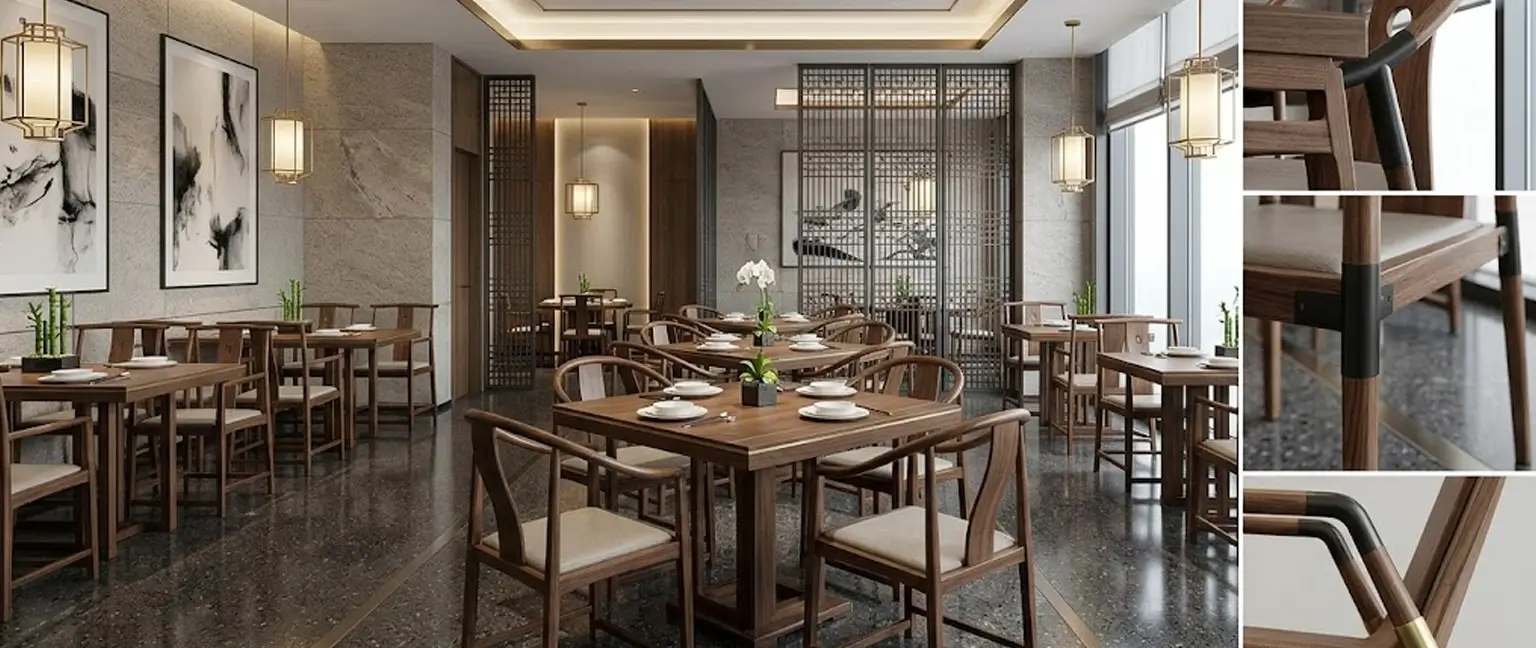
Trend 1: The Neo-Chinese Renaissance
A sophisticated mix of Ming Dynasty silhouettes and clean, modern metal details. This is highly favored by upscale business-luncheon venues and contemporary private kitchens.
- Material Specifications: Solid North American Ash or Walnut frames (kiln-dried to a strict 8% to 12% moisture content to prevent cracking across different climates), reinforced at critical stress points with matte black carbon steel or brushed brass accents. Chairs feature a strict 102° to 105° lumbar recline pitch—the sweet spot that offers excellent ergonomic support while keeping the dining rhythm fast enough for efficient table turns.
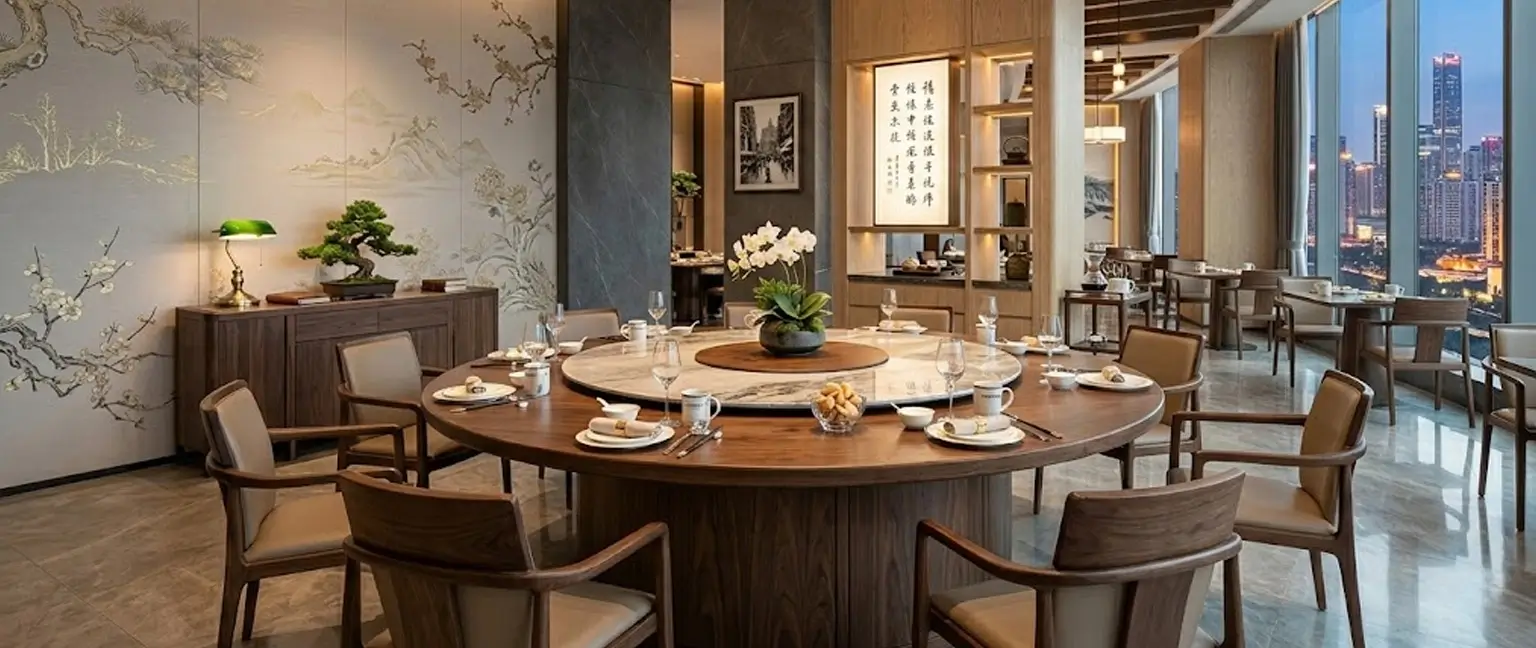
Trend 2: The VIP Private Dining Room (PDR 2.0)
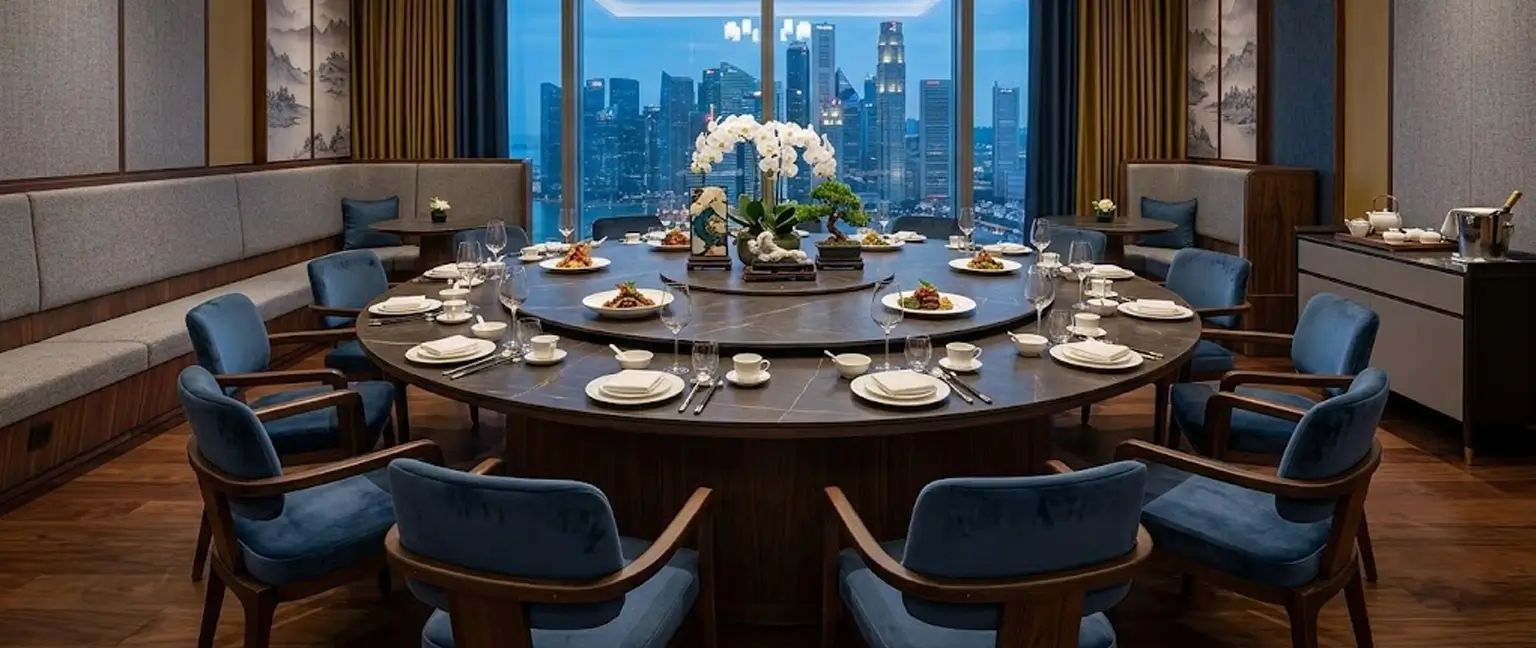
In high-end Chinese dining, the private room is the ultimate revenue engine. These rooms cater to corporate deal-making and multi-generational family gatherings, frequently pulling in massive minimum spends.
- Material Specifications: Acoustic management is key here. We build sound-dampening acoustic layers directly into the bases of our modular PDR banquettes and use heavy, upholstered backing. The centerpiece is always the massive solid wood round table. We integrate a 12mm ultra-slim, high-density sintered stone top (scratch-proof, oil-resistant, and heat-resistant up to 1200°C) with a flush, completely hidden motorized Lazy Susan. The hardware is concealed within the table core and operates at a whisper-silent decibel level under a 150 kg load.
Trend 3: Zen Essentialism and Wabi-Sabi
Targeting wellness-driven menus, high-end tea pairings, and “slow dining” fusion concepts. This style relies heavily on natural textures like rattan and bamboo.
- Material Specifications: Authentic natural rattan splinters, cracks under dry commercial HVAC air, and catches on guests’ fine clothing. We replace this liability with commercial-grade, high-density synthetic PE resin rattan. It is hand-woven over double-powder-coated, reinforced aluminum frames. It looks and feels identical to organic vine, but it can be aggressively sanitized and sprayed down without ever losing its tension or fraying.
4. Logistics, Freight, and On-Site Execution
4.1 Avoiding the Sea Freight “Volume Bomb”: KD Engineering
Traditional Chinese furniture is notorious for being shipped as massive, fully assembled blocks. Trying to ship a three-meter custom booth or a heavy wooden room divider fully built across an ocean will completely destroy your CapEx budget due to volumetric freight penalties.
Our engineering team addresses this during the CAD shop-drawing phase by designing items for KD (Knock-Down) structural assembly. Using high-tensile steel three-in-one connector cams and internal locking joints, we ensure a massive booth can flat-pack into thin, dense crates.
This engineering detail slashes ocean and inland logistics costs by up to 40%. Furthermore, it guarantees that large seating modules can actually fit through standard mall service elevators and tight corridor corners during midnight handovers. Two workers can assemble a full module on-site in under 15 minutes using basic tools.
4.2 The “One-Stop Factory” Finish Control
The biggest headache in fragmented sourcing—buying chairs from Factory A, tables from Factory B, and lounge seating from Factory C—is the inevitable finish mismatch. You will end up with three completely different versions of “Walnut” or “Bronze” that look messy and cheap under restaurant lighting.
Consolidating production under our single vertical manufacturing line ensures absolute finish synchronization. Every piece of wood goes through the same automated coating line using identical batches of eco-friendly, water-based polyurethane (PU) topcoats. Your tones match, your metal hardware coordinates perfectly, and your entire project arrives consolidated into a single Full Container Load (FCL), eliminating split-shipment delays and port coordination chaos.
5. សំណួរគេសួរញឹកញាប់អំពីប្រភព
Q1: What happens when dark soy sauce or chili oil sits on a light-colored booth leather overnight? Will it ruin the seat?
គ្រឿងសង្ហារិម MingMeng៖ Standard upholstery leather will absorb the pigment and stain permanently. We construct our restaurant booth seating using specialized three-proof (waterproof, oil-proof, stain-proof) fluorocarbon-treated tech-fabrics or heavy commercial PU. In our factory QC testing, we let dark soy sauce and szechuan chili oil sit on the material for 24 hours. It wipes clean with standard commercial leather cleaner and a microfiber cloth, leaving zero ring marks or discoloration.
Q2: We’ve had solid wood tabletops warp and split in the winter due to indoor heating. How do you prevent this?
គ្រឿងសង្ហារិម MingMeng៖ Wood splits because its internal moisture doesn’t match the environment. We run all our raw timber through an extended kiln-drying and conditioning process to lock the moisture level at a stable 9%. To completely neutralize natural wood movement, we rout heavy-duty anti-warping steel channels (C-channels) directly into the underside of every large wood tabletop. The wood is held flat by structural steel, ensuring it stays perfectly level whether your restaurant is in a humid coastal city or a dry, heated winter climate.
Q3: Do Knock-Down (KD) flat-pack chairs and booths loosen up, wobble, or squeak after a few months of heavy use?
គ្រឿងសង្ហារិម MingMeng៖ Cheap residential flat-packs wobble because wood screws are driven directly into soft particleboard; once the wood strips, the joint is dead. Our commercial KD furniture uses hardened steel insert nuts pre-anchored deep into solid hardwood or metal framing. Every connection is a steel-to-steel mechanical lock. Even after years of commercial cleaning, moving, and heavy guest impacts, the joints remain completely rigid and completely silent.
6. 2026 Hospitality Furniture Sourcing Matrix
| Furniture Line / Category | Target Space & Audience | Core Financial ROI Driver | Factory Engineering Specification | កម្រិត CapEx |
| Neo-Chinese FAS Solid Wood (Dining Chairs / Tables) | Fine Dining, Premium Hotpot, Business Banquets | Drives higher check averages; positions the brand alongside premium western concepts. | Double mortise-and-tenon construction; internal 100k-cycle 300 lb dynamic load drop test approved. | ខ្ពស់។ |
| VIP PDR 2.0 Modular Seating (Motorized Tables / High-Back Soft seating) | Corporate Events, Premium Family Rooms | Unlocks high minimum-spend guarantees and premium beverage sales. | 12mm stain-proof sintered stone; hidden silent motorized Lazy Susan (150 kg capacity); CAL 117 acoustic foam. | មធ្យម-ខ្ពស់។ |
| Zen / Wabi-Sabi Synthetic Rattan (Lounge Chairs / Accent Benches) | Tea Lounges, Asian Fusion, Casual “Slow Dining” | Cultivates social media check-ins; extends afternoon dwell times for high-margin tea/snack sets. | Commercial-grade UV-resistant synthetic PE rattan; double-powder-coated reinforced aluminum inner framing. | មធ្យម |
| Custom High-Performance Banquettes (Dim Sum Booths / Perimeter Seating) | Modern Dim Sum Outlets, Gastropubs, High-Volume Chains | Maximizes floor plan yield (10-15% seat count increase); rapid table turns via fast-clean engineering. | 50k+ Martindale rub count fabric; integrated anti-crumb drop gap; fully flat-packed KD freight structure (saves 40% shipping volume). | មធ្យម |
បន្ទាត់ខាងក្រោម
Building a highly profitable modern Chinese dining space requires ruthless pragmatism. Let your design firm create stunning visual concepts, but hold your manufacturing standards to a strict engineering reality.
Insist on looking at internal structural stress metrics, audit your factory’s fire compliance documentation, and force your suppliers to design smart, KD flat-pack freight setups. A restaurant’s aesthetic only matters if the underlying build is engineered to protect your capital, cut down on cleaning labor, and withstand the daily grind of a busy dining room. At Mingmeng Furniture, we build that exact peace of mind straight into your floor plan.


