

 English
 中文
 日本語
 한국어
 العربية
 Русский
 Português
 Türkçe
 हिन्दी
 Tiếng Việt
 ไทย
 Indonesia
 Melayu
 ខ្មែរ
 ລາວ
 မြန်မာ
 Afrikaans
 Hausa
 Igbo
 Sesotho
 isiXhosa
 Yorùbá
 isiZulu
The wrong dining booth for restaurants costs twice. Once when you buy it, again when you replace it eighteen months later because the frame shook loose or the foam flattened under daily service.
This guide cuts through the catalog noise. It covers seven commercial dining booth types — what each one is actually built for, what to specify before you commit to a bulk order, and where the hidden costs usually appear. If you are sourcing for a restaurant project, a hotel rollout, or a chain program, start here.
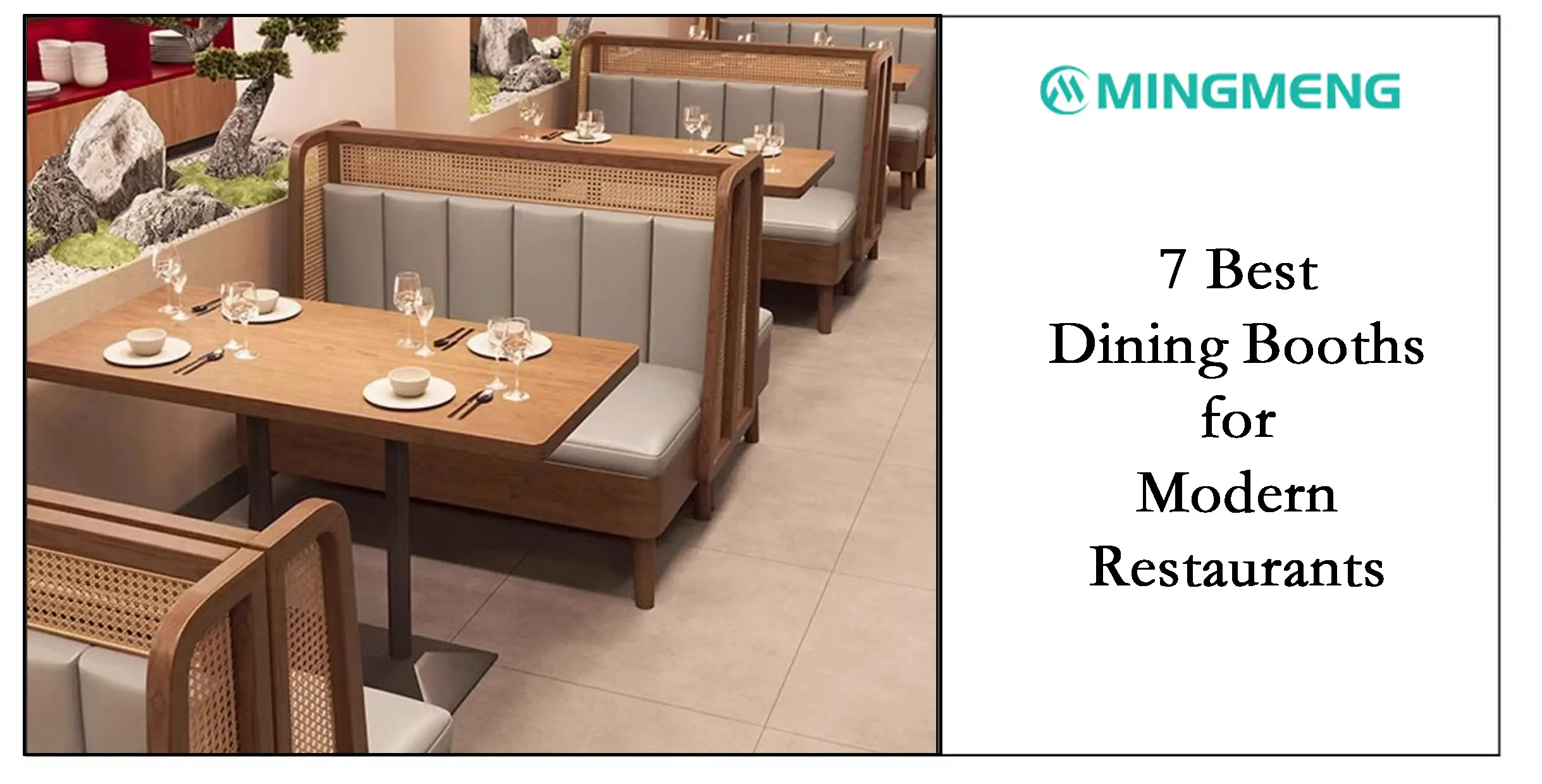
How to Use This Guide
Booth selection should follow three inputs in order: floor plan dimensions, daily customer volume, and brand specification. Product photos come last. A booth that photographs well but ships with a weak center joint or inadequate foam density will fail your operation, not your Instagram feed.
According to ANSI/BIFMA X5.4-2020(R2025),1 the performance standard for public and lounge seating, commercial seating used in shared dining environments must meet specific load, durability, and stability requirements. Treat this standard as your baseline, not a bonus feature, when evaluating any supplier’s production claims.
1. Single Wall Booths — Built for Small Restaurants and High-Turnover Cafés
Single wall booths seat guests along one side, fixed against the wall. Simple in concept. Harder to get right than most buyers expect.
The critical specification is seat depth. Too shallow — under 400mm — and guests sit forward, which reads as uncomfortable even before the food arrives. Too deep — over 500mm — and smaller guests lose lumbar support entirely. For cafés and fast-casual environments, 420–460mm is the commercial standard. Back height typically sits between 750–850mm, enough to define the zone without visually closing the room.
Base structure matters here more than most product pages will tell you. A closed plinth base traps food debris in high-turnover environments. A raised metal base at 100–150mm clearance gives cleaning staff actual access. Specify it before production, not after installation.
ល្អបំផុតសម្រាប់៖ small restaurants, cafés, canteens, bubble tea shops, fast-casual dining
Mingmeng Furniture produces single wall booths to floor plan specifications. Seat depth, back height, upholstery, and base structure are confirmed with layout drawings before the bulk run begins. ទាក់ទងមកយើងខ្ញុំ to start with dimensions.
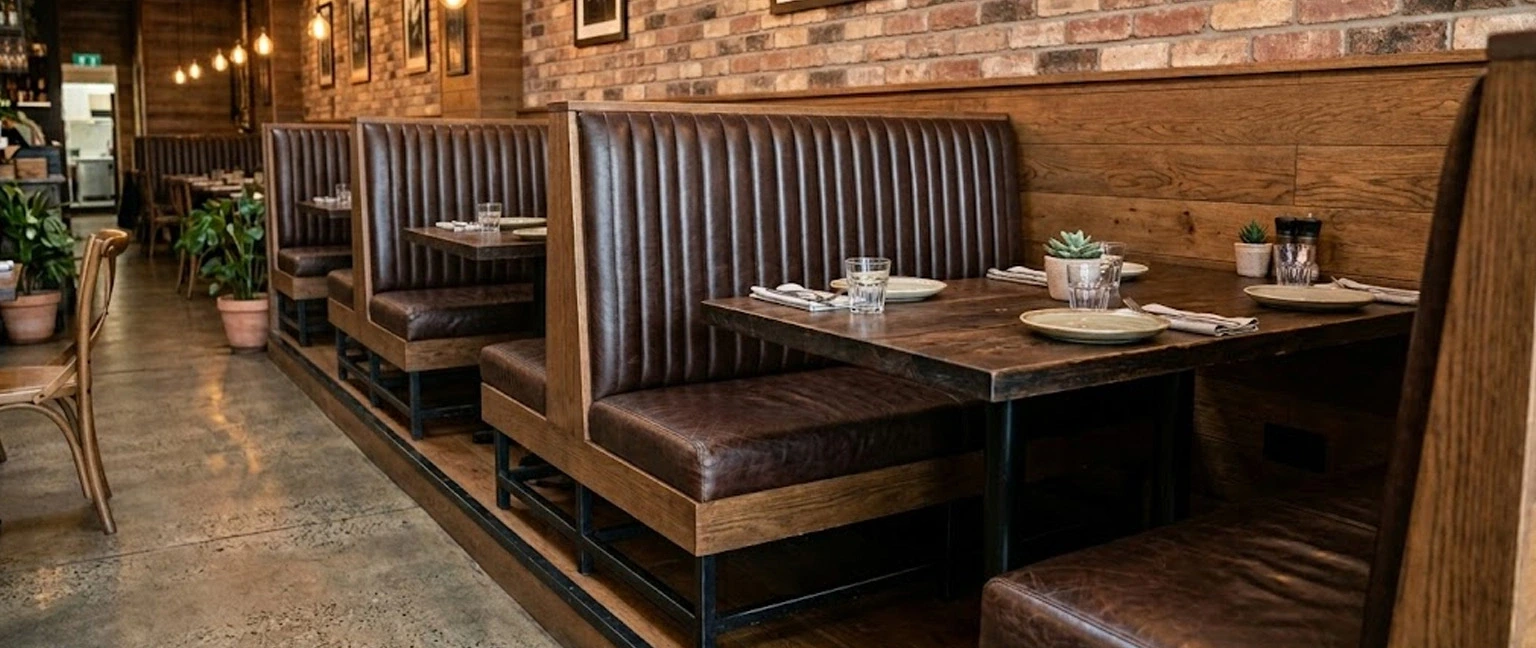
2. Double-Sided Booths — The Workhorse of Commercial Canteens and Diners
One shared backrest. Two dining zones. Double-sided booths are the most space-efficient configuration for open dining floors — used across hotel breakfast areas, commercial canteens, and family restaurant chains for exactly that reason.
What most buyers underestimate is the structural demand on the center section. A 2.4-meter double-sided booth supports simultaneous load from both sides. If the internal frame uses standard residential joint construction — no corner blocking, no metal reinforcement at load-bearing points — the center shakes within a season. Tenon-and-mortise joinery or welded steel reinforcement at the backrest-to-seat connection is the contract-grade standard, not an upgrade.
Foam density also behaves differently in double-sided configurations. The back foam on both sides compresses from opposite directions. Specify minimum 38kg/m³ seat foam and 28kg/m³ back foam for commercial use. Below those numbers, you are buying a replacement cycle, not furniture.
ល្អបំផុតសម្រាប់៖ diners, family restaurants, hotel breakfast rooms, canteens, chain restaurants
Mingmeng Furniture supplies double-sided booths for canteen and chain restaurant programs, including commercial canteen chairs suited to high-volume dining environments. View canteen seating options or request a project quote with layout input.
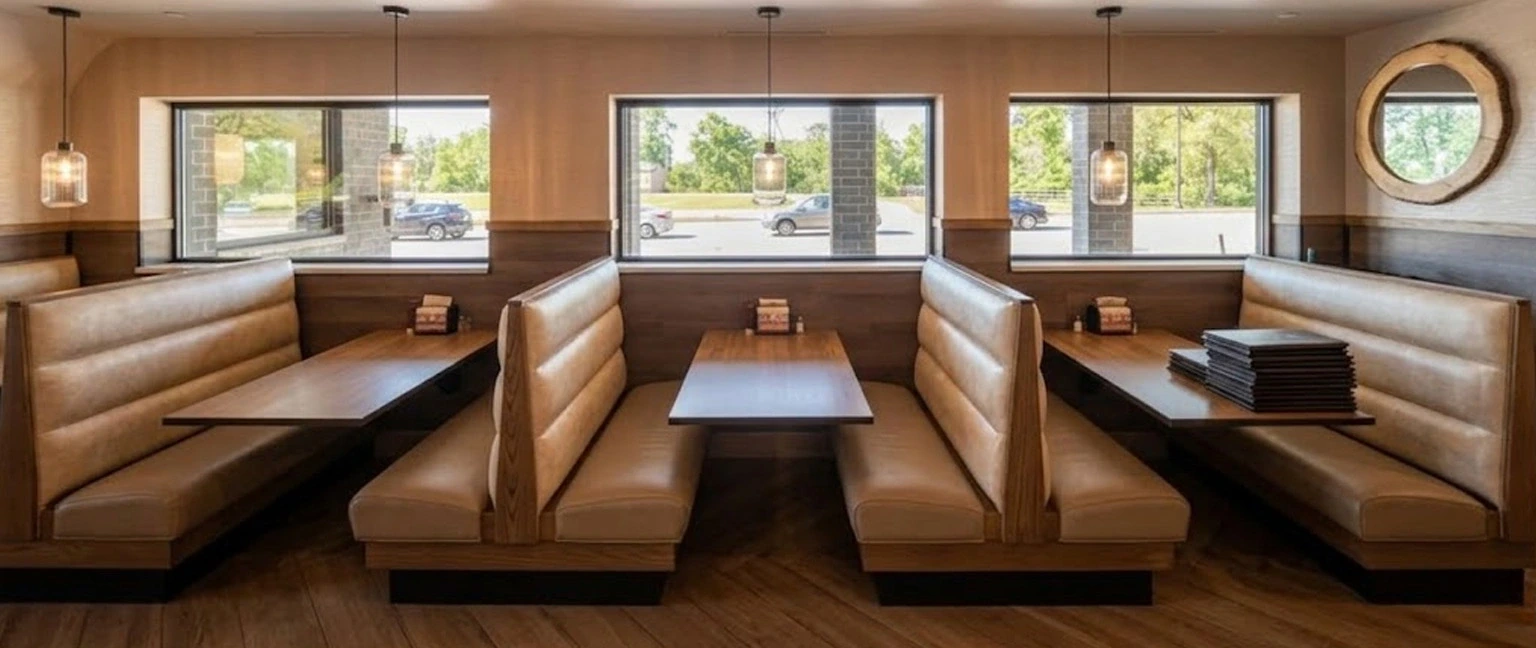
3. Curved Booths — For Spaces Where the Seating Is Part of the Brand
Curved restaurant booths are the most technically demanding booth type to produce correctly. The frame must hold its geometry through freight, installation, and years of load. A curved booth that arrives with visible gaps at the join points, or loses its radius under seat pressure, is a quality failure that no upholstery color will fix.
The pairing logic matters too. Curved booths work with round or oval tables — the ergonomic silhouette of the seating needs to match the table geometry or the layout looks accidental. For fine dining and hotel lounge applications, velvet, Nappa-style leather texture, or full-grain leather upholstery is the standard specification. These materials read as premium precisely because they age visibly — which means they need to age well. Check Martindale abrasion ratings against ISO 129472 before approving fabric samples.
ល្អបំផុតសម្រាប់៖ fine dining restaurants, hotel restaurants, lounge areas, private dining corners, luxury hospitality projects
Mingmeng Furniture supports curved booth production with pre-production drawings and sample approval before bulk order confirmation.
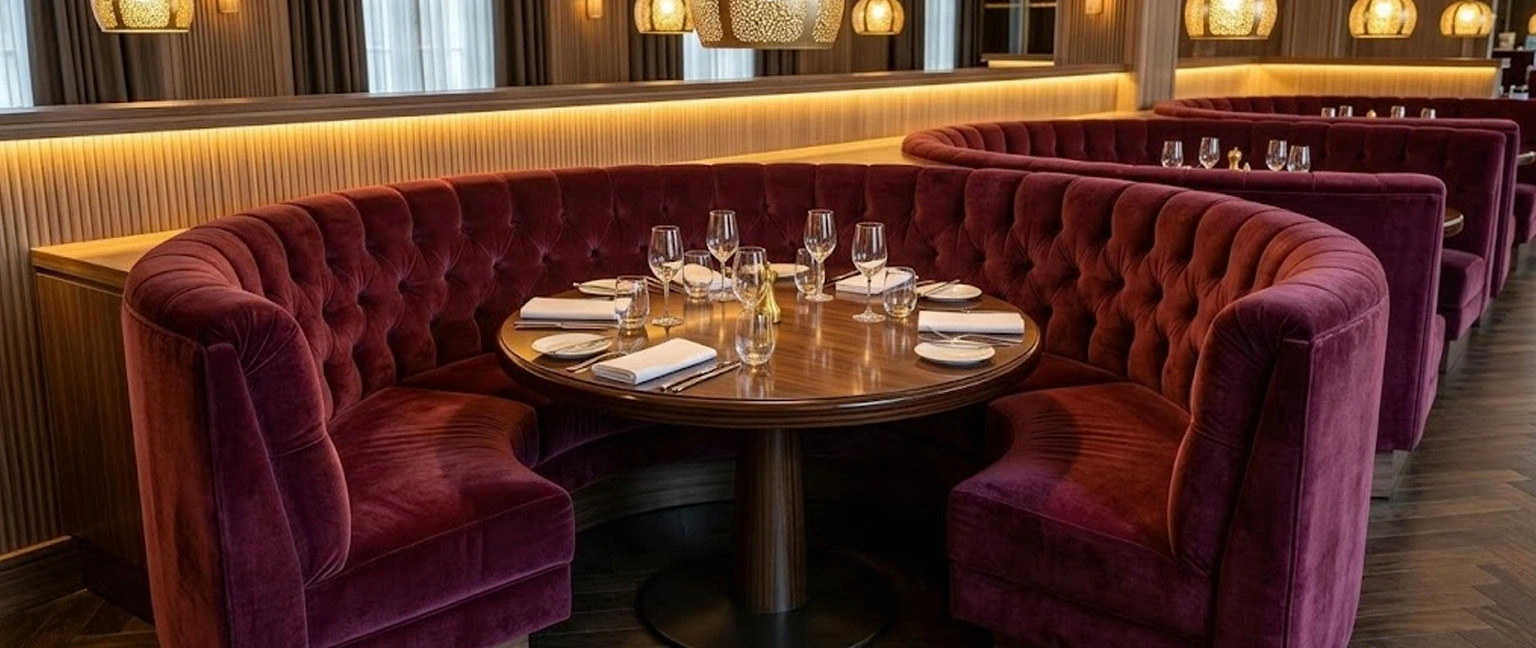
4. High-Back Privacy Booths — Acoustic Separation Without Construction Costs
A high-back booth does something a partition wall cannot: it defines privacy zones without requiring permits, construction time, or fixed infrastructure. For a full range of commercial seating configurations, see our restaurant café booth collection.
Back height between 900–1100mm creates enough visual separation to make guests feel settled. The upholstered surface absorbs some reflected sound — not at the level of acoustic treatment, but enough to reduce the hard-surface echo common in modern restaurant interiors.
The structural risk in high-back designs is leverage. A taller backrest creates more torque at the base connection under lateral load. Specify steel or stainless steel base reinforcement for back heights above 950mm. Wood-only base construction at that height will show movement within a year of contract use.
Seat comfort in high-back booths also requires more attention than standard configurations. Guests sit longer in privacy booth environments. Back angle, lumbar support position, and foam rebound all matter more here than in fast-turnover seating.
ល្អបំផុតសម្រាប់៖ business restaurants, hotel lounges, private dining zones, quiet fine dining environments
For hospitality and hotel projects, Mingmeng Furniture adjusts back height, base specification, and upholstery grade to match interior design requirements and project timelines.
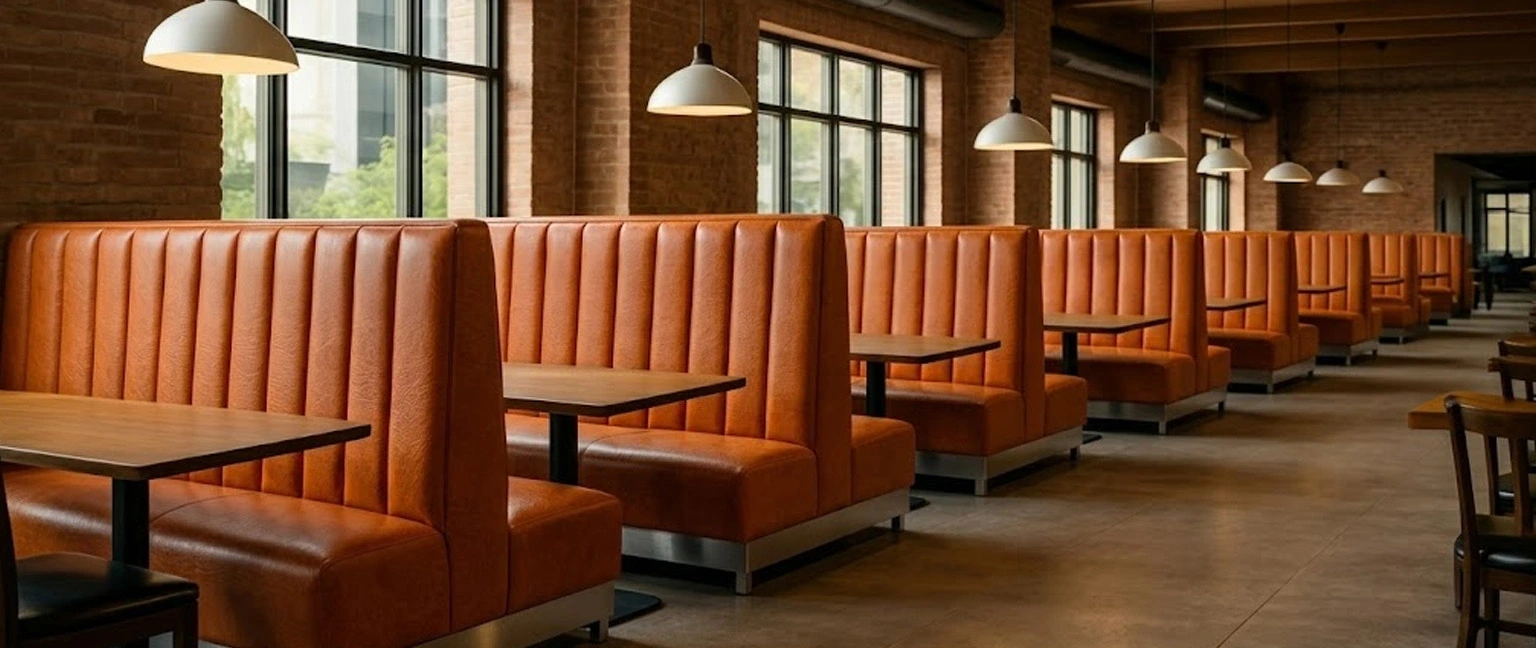
5. Fine Dining Sofa Booths — Where Comfort Becomes a Revenue Decision
Fine dining booths are not about softness. They are about proportion.
A seat depth of 480–520mm supports a relaxed dining posture for a two-hour cover. A back angle of 95–100 degrees keeps guests comfortable without encouraging them to recline past the point where the table relationship breaks down. These are not decorative decisions — they are ergonomic specifications that affect how long guests stay, how they perceive value, and whether they return.
Layered foam construction — a firmer base layer with a softer comfort layer on top — maintains consistent seat height through years of daily compression better than single-density foam. It costs more upfront. It saves the replacement cycle that single-density foam creates after eighteen months of commercial use.
Stitching detail, piping, and base finish in fine dining booths are visible brand signals. Guests notice the quality of the seam before they notice the thread color. Specify these details in writing before production, not as verbal agreements.
ល្អបំផុតសម្រាប់៖ upscale restaurants, boutique hotels, wine bars, chef’s table areas, premium dining spaces
Mingmeng Furniture supports fine dining sofa booth customization with velvet, leather-texture, and premium vinyl upholstery options, wood veneer panel details, and metal base finishing.
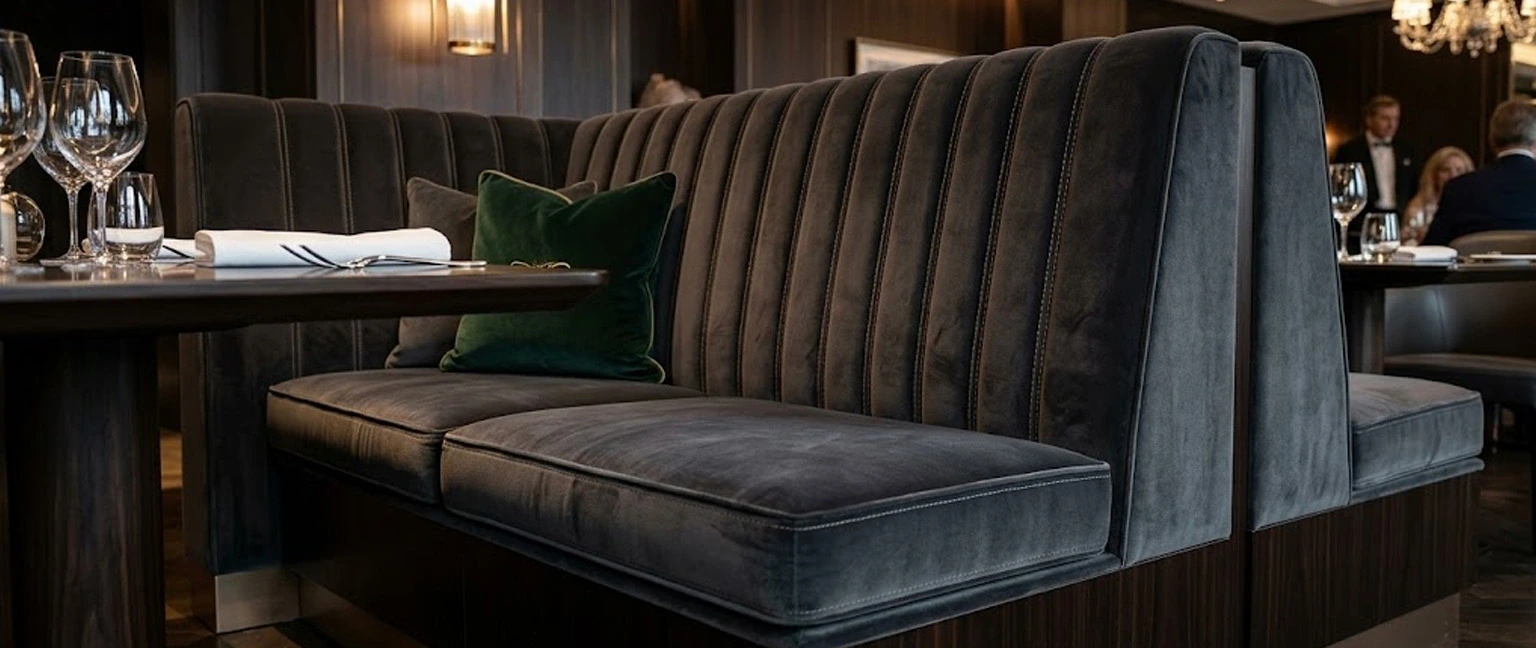
6. Compact Booths — Maximum Seats Per Square Meter Without Sacrificing Function
Compact booth seating is a discipline, not a compromise. The goal is efficient use of floor area while maintaining the minimum specifications that keep guests comfortable and cleaning staff functional.
Before ordering, confirm your standard booth dimensions against the actual floor plan. Minimum aisle clearance for server access is 900mm. Table-to-backrest distance should allow guests to slide in and out without adjusting the table. These numbers are fixed by operational reality — not by what looks good on a space plan.
For urban cafés and small restaurant formats, thinner back profiles — 80–100mm — recover usable depth compared to standard commercial booths at 120–150mm. That 30–50mm difference across a row of booths changes the seat count.
ល្អបំផុតសម្រាប់៖ small cafés, fast-casual restaurants, bakery seating, bubble tea shops, compact urban dining formats
Mingmeng Furniture produces compact booths from floor plan drawings. Dimension confirmation is included before production begins.
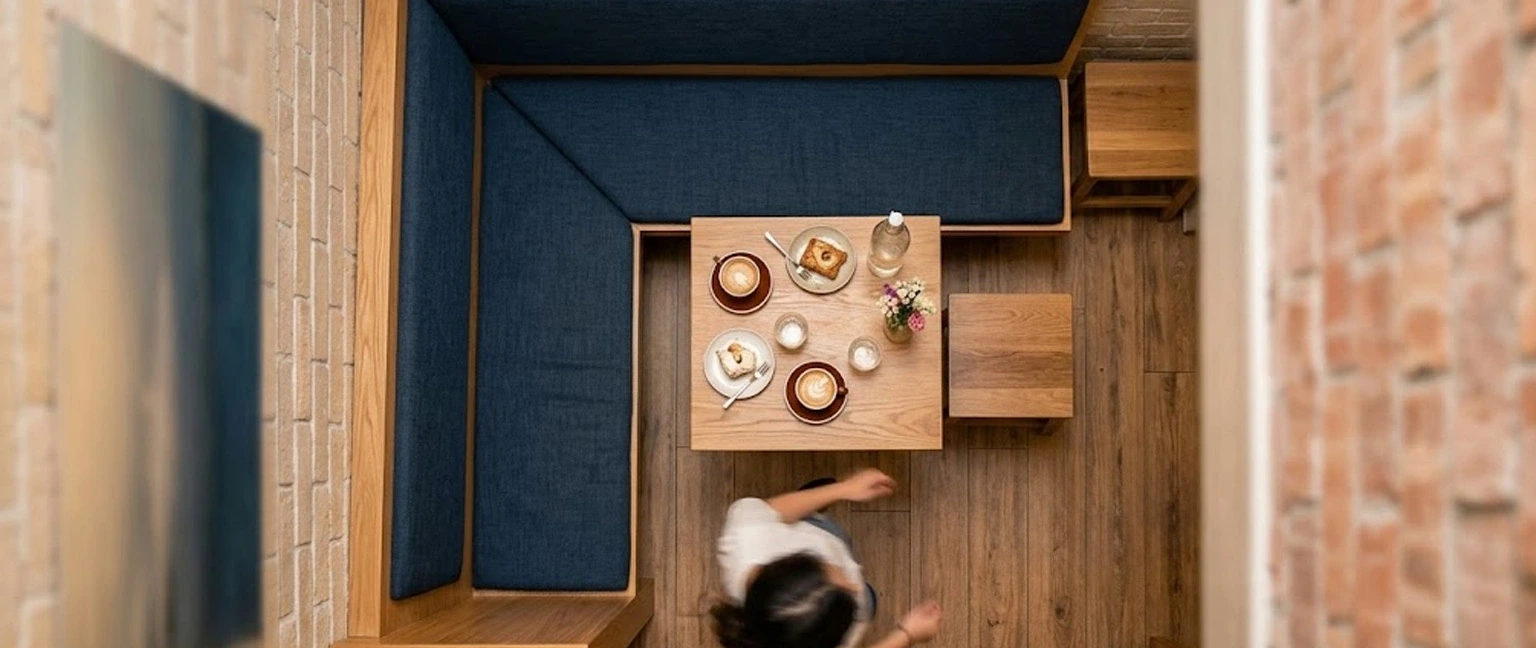
7. Custom OEM Booths — Brand Consistency Across Every Location
For chain restaurant groups and hotel brands, the booth is not a product decision. It is a brand decision repeated across every location, every refurbishment cycle, every new market entry.
The operational requirement is repeatability. The silhouette, upholstery color, stitching pattern, and base finish must arrive identical whether the order is 20 units or 200. That requires documented production specifications, pre-production sample approval, and a supplier with a quality management process — ISO 9001 is the standard reference for evaluating whether a manufacturer’s production system is structured enough to hold consistency across large runs.
Packaging for international freight is where OEM booth programs often lose margin quietly. Inadequate corner protection on a 40-foot container load creates damage claims that erode project profitability. Specify packaging method, loading configuration, and spare material requirements before the production order is confirmed.
ល្អបំផុតសម្រាប់៖ chain restaurants, hotel groups, commercial design projects, brand rollout programs, OEM and ODM furniture orders
With over 10 years of experience and more than 1,200 commercial furniture projects delivered globally, Mingmeng Furniture supports OEM and ODM booth programs with full specification documentation, pre-production sample approval, and export-ready packaging. ទាក់ទងមកយើងខ្ញុំ to discuss project requirements.
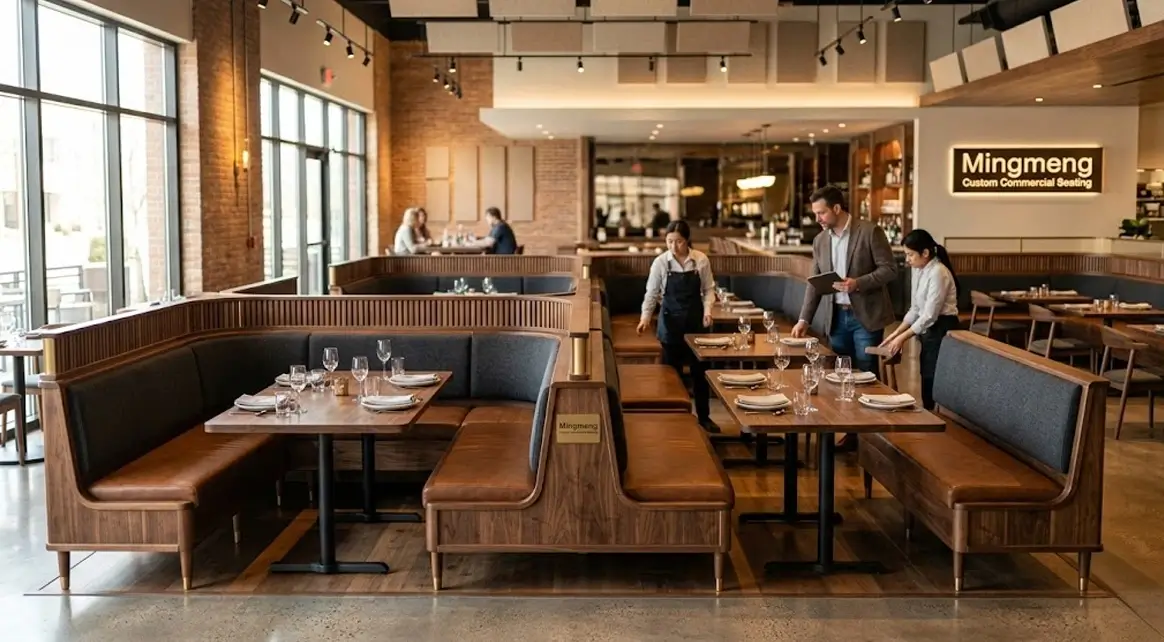
How to Match Booth Type to Your Project
| ប្រភេទភោជនីយដ្ឋាន | Recommended Booth | Key Specification Priority |
|---|---|---|
| Small café / fast casual | Single wall or compact | Seat depth, base clearance, easy-clean upholstery |
| Canteen / hotel breakfast | Double-sided | Frame reinforcement, foam density, cleaning access |
| Fine dining / boutique hotel | Curved or sofa booth | Frame geometry, upholstery grade, layered foam |
| Business restaurant / lounge | High-back privacy | Base reinforcement, back angle, acoustic material |
| Chain restaurant / brand program | Custom OEM | Specification documentation, sample approval, packaging |
FAQ About Dining Booths for Restaurants
Q1: What foam density should I specify for commercial restaurant booths? For contract-grade use, minimum 38kg/m³ for seat foam and 28kg/m³ for back foam. Below these figures, expect visible compression and surface unevenness within 12–18 months of daily service.
Q2: How long should a commercial dining booth last?
With correct material specification and routine cleaning, 8–10 years for upholstery and frame. Stainless steel or welded steel frames extend structural life to 12–15 years. Early failure almost always traces back to frame joint construction or foam density, not surface wear.
Q3: What certifications should I check before placing a bulk order?
ISO 9001 for quality management systems. ISO 14001 for environmental management where sustainability compliance is required. CAL TB 117-2013 for upholstery smolder resistance in California-market projects. BS 58523 for UK and European projects. ANSI/BIFMA X5.4 as a performance reference for public seating durability.
Q4: How do I confirm booth dimensions before production?
Provide floor plan drawings with wall lengths, aisle clearances, and table sizes confirmed. A reputable contract furniture supplier will return pre-production drawings for approval before cutting material. Do not approve production without this step.
Q5: Can Mingmeng Furniture handle international bulk orders?
Yes. Mingmeng Furniture supports bulk custom booth orders for restaurants, hotels, canteens, and chain-store programs with export packaging, documented lead times, and pre-production sample confirmation.
Reference Notes
- ANSI/BIFMA X5.4-2020(R2025): Performance standard for public and lounge seating used in shared indoor environments including dining and cafeteria settings. ↩︎
- ISO 12947: Martindale abrasion resistance method for textile fabrics used in upholstered commercial seating. ↩︎
- BS 5852:2006: UK ignitability test method for upholstered seating by smoldering and flaming ignition sources. ↩︎


