

 English
 中文
 日本語
 한국어
 العربية
 Русский
 Português
 Türkçe
 हिन्दी
 Tiếng Việt
 ไทย
 Indonesia
 Melayu
 ខ្មែរ
 ລາວ
 မြန်မာ
 Afrikaans
 Hausa
 Igbo
 Sesotho
 isiXhosa
 Yorùbá
 isiZulu
Bulk furniture procurement is never just about choosing a beautiful chair—it’s a long-term investment that affects customer comfort, brand identity, maintenance cost, and operational efficiency. For restaurants, hotels, cafés, and commercial dining spaces, iron dining chairs remain one of the most popular choices due to their durability and design versatility. However, many buyers still make avoidable mistakes that lead to extra expenses, mismatched finishes, or chairs that don’t perform in high-traffic environments.
To help you source commercial furniture with confidence, this guide highlights five common mistakes buyers make when purchasing iron chairs in bulk—and how to avoid them.
1. Ignoring Commercial-Grade Specifications
Many iron chairs on the market look similar, but not all are engineered for commercial use. A chair designed for a home dining room cannot withstand 12+ hours of daily use in a restaurant.
What many buyers overlook
- Wall-thickness of metal tubing
- Welding reinforcement
- Weight capacity testing
- Surface coating thickness
- Footrest and leg stability tests
What to check
| ការបញ្ជាក់ | Minimum Requirement | ហេតុអ្វីបានជាវាសំខាន់ |
|---|---|---|
| Steel Thickness | ≥1.2 mm for chair legs | Prevents bending under heavy use |
| Welding Quality | Full-welded, seamless joints | No wobbling or early breakage |
| Weight Capacity | 250–300 lbs+ | Meets industry safety standards |
| Coating | Powder coating, ≥70–90 μm | Long-term rust prevention |
If the supplier cannot provide a commercial specification sheet, skip them.
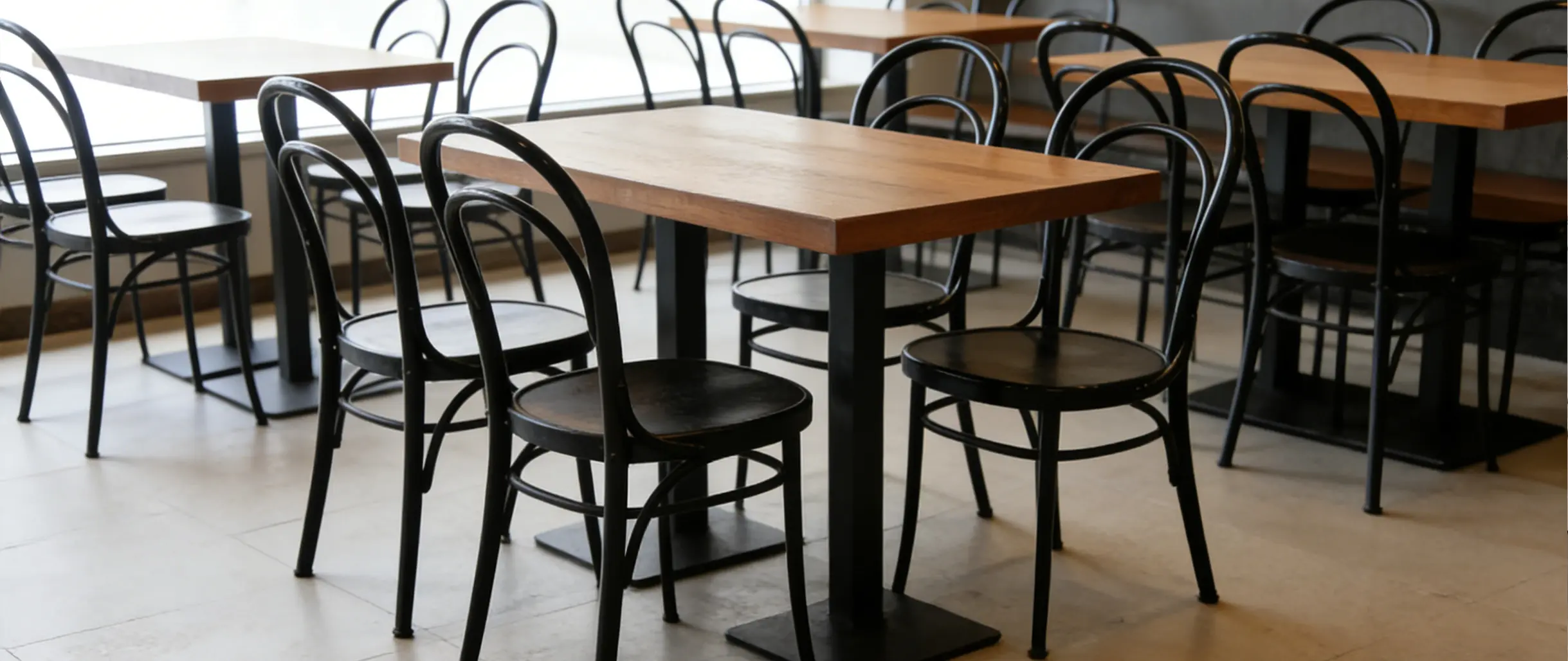
2. Choosing the Wrong Finish for Your Environment
Iron chairs are available in multiple finishes—powder-coated, matte painted, sandblasted, galvanized, antique-brushed, etc.—but not all finishes perform equally in different environments.
Typical mistakes
- Using matte-painted chairs in outdoor or coastal areas
- Choosing glossy finishes that show scratches easily
- Selecting textured coatings that trap food and grease
How to choose correctly
- Outdoor cafés / patios: galvanized + powder-coated
- Coastal restaurants: anti-corrosion treatment + UV-stable coating
- High-traffic dining: matte powder-coat + fingerprint-resistant
- Luxury interiors: brushed iron or electroplated finishes
Your finish decision directly affects service life and long-term maintenance cost.
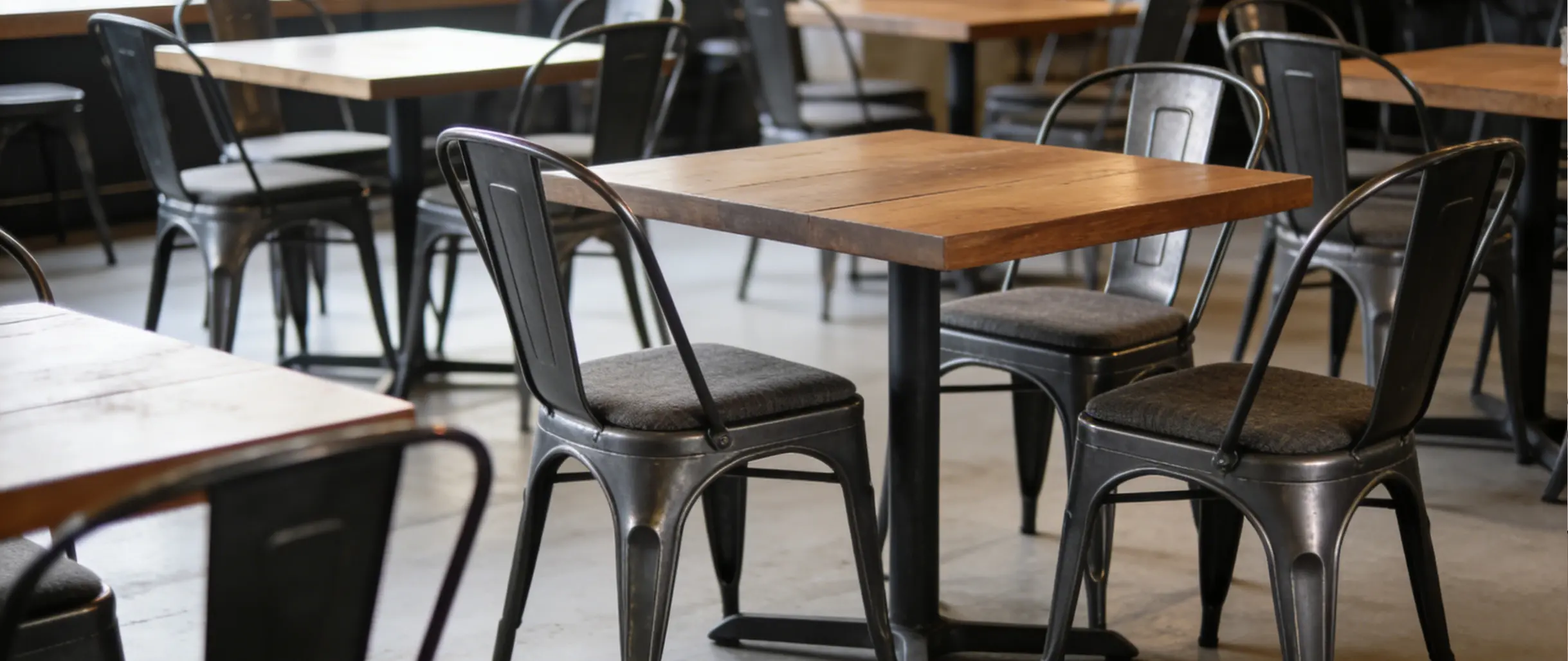
3. Underestimating Ergonomics & Comfort
A common misconception: “Iron dining chairs are durable, so comfort doesn’t matter.”
But in real operations, comfort affects:
- Customer dwell time
- Review ratings
- Table turnover rate
- Guest satisfaction
Avoid these comfort mistakes
- Choosing chairs with flat, unshaped seats
- Selecting backs that are too vertical (90°)
- Using seats without breathable padding
- Buying without testing full-height sitting posture
Minimum ergonomic requirements
- Seat width: 16–18 inches
- Seat height: 17.5–18.5 inches
- Backrest angle: 100–105°
A comfortable iron chair encourages guests to stay longer—and spend more.
4. Forgetting About Floor Protection and Noise Control
In busy restaurants, iron chairs can become a source of noise pollution or floor damage if not properly protected.
Common issues
- Scratched tile, wood, or vinyl floors
- Loud dragging noises
- Uneven chair legs causing wobbling
What to specify in bulk orders
- Replaceable nylon or rubber glides
- Felt pads for indoor dining
- Adjustable leveling feet for uneven floors
- Footrest reinforcement for bar-height chairs
Most suppliers allow customization, but only if you request it before production starts.
5. Not Ordering Samples Before Bulk Production
This is arguably the most expensive mistake.
Iron chairs differ dramatically in:
- Weld smoothness
- Seat comfort
- Frame weight
- Paint texture
- Stability
Photos or 3D models can never replace a real sample.
Always test your samples for:
- Real seated comfort (10–15 minutes)
- Wobble resistance
- Surface smoothness
- Consistent coating color
- Quality of glides and joints
A $120 sample can prevent a $12,000 loss from unusable bulk chairs.
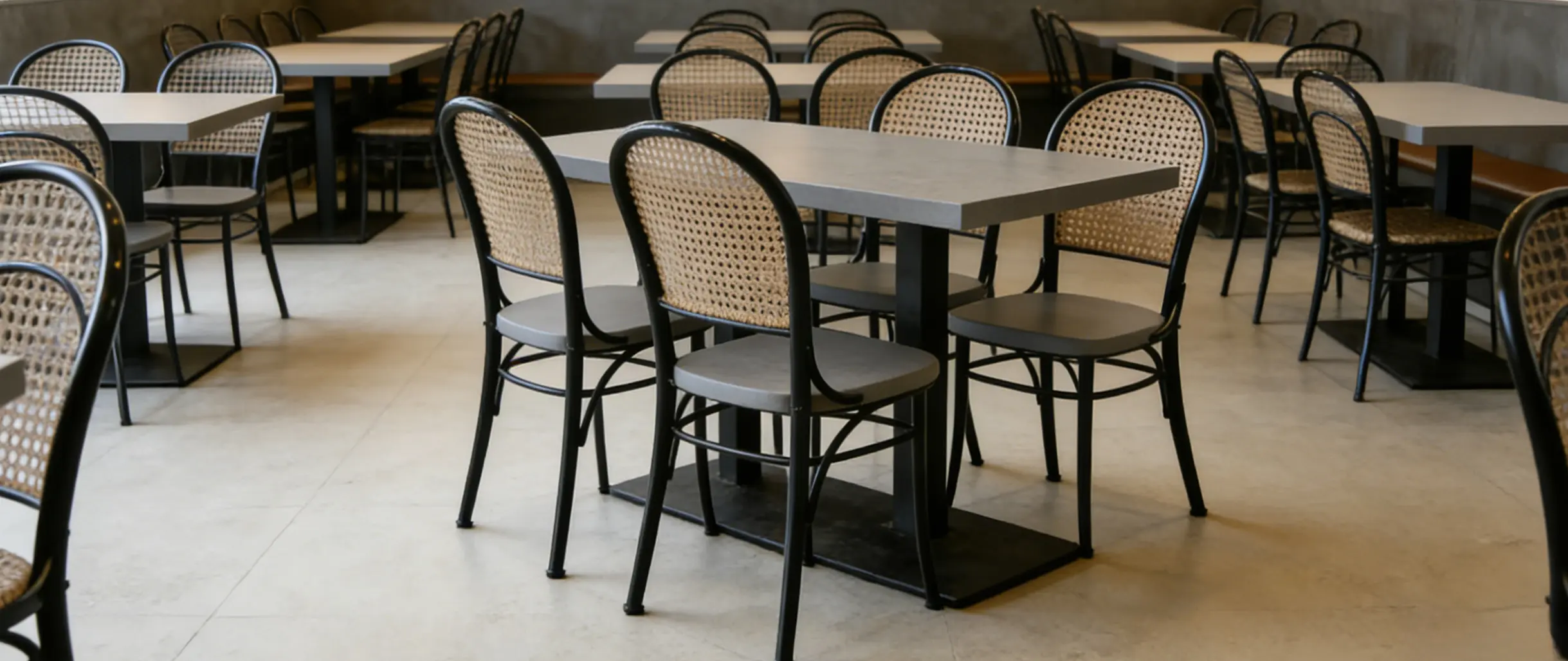
Quick Buyer Checklist Before Placing a Bulk Order
Use this 10-point list to verify your supplier:
- Commercial-grade frame thickness
- Powder-coating with corrosion protection
- Required weight capacity
- Smooth welding, no visible seams
- Ergonomic seat dimensions
- Floor-protection glides included
- Indoor/outdoor suitability verified
- Custom color + finish approval
- Sample tested in real environment
- Bulk packaging specification confirmed
FAQs
1. Are iron dining chairs suitable for outdoor use?
Yes, but only with galvanized or powder-coated finishes designed to resist rust and UV exposure.
2. Can iron chairs be customized in color or upholstery?
Absolutely. Most manufacturers offer custom powder-coat colors, PU cushions, wood seats, or fabric upholstery.
3. What is the average lifespan of commercial iron dining chairs?
With proper coating and quality welding, 5–10 years in high-traffic restaurants.
4. What is the ideal weight for a commercial iron chair?
Typically 5–8 kg—heavy enough for stability but light enough for staff to move easily.
5. What packaging should I request for bulk orders?
For overseas shipping:
- EPE foam wrapping
- Anti-rust bag
- Drop-tested carton
- Optional palletization
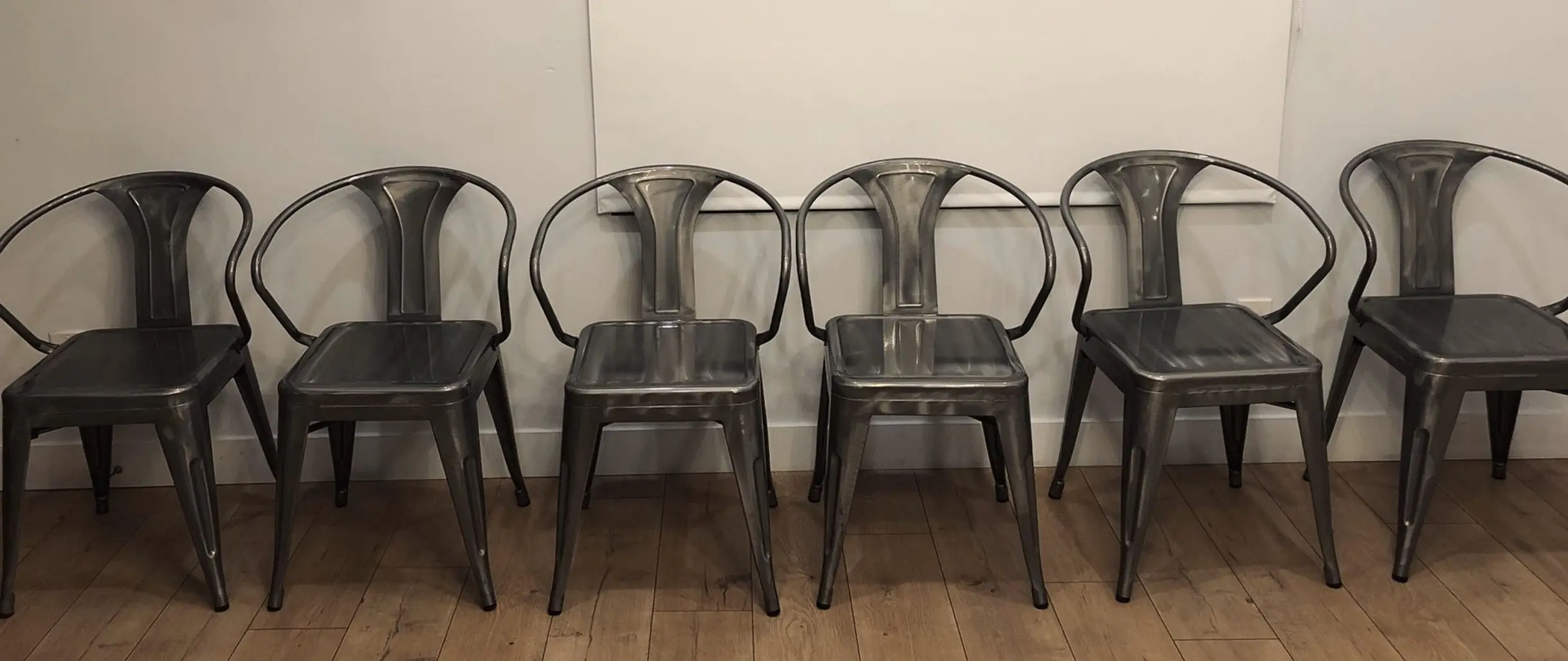
A Smarter Way to Source Iron Dining Chairs
Avoiding these five mistakes can save you thousands in replacement costs, reduce customer complaints, and ensure your furniture performs flawlessly in commercial environments. With careful specification, the right supplier, and real-world testing, iron dining chairs can become a long-lasting asset in your restaurant or hospitality project.


