
 English
 中文
 日本語
 한국어
 العربية
 Русский
 Português
 Türkçe
 हिन्दी
 Tiếng Việt
 ไทย
 Indonesia
 Melayu
 ខ្មែរ
 ລາວ
 မြန်မာ
 Afrikaans
 Hausa
 Igbo
 Sesotho
 isiXhosa
 Yorùbá
 isiZulu
Kini idi Rẹ “Commercial Grade” Restaurant Booths Might Be Broken After 18 Months: Lessons from 15 Years in the Trenches
Nipa Eson Liu | Senior Upholstery Specialist & Lead Designer at Mingmeng
(15+ years experience outfitting 300+ restaurants across North America & Asia)

🚨 Otitọ Lile:
Three years ago, a popular bistro in Seattle to save $4,000 by choosing “Premium Bonded Leather” instead of our heavy-duty vinyl. It looked gorgeous on day one. By month 18, the seats were peeling like sunburned skin. The owner spent $12,000 on emergency replacements during peak season.
Ma ṣe jẹ ki iwe kan pato purọ fun ọ. In this article, I’m skipping the marketing fluff. I’ll show you exactly what happens to Vinyl, Genuine Leather, and Performance Fabric after 1,000+ dinners, based on real data from our workshop and client sites.
The “Peeling” Disaster: Why Bonded Leather Fails
Let’s get the elephant out of the room first. If your quote includes “Bonded Leather,” “Reconstituted Leather,” tabi "PU Alawọ" for a high-traffic dining area, Duro.
I’ve seen it too many times. Bonded leather is essentially leather dust glued together with polyurethane. In a home setting, it lasts 5-7 years. In a restaurant?
- Oṣu 1-6: Wulẹ nla. Lofinda bi alawọ.
- Osu 12: Micro-cracks appear where customers slide in and out.
- Osu 18: The top layer delaminates. Large flakes start coming off on customers’ clothes.
💡 Imọye Amoye:
True Top-Grain Leather is a natural hide; it breathes and develops a patina. Bonded leather is plastic wrapping. The price difference is significant (Top-Grain is ~3x the cost), but the igbesi aye difference is 10x. If you can’t afford Top-Grain, choose High-Performance Vinyl. It will outlast bonded leather every single time.
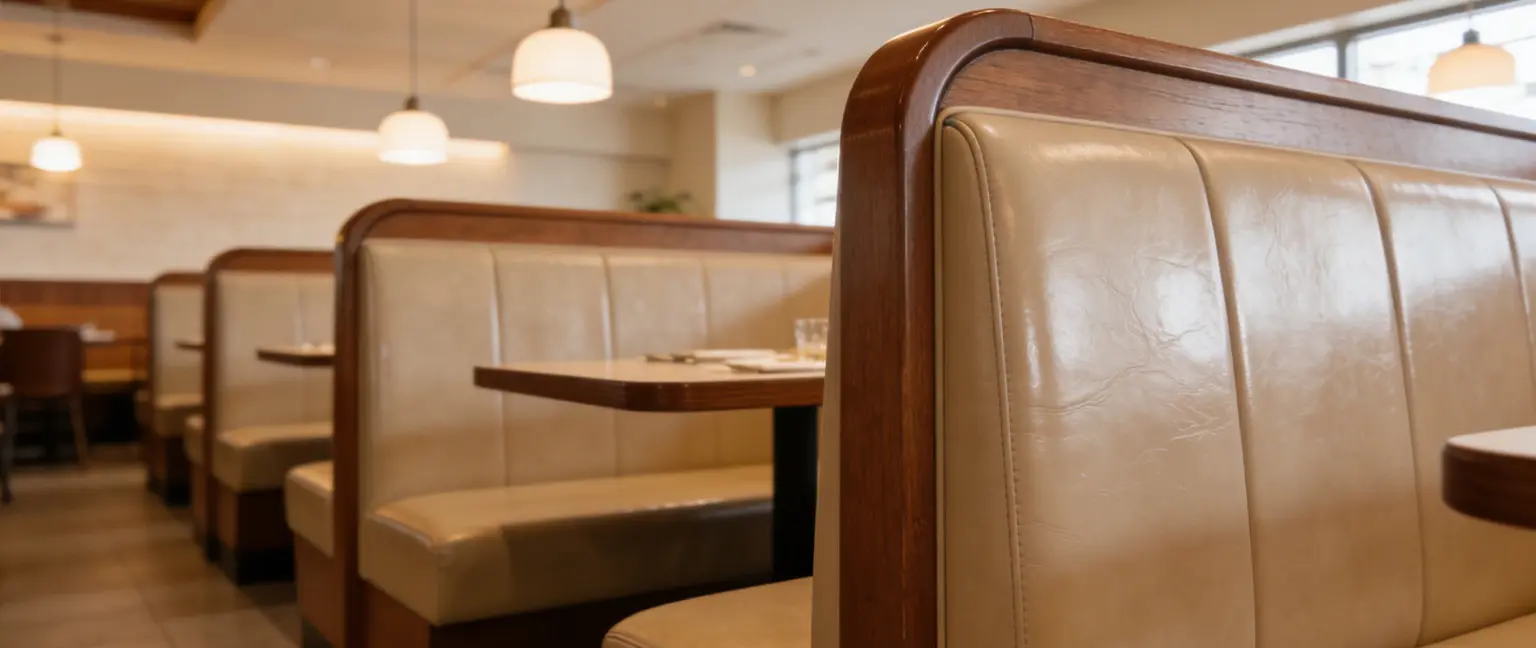
Igbeyewo # 1: Awọn 50,000-Rub Reality Ṣayẹwo
We don’t just trust manufacturer specs. In our Mingmeng workshop, we run accelerated wear tests using a Wyzenbeek tester, but we also add our own “Real World” variables: denim friction (jeans are abrasive!) and sunscreen exposure.
Here is what we found testing three top-tier materials over 6 months:
| Ohun elo | Iwọn Wyzenbeek (Spec) | Wọ gangan Lẹhin Awọn Ọdun 2 Afarawe | Ojuami Ikuna |
|---|---|---|---|
| Heavy-Duty Vinyl (e.g., Ultrafabrics ULC) | 1,000,000+ rubs | Odo han yiya. Slight sheen loss in high-friction zones. | None. Resists denim abrasion perfectly. |
| Awọ Ọkà Òkè (Aniline Dyed) | 100,000+ rubs | Idagbasoke ọlọrọ patina. Minor scratches from belt buckles/zippers visible. | Sharp objects cut the grain permanently. |
| Performance Fabric (e.g., Crypton Home) | 150,000+ rubs | Ko si pilling. Color remained vibrant. Edges showed slight fuzzing. | Abrasive dirt trapped in weave if not vacuumed. |
Gbigba bọtini: For pure abrasion resistance (sliding in/out 50 times a day), Fainali jẹ unbeatable. Leather ages beautifully but shows “battle scars.” Fabric holds up surprisingly well ti o ba jẹ o igbale osẹ.
Test #2: The “Spaghetti & Wine” Spill Simulation
Cleanability isn’t just about wiping; it’s about stain permanence and chemical resistance. We tested three common restaurant disasters: Red Wine (Acid), Marinara Sauce (Oil + Acid), and Quaternary Ammonium Disinfectant (daily cleaning).
🧪 Awọn abajade:
- Waini Pupa (Osi fun ọgbọn išẹju 30):
- Fainali: Foju mọ pẹlu omi. Ko si itọpa.
- Alawọ: Wiped surface clean, but left a faint dark shadow that required a specialized leather cleaner to lift.
- Aṣọ Iṣe: Beaded soke ni ibẹrẹ. Ti bajẹ ni irọrun. Note: Standard cotton fabric would be ruined here.
- girisi/Epo (Marinara):
- Fainali: Zero absorption. Degreaser removed it instantly.
- Alawọ: Ikuna pataki. Oil soaked into the pores. Even after cleaning, a dark spot remained. This is why leather is risky for Italian or BBQ concepts.
- Aṣọ Iṣe: Olefin-based fibers repelled the oil. Required a foaming spot cleaner, but came out 95% clean.
- Alakokoro Ojoojumọ (orisun Bilisi):
- Fainali: Passed. No color fade or cracking after 500 wipes.
- Alawọ: O kuna. The finish became dull and sticky after 50 wipes. Harsh chemicals strip natural oils.
- Aṣọ Iṣe: Passed, but some bright colors showed slight fading after 300+ wipes.
Climate Check: Does Your Location Matter?
Absolutely. A material that works in dry Arizona might fail in humid Miami. Here are lessons from our local projects:
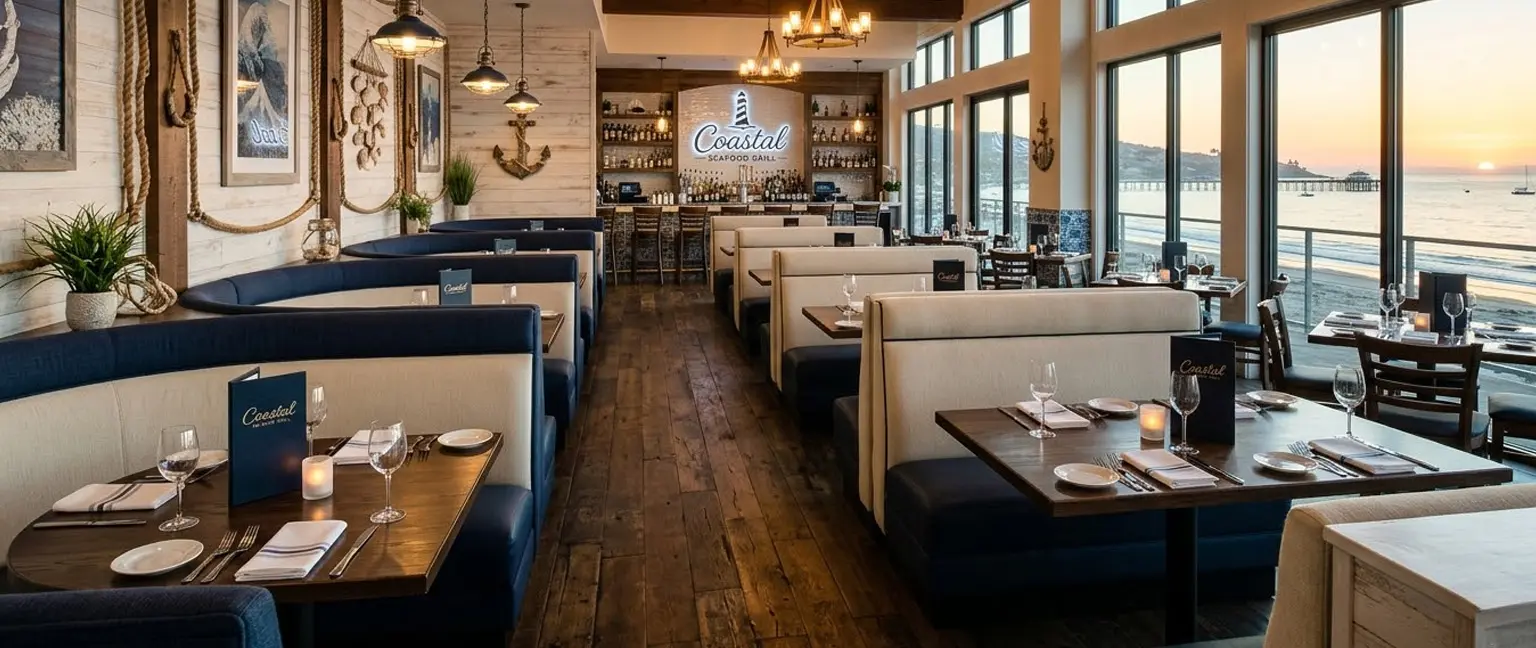
Case Study: Coastal Seafood Grill ( Boston])
- Ipenija: Ipata afẹfẹ iyọ + ọriniinitutu giga.
- Asise: Client initially wanted untreated metal frames and standard leather.
- Ojutu: Tiwa ibijoko agọ restautant switched to marine-grade polymer vinyl and powder-coated aluminum frames.
- Abajade: 4 years later, zero rust, no mold on seats. Standard leather would have grown mildew in the stitching within months.
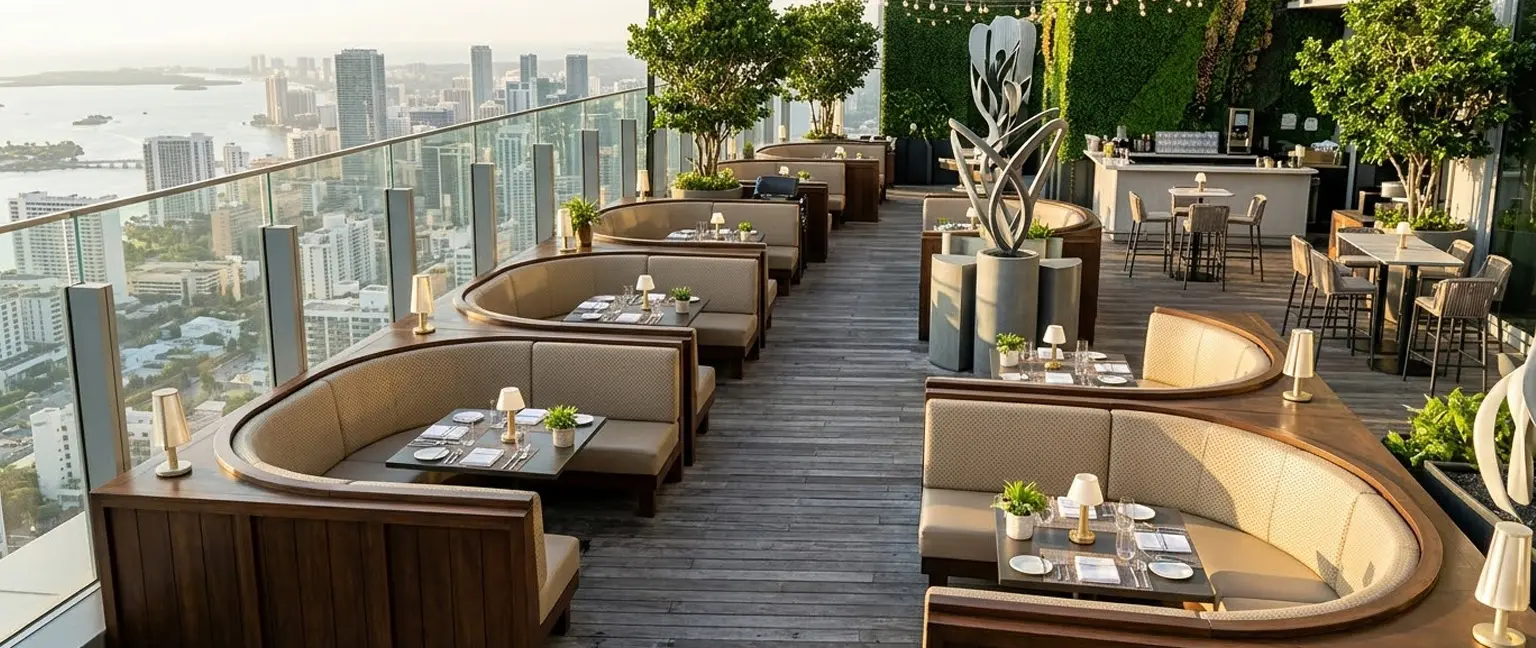
Case Study: Rooftop Lounge (Los Angeles])
- Ipenija: Ifihan UV taara + ooru.
- Akiyesi: Dark vinyl gets hot (up to 140°F in direct sun).
- Ojutu: A lo perforated breathable fainali in lighter colors (sand/grey) and paired it with Sunbrella iṣẹ fabric fun shaded agbegbe.
- Abajade: Customers aren’t burning their legs, and the fabric hasn’t faded despite 8 hours of daily sun.
Imọran agbegbe: If you are in a high-humidity zone (like the Gulf Coast or Southeast Asia), avoid thick, non-breathable vinyl unless it has a moisture-wicking backing. Mold loves trapped sweat.
Real Restaurant Owner Reviews: What They Say After 2 Years
Don’t just take my word for it. Here is what our clients are saying about their material choices lẹhin awọn ijẹfaaji alakoso jẹ lori.
(Dynamic Review Module: Code snippet to pull live Google Reviews filtered by keywords “durability”, “cleaning”, “seats”)
⭐⭐⭐⭐⭐
“O gba wa la lakoko iyara.”
“We chose the heavy-duty vinyl for our diner in [City]. Last week, a waiter dropped a tray of chili cheese fries on a booth. The manager wiped it down in 10 seconds. If we had gone with the fabric we originally liked, that seat would have been out of commission for a deep clean. Best ROI decision we made.”
— Mike R.
⭐⭐⭐⭐
"Ẹwa ṣugbọn itọju giga."
“Tiwa alawọ ounjẹ agọ in the VIP section look incredible and our guests love the feel. But be warned: our staff has to condition them every month, or they start looking dry. It’s worth it for the upscale vibe, but don’t put them in the family section!”
— Sarah L., GM
⭐⭐⭐⭐⭐
"Aṣọ ti o ṣiṣẹ ni otitọ."
“I was skeptical about fabric in our coffee shop, but the Crypton material is magic. Kids spill juice, we blot it, and it’s gone. It feels so much warmer and cozier than vinyl. Highly recommend for cafes.”
— David T.
The Decision Matrix: Choose Based on Your Pain Points
Stop choosing based on “what looks nice.” Choose based on ohun ti o pa ọ mọ.
| Ti Ibẹru Ti o tobi julọ ba… | Yan Eyi | Kí nìdí? | Yago fun Eyi |
|---|---|---|---|
| “I can’t afford constant cleaning labor.” | Fainali Eru | Wipe-and-go. Resists harsh chemicals. | Fabric (requires vacuuming/steam), Leather (requires conditioning). |
| “My customers stay for 2+ hours.” | Fabric išẹ | Breathable, soft, doesn’t stick to skin. Feels like home. | Vinyl (can get sweaty/hot), Cheap Leather (can feel stiff). |
| “I need to justify a $150+ entree.” | Top-Ọkà Alawọ | Signals luxury. The smell and feel elevate the perceived value. | Vinyl (can feel “cheap” if not textured well), Patterned Fabric. |
| “I have kids and clumsy servers.” | Ifojuri Dark fainali | Hides scratches and stains. Nearly indestructible. | Light-colored Leather (shows every drop), Loose-weave Fabric. |
| “My restaurant is near the ocean.” | Marine-Ite polima | Koju ipata iyọ ati m. | Standard Leather (mildew risk), Metal accents without coating. |
Pro Maintenance Tips: 3 Mistakes You’re Probably Making
Even the best material fails if cleaned wrong. Here are the top 3 errors I see in the field:
- ❌ Lilo Ọti lori Alawọ: O nyọ topcoat aabo. Fix: Use pH-balanced leather cleaners only.
- ❌ Lilọ fainali pẹlu Abrasives: Steel wool or stiff brushes create micro-scratches where dirt hides. Fix: Lo awọn asọ microfiber rirọ.
- ❌ Aibikita awọn Seams: Idọti accumulates ni stitching. Fix: Use a soft brush attachment on your vacuum weekly for fabric; use a toothbrush with soapy water for vinyl seams monthly.
📥 [Download Free Resource: The Restaurant Booth (PDF)]
Alaye ọja iwe ti MingMeng Restaurant Furniture(Includes a printable log sheet for your cleaning staff and a list of recommended commercial-grade cleaners.)
Ṣetan lati Ṣe idanwo Awọn ohun elo funrararẹ?
Photos and data can only tell you so much. You need to feel the difference.
At Mingmeng, we don’t just send catalogs. We send survival kits.
👉 [Request Your Free Material Swatch Kit]
Pẹlu:
- 3 Samples of our Heavy-Duty Vinyl (scratched tested)
- 2 Ayipada ti Top-Grain Alawọ
- 2 Squares of Stain-Resistant Performance Fabric
- A mini-bottle of recommended cleaner for each
Or visit our Factory in [ Foshan , China] for a live “Spill Test” demonstration. Let’s build seating that survives your busiest night.