
 English
 中文
 日本語
 한국어
 العربية
 Русский
 Português
 Türkçe
 हिन्दी
 Tiếng Việt
 ไทย
 Indonesia
 Melayu
 ខ្មែរ
 ລາວ
 မြန်မာ
 Afrikaans
 Hausa
 Igbo
 Sesotho
 isiXhosa
 Yorùbá
 isiZulu
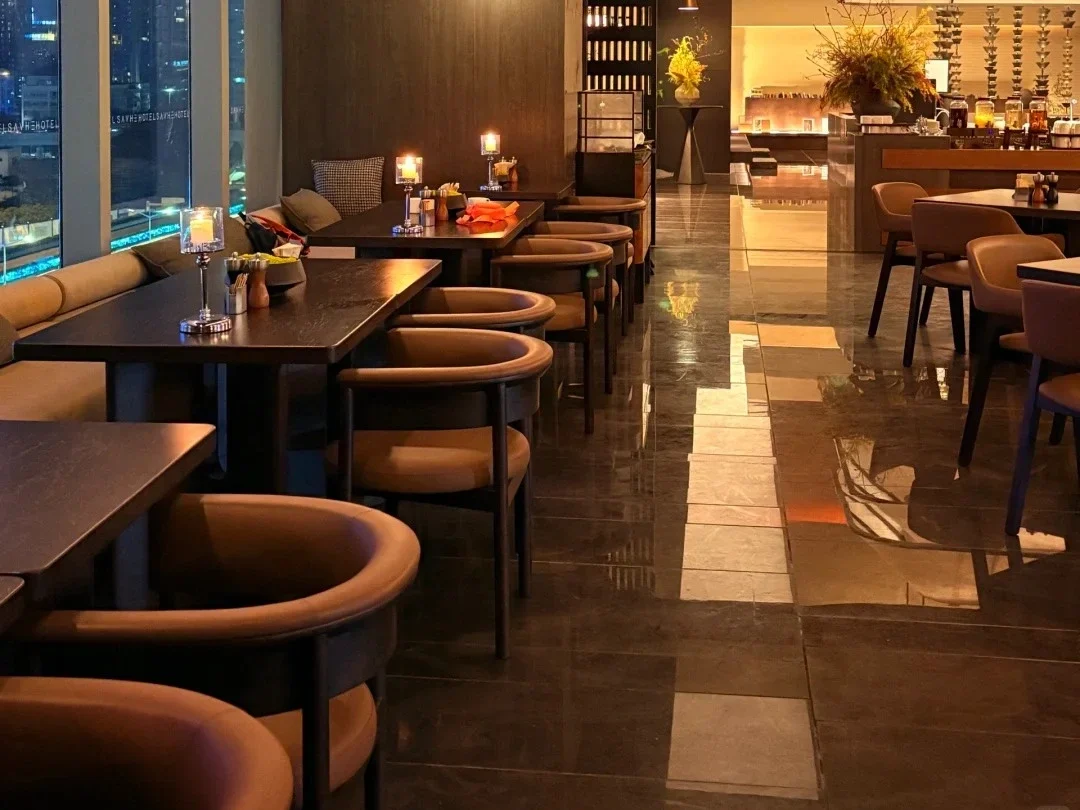
In 2026, the catering industry is becoming increasingly competitive. Onje Furniture is the core of store hardware, directly affecting customer experience and operating costs. Facing dozens or even hundreds of times of sitting, collision and cleaning every day, its wear rate is far higher than that of residential furniture. Choosing durable Restaurant Furniture can save the trouble of repeated replacement and maintain a unified store image—to be honest, this is also a long-term money-saving skill that many catering operators easily overlook.
Many operators choose low-cost models to control initial costs, only to find that the chair surfaces collapse and table corners peel off in just a few months. This not only requires repeated replacement investments, but also shabby furniture reduces the overall experience of the store and greatly impairs customers’ goodwill. So in 2026, what kind of Commercial Restaurant Tables and Chairs can withstand the high-frequency daily use of the store? The answer lies in every detail of grade standards, structural design and material selection.
Residential vs. Commercial Grade: Why the Difference Matters (2026 Updated)
The core design of residential furniture is comfort and beauty, adapted to the low-frequency use scenarios of families, while Restaurant Furniture must comply with the latest 2026 Contract Grade standards, a stringent testing system for commercial scenarios. Take fire safety standards as an example, the fabrics and boards of commercial models must pass the latest 2026 flame retardant test to avoid safety hazards caused by open fire and high temperature in catering scenarios; in terms of abrasion resistance tests, the abrasion resistance of residential furniture is mostly tens of thousands of times, while qualified commercial models need to reach more than 150,000 times.
The comparison of core indicators between residential and commercial restaurant furniture in 2026 is as follows:
| Ifiwera Dimension | Residential Restaurant Furniture | Commercial Restaurant Furniture (2026 Standard) |
|---|---|---|
| Abrasion Resistance Test Times | 30,000-50,000 times | 150,000 times and above |
| Fire Safety Requirements | No mandatory standards | Meet 2026 commercial flame retardant grade B1 |
| Structural Design | Focus on beauty and comfort | Focus on reinforcement and durability, suitable for high-frequency use |
| Load Capacity Standard | Single chair load capacity 80-100kg | Single chair load capacity above 150kg, dining table load capacity above 200kg |
Custom Commercial Restaurant Furniture that deviates from this standard is just “all show and no go” no matter how good-looking it is. Especially in 2026, the catering industry has increasingly strict requirements for store hardware, and unqualified commercial furniture may even affect store compliance inspections.
Key Factors for Longevity: 2026 Commercial Restaurant Furniture Buying Points
As it turns out, a durable piece of Restaurant Furniture must be designed for “durability” from the inside out. When purchasing in 2026, you can focus on the following 3 core points to avoid pitfalls:
- Frame Structure: As the backbone of furniture, priority should be given to styles with ten-mortise structure and reinforced support points. The connection between chair legs and the frame should be further reinforced by welding or nailing to avoid loosening caused by frequent sitting and pressing—all commercial furniture launched by Mingmeng in 2026 adopts this reinforced structure, and its stability is more than 60% higher than that of ordinary spliced models.
- Material Selection: High-density sponge (density ≥ 30kg/m³) should be selected for seat cushions to avoid collapse within half a year; fabrics must pass the latest 2026 Martindale abrasion resistance test, and materials such as leather and rattan should also be scratch and stain resistant. Commercial Solid Wood Restaurant Furniture should preferably choose hardwood such as ash wood and oak, and metal parts should be treated with electrophoretic anti-rust to adapt to the humid and oily environment of catering scenarios.
- Surface Technology: The rock slab and solid wood surface of the dining table are coated with scratch and stain resistant coating, and the metal table legs and chair legs are treated with spray plastic anti-rust. These subtle processes can greatly reduce daily wear and tear and keep the appearance of furniture for a longer time—which is also a key link that Mingmeng focuses on in quality control.
The Hidden Cost of “Cheap” Commercial Restaurant Furniture in 2026
Many operators are attracted by low-cost Restaurant Furniture, but fail to calculate the hidden costs behind it. In fact, although the initial purchase cost seems to be saved, the subsequent maintenance and replacement costs add up to much more than choosing a high-quality piece of furniture. What’s more, the store may need to close partially when replacing furniture, and this part of the operating loss is often the easiest to be miscalculated.
For example, in 2026, a chain restaurant replaced 3 batches of low-cost Commercial Restaurant Booths in one year, which not only invested double the purchase cost, but also lost a lot of customer flow due to repeated closures for replacement; while the neighboring store chose Mingmeng’s commercial booths, which are still in good condition after 3 years of use, which actually saved a lot of expenses. A durable piece of commercial restaurant furniture may require a slightly higher initial investment, but it can save the trouble of repeated replacement. Isn’t this a kind of return on investment?
How We Engineer Longevity at Mingmeng
In the durability development of Restaurant Furniture, Mingmeng has always put quality control first, adhering to the latest 2026 Contract Grade standards, and providing cost-effective products for catering operators.
All raw materials are fully inspected upon entry, and every index such as the hardness of solid wood, the density of sponge and the thickness of metal must meet the 2026 commercial standards; during production, from frame splicing to primer spraying, each process is inspected by a special person, and the finished products are also tested for load-bearing and abrasion resistance in simulated scenarios (simulating the high-frequency use scenario of restaurants for 1 year) to ensure that they can adapt to the long-term use of catering stores.
In addition, according to the needs of different stores, we can also provide full-category design services such as Custom Commercial Restaurant Booths and tables and chairs, adjusting the furniture structure and appearance in combination with the popular styles of catering stores in 2026—for example, the furniture of hot pot restaurants will be additionally treated with anti-scald and anti-oil pollution, and the furniture of cafes will take into account appearance on the basis of durability. With 3D rendering design services, the furniture can fit the store style in advance.
2026 Commercial Restaurant Furniture FAQ
Q: What is the sufficient abrasion resistance standard for commercial restaurant furniture in 2026? A: In the high-frequency use scenarios of catering stores, the basic abrasion resistance test time is 150,000 times and above. For heavy use scenarios such as hot pot and barbecue, it is recommended to choose styles with more than 200,000 times. All series of Mingmeng’s Restaurant Furniture can meet the abrasion resistance standard of more than 150,000 times, and can be upgraded to more than 200,000 times on demand.
Q: Can customized commercial restaurant furniture in 2026 balance durability and appearance? A: Of course. Mingmeng’s customization service is not only about changing the appearance, but also adjusts the structure and materials according to the use frequency and scene characteristics of the store—for example, stores with large passenger flow will reinforce the frame, and humid stores will upgrade the anti-rust process. At the same time, it combines the popular minimalist and industrial styles in 2026 to achieve both appearance and durability.
Q: In 2026, which is more durable for commercial restaurant furniture, solid wood or rock slab? A: It depends on the use scenario. Commercial Solid Wood Restaurant Furniture has a good texture, suitable for cafes and western restaurants; rock slab dining tables are scratch-resistant, stain-resistant and high-temperature resistant, suitable for hot pot restaurants and home-cooked restaurants. Mingmeng can recommend suitable materials according to the store type, balancing durability and practicality.
Q: Can Mingmeng provide the latest 2026 material test report for commercial restaurant furniture? A: Yes. All Mingmeng Restaurant Furniture can provide the latest 2026 abrasion resistance, fire resistance and load-bearing test reports, which meet the commercial operation standards, allowing operators to purchase and use with confidence.
To learn more about the material durability parameters and customization plans of Restaurant Furniture in 2026, you can directly contact Mingmeng for exclusive services, or consult 3D rendering design services. Let the furniture of your store not only fit your own style, but also withstand long-term business use, saving you from the worries of hardware for catering operations.