

 English
 中文
 日本語
 한국어
 العربية
 Русский
 Português
 Türkçe
 हिन्दी
 Tiếng Việt
 ไทย
 Indonesia
 Melayu
 ខ្មែរ
 ລາວ
 မြန်မာ
 Afrikaans
 Hausa
 Igbo
 Sesotho
 isiXhosa
 Yorùbá
 isiZulu
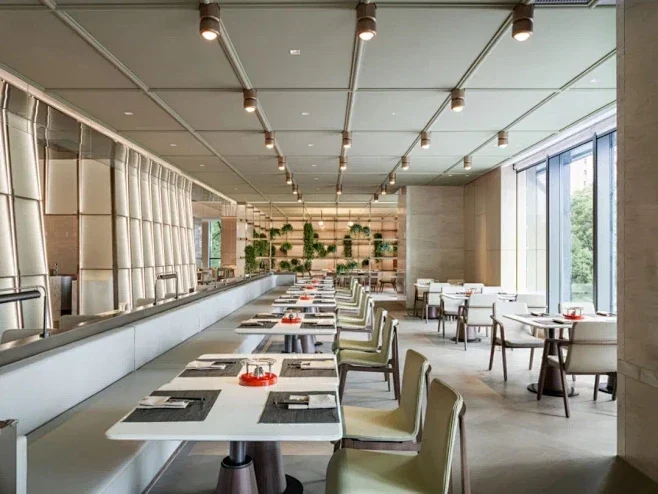
The charm of a Western-style restaurant lies half in its elegant environment and the other half in the suitable Western-style restaurant tables and chairs. As the “protagonists” of the restaurant, the choice of tables and chairs directly affects customers’ dining experience and determines the overall style of the space. Many businesses tend to overlook details when selecting, but in fact, as long as you grasp the core points, you can choose styles that are both practical and beautiful. Let’s break down the selection skills for Western-style restaurant tables and chairs to help you avoid pitfalls~
1. Material Selection for Western-Style Restaurant Tables and Chairs: Match Scenarios on Demand
There are various tabletop materials for Western-style restaurant tables and chairs, and the advantages, disadvantages, and suitable scenarios of different materials vary significantly. It’s clearer to organize them into a table:
| Ohun elo Iru | Core Features | Awọn oju iṣẹlẹ ti o yẹ | 2024 Market Trend | Awọn akọsilẹ |
|---|---|---|---|---|
| Fireproof Board | Low cost, easy to produce; poor texture, prone to fading, cracking, and corrosion | Western fast-food restaurants, affordable Western-style restaurants | Still the main material for fast-food restaurants, accounting for about 65% | Confirm raw materials when purchasing to avoid low-quality melamine |
| Solid Wood Tabletop | Beautiful natural grain, wide color options, easy to clean, strong wear resistance | Mid-to-high-end Western-style restaurants, theme restaurants | Demand is increasing year by year, with a usage rate of 78% in high-end restaurants | Prices are rising steadily; daily moisture-proof maintenance is required |
| Tempered Glass Panel | Strong transparency, lightweight visual effect, easy to clean | Minimalist Western-style restaurants, internet-famous restaurants | Preference among young consumers is increasing | Avoid heavy impact to prevent explosion |
| Marble Panel | High-end texture, easy to manage and maintain | High-end Western-style restaurants, luxurious restaurants | Prices of natural marble have increased by 12% due to scarcity | Distinguish between natural and artificial; natural has unique patterns, artificial has homogenized patterns |
Among them, solid wood tabletops are a popular choice for high-end restaurants. The commonly used woods include these three types:
- Ash Wood: Strong stability, not easy to crack or deform, clear and beautiful wood grain, corrosion-resistant, easy to process. It has a higher cost-performance ratio than mahogany and is harder and more wear-resistant than pine, making it an excellent choice balancing practicality and aesthetics;
- Oak Wood: Hard texture, compact structure, good coloring performance. Furniture made after drying treatment is dignified and stable, but prone to cracking and warping if not properly treated. The heartwood has poor corrosion resistance, so anti-corrosion treatment is necessary;
- Elm Wood: Known as “elm knot”, it is hard and straight with unique natural colors. It fits the style of integrating tradition and modernity, retaining the elegance of Ming and Qing furniture, and is suitable for Western-style restaurants focusing on cultural atmosphere.
It’s worth mentioning that the chairs of solid wood tables and chairs are usually filled with high-density rebound sponge and wrapped in soft fabric or leather, which is comfortable even for long sitting, allowing customers to enjoy their meals at ease.
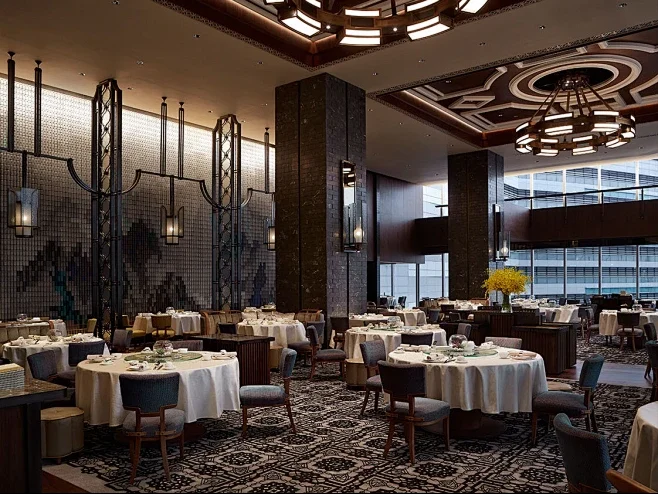
2. Structure of Western-Style Restaurant Tables and Chairs: Connected vs. Detachable
In addition to materials, structural design also affects the user experience:
- Connected Structure: Neat and uniform arrangement, space-saving, but inconvenient to move and slightly poor in comfort, suitable for affordable restaurants with limited space;
- Detachable Structure: Although it may seem a bit messy, it is flexible to move, can adjust the layout according to the number of diners, and has higher comfort, making it the first choice for mid-to-high-end Western-style restaurants (accounting for over 80% of the market).
Regardless of the structure chosen, attention should be paid to stability and design rationality to avoid shaking or mismatched sizes.
3. Tablecloth Matching: Only Add Points if It Fits the Tables and Chairs
Tablecloths are the “finishing touch” of Western-style restaurants. When choosing, first clarify the shape and quantity of Western-style ounjẹ tabili ati ijoko awọn to avoid mismatched sizes. Nowadays, affected by dietary culture, domestic Western-style restaurants are no longer limited to traditional long tables. Round tables, square tables, oval tables, and even irregular tables are very common, which need to be selected according to indoor space layout requirements.
Recommended tablecloth materials:
| Ohun elo Iru | Awọn ẹya ara ẹrọ | Suitable Restaurant Grade | Cleaning Difficulty |
|---|---|---|---|
| Plastic Tablecloth | Good waterproof and oil-proof effect, low cost | Affordable Western-style restaurants, fast-food restaurants | Easy to clean, can be wiped directly |
| Chemical Textile | Easy to clean, high cost-performance ratio | Mid-range Western-style restaurants | Machine washable, not easy to deform |
| Linen Tablecloth | Natural and environmentally friendly, good texture, rich colors and patterns | Mid-to-high-end Western-style restaurants | Need gentle cleaning, avoid exposure to sunlight |
Awọn ibeere Nigbagbogbo
Q: How to quickly distinguish between natural marble and artificial marble?A: The patterns of natural marble are unique natural textures, while artificial marble is mostly made of machine templates with repeated patterns; it can also be tested by the vinegar drop method. Natural marble will have a slight bubble reaction when exposed to vinegar, while artificial marble has no obvious reaction.
Q: How to maintain solid wood tables and chairs daily?A: Avoid direct sunlight to prevent fading and cracking; regularly wipe with a mild detergent and keep dry; avoid scratching the tabletop with sharp objects, and handle heavy objects with care when placing them.
Choosing the right Western-style restaurant tables and chairs can not only enhance the restaurant’s style but also bring customers a comfortable dining experience. By combining the three core points of material, structure, and matching, and choosing according to the positioning and scenario of your own restaurant, you can create a practical and textured dining space~


