

 English
 中文
 日本語
 한국어
 العربية
 Русский
 Português
 Türkçe
 हिन्दी
 Tiếng Việt
 ไทย
 Indonesia
 Melayu
 ខ្មែរ
 ລາວ
 မြန်မာ
 Afrikaans
 Hausa
 Igbo
 Sesotho
 isiXhosa
 Yorùbá
 isiZulu

In Europe and America, cafés are more than just “places to get coffee”—they’re the heart of community socializing, a “second office” for remote workers, and even a spot for family weekend outings. The key to making guests “want to stay an extra hour” lies in every detail of the tables and chairs—from the width of the tabletop to the material of the seat, from the spacing in the layout to the ease of maintenance. As a furniture customization manufacturer with years of experience, we’ve seen too many issues caused by “small oversights”: a café in Berlin used rattan chairs without waterproof treatment, and all the chairs in the outdoor area mildewed during the rainy season; a Japanese-style café in Tokyo left too little space between tables, so guests always knocked over neighboring coffee cups when standing up. Today, we’ll walk you through the entire customization process to help you master the design and implementation of café tables and chairs.
1. Furniture Sizes: Not Just “Standard,” But “Space-Adapted”
Many clients ask us initially: “Is there a ‘one-size-fits-all’ dimension?” The answer is no—even for a 4-person table, the right size differs completely between a 100㎡ café and a 50㎡ café. Let’s start with basic standard sizes, then explain “flexible adjustments” based on scenarios:
| Furniture Iru | Basic Standard Specifications | Suitable Space Size | Adjustment Tips (Small/Large Spaces) |
|---|---|---|---|
| Square Café Tables | 76cm×76cm (4 people); 107cm×76cm (6 people) | Medium spaces (60-100㎡) | Small spaces: 70cm×70cm (slightly narrower but functional); Large spaces: add 10cm in width for a grander look |
| Round Café Tables | 60cm diameter (2 people); 90-120cm diameter (4 people) | Compact spaces (<60㎡)/Spacious spaces (>100㎡) | Small spaces: 55cm diameter (rounded edges to prevent bumps); Large spaces: 130cm diameter (seats 5, ideal for small gatherings) |
| Western-style Chairs/Sofa Chairs | Seat height: 35-42cm; Depth: 48-55cm; Back height: 68-72cm | Universal scenarios | For shorter guests: 38cm seat height; For taller guests: 40cm seat height to avoid dangling feet |
Real-Life Case: We customized furniture for a 50㎡ Japanese-style café in Melbourne—the space was compact with many corners, so we reduced the standard 60cm-diameter round table to 55cm and chose light gray velvet seat cushions (soft to the touch and makes the space feel larger). After opening, the owner shared: “Guests say even during peak hours, it never feels crowded—instead, it has a ‘warm, homey vibe.’”
2. Material Selection: “Durable” Matters As Much As “Good-Looking”
Kafe tables and chairs face daily challenges: coffee spills, food crumbs, and frequent sitting/leaning. Choosing the wrong material will significantly increase maintenance costs. We’ve compiled a practical material list based on “scenario needs,” with real client feedback:
- Solid Wood (Oak, Walnut, Ash)
- Pros: High-end texture, perfect for Nordic, vintage French, and Japanese styles;
- Cons: Heat and moisture sensitive, requires regular maintenance;
- Suitable Scenarios: Indoor main dining areas (no outdoor exposure, minimal water spills);
- Client Case: We customized oak tables and chairs for a Nordic-style café in Copenhagen. The tabletops were coated with heat-resistant paint, and the owner said: “A guest accidentally placed a hot coffee pot on the table, and after wiping it clean, there was no trace at all—it’s so worry-free!”
- Metal (Aluminum Alloy, Wrought Iron, Stainless Steel)
- Aleebu: Waterproof, rust-resistant, scratch-resistant, ideal for industrial and modern minimalist styles;
- Cons: Cold to sit on in winter (solved with soft cushions);
- Suitable Scenarios: Outdoor areas, industrial-style cafés;
- Client Case: An industrial-style café in Berlin used black wrought iron tables and chairs with leather cushions. Guests said: “The cold hardness of metal balances with the softness of leather—it looks great in photos too.”
- Fabric/Upholstery (Linen, Velvet, Faux Leather)
- Pros: Comfortable to sit on, wide color options, perfect for cozy and vintage styles;
- Cons: Easy to get dirty (removable covers are recommended);
- Suitable Scenarios: Indoor lounge areas (for guests working on laptops or chatting);
- Our Small Design: We provide removable covers for all fabric chairs, and clients feedback: “Just throw them in the washing machine when dirty—it’s half the cost of dry cleaning.”
3. Café Styles: “Pitfalls” and “Winning” Customization Cases
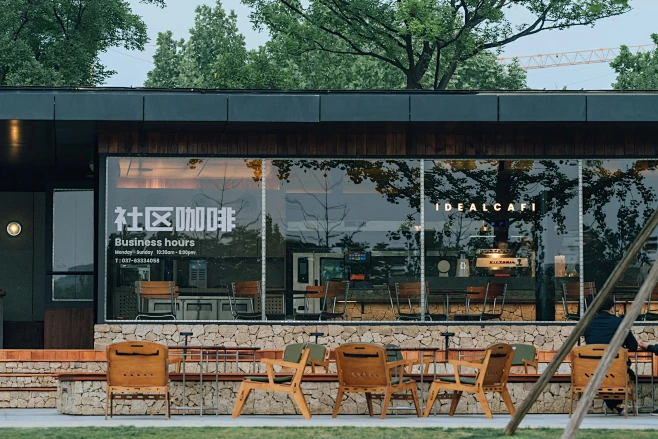
Every café style has its own “furniture code”—choosing the right one enhances the overall atmosphere, while the wrong choice feels out of place. We share customization experiences for 3 typical styles:
- Nordic-Style Cafés: “Light, Pale, Soft” Is Key
- Pitfall: Avoid dark, heavy materials (e.g., black walnut + wrought iron, which ruins the lightness);
- Winning Plan: Light oak square tables (76cm×76cm) + off-white linen upholstered chairs, with rounded table edges (to prevent bumps);
- Client Feedback: A café in Stockholm, Sweden used this plan, and guests said: “It feels like sitting on the balcony of my living room—so healing when the sun shines in.”
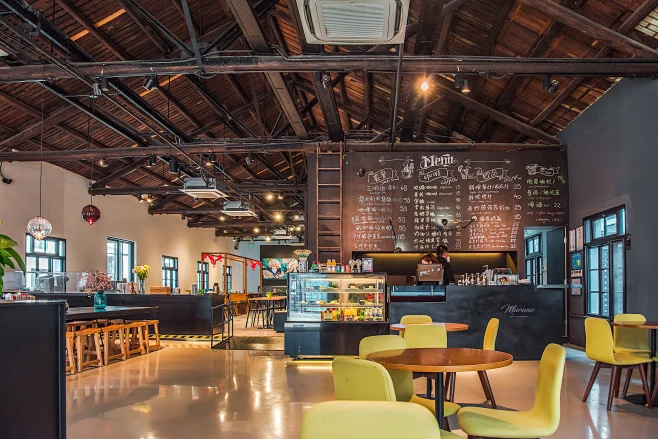
- Industrial-Style Cafés: Balance “Roughness + Details”
- Pitfall: Don’t use all cold, hard metal (it makes guests feel “uninviting”);
- Winning Plan: Black wrought iron-framed tables (with light gray cement tabletops) + dark brown faux leather chairs, with anti-slip pads on chair legs (to avoid scratching floors);
- Client Case: An industrial-style café in East London initially used all wrought iron furniture, but guests complained it was “too hard to sit on for long.” We added 3cm-thick faux leather cushions, and repeat customers increased by 20%.
- Vintage French Cafés: “Curves + Wood Grain” for Elegance
- Pitfall: Avoid angular designs (they break the romantic French vibe);
- Winning Plan: Round walnut tables (90cm diameter, with curved table legs) + beige velvet high-back chairs (only 2 placed in corners as “photo spots”);
- Small Detail: We carved shallow embossed patterns on the bottom of the table legs, and guests said: “When I looked down and saw them, I thought they were so delicate—like a little surprise.”
4. Layout & Maintenance: Practical Tips for “Durable and Stylish” Furniture
- Layout: Divide Areas by “Usage Scenarios”
- 「Work Zone」: Place 107cm×76cm square tables (enough for laptops, notebooks, and coffee cups), with 1.3 meters between tables (easy to stand up and grab items);
- 「Social Zone」: 4-person round tables (120cm diameter) in the center, with warm pendant lights—guests “don’t have to lean in to hear each other”;
- 「Private Zone」: 2-person small square tables (60cm×60cm) by windows, with semi-transparent curtains—couples on dates “have privacy without feeling cramped.”
- Real Adjustment: We redesigned the layout for a café in Toronto—originally, all 4-person tables were in the center, and guests complained it was “too noisy.” After creating 2 small private areas, weekend couple orders increased by 30%.
- Maintenance: Simple Steps to Extend Lifespan
- Solid Wood Furniture: Wipe dust with a dry cloth daily, apply wood wax oil once a month (to prevent cracking), and avoid placing near direct air conditioning;
- Metal Furniture: Wipe with a dry cloth after rain, apply anti-rust paint once a year (a must for outdoor areas);
- Fabric Furniture: Wash removable covers weekly with neutral detergent (to avoid fading), and clean stains immediately with a damp cloth dipped in soapy water.
Additional FAQs
Q: How far in advance should I order custom café tables and chairs?
A: Our standard customization cycle is 3-4 weeks (including design, production, and shipping). For irregular-shaped furniture (e.g., curved tables, triangular chairs), an extra week is needed to finalize CAD drawings. We recommend starting communication 2 months before opening to leave time for adjustments.
Q: If my café is in a rainy area, what materials are best for outdoor tables and chairs?
A: Prioritize waterproof rattan chairs (PE rattan, rainproof) + aluminum alloy tables (rust-resistant). We used this combination for a café in Seattle, and after the rainy season, the furniture “didn’t mildew at all—still looked new after wiping.”
Q: Can I customize tables and chairs to match my café’s logo color?
A: Absolutely! We offer fabric dyeing, metal spraying, and solid wood veneer coloring. For example, we customized light pink fabric chairs matching the logo for a milk tea-themed café in Bangkok, and guests said: “It’s perfect for photos—many people come just to take pictures.”
Ipari
Customizing café tables and chairs isn’t about “choosing good-looking styles”—it’s about “finding the right solution for your café.” It needs to fit the space size and style, and more importantly, consider guests’ real usage experience. Since 2015, we’ve been making aṣa ounjẹ aga, serving café clients in over 20 countries—from small industrial-style shops in London to cozy Japanese-style cafes in Melbourne. Every set of tables and chairs hides a “wish to make guests stay longer.” If you’re planning a café or want to replace existing furniture, feel free to contact us: We’ll bring measuring tools to your space, help you calculate the “most comfortable sizes,” and design the “most reasonable layout”—turning tables and chairs into a “plus” for your café, not a “regret.”


