

 English
 中文
 日本語
 한국어
 العربية
 Русский
 Português
 Türkçe
 हिन्दी
 Tiếng Việt
 ไทย
 Indonesia
 Melayu
 ខ្មែរ
 ລາວ
 မြန်မာ
 Afrikaans
 Hausa
 Igbo
 Sesotho
 isiXhosa
 Yorùbá
 isiZulu
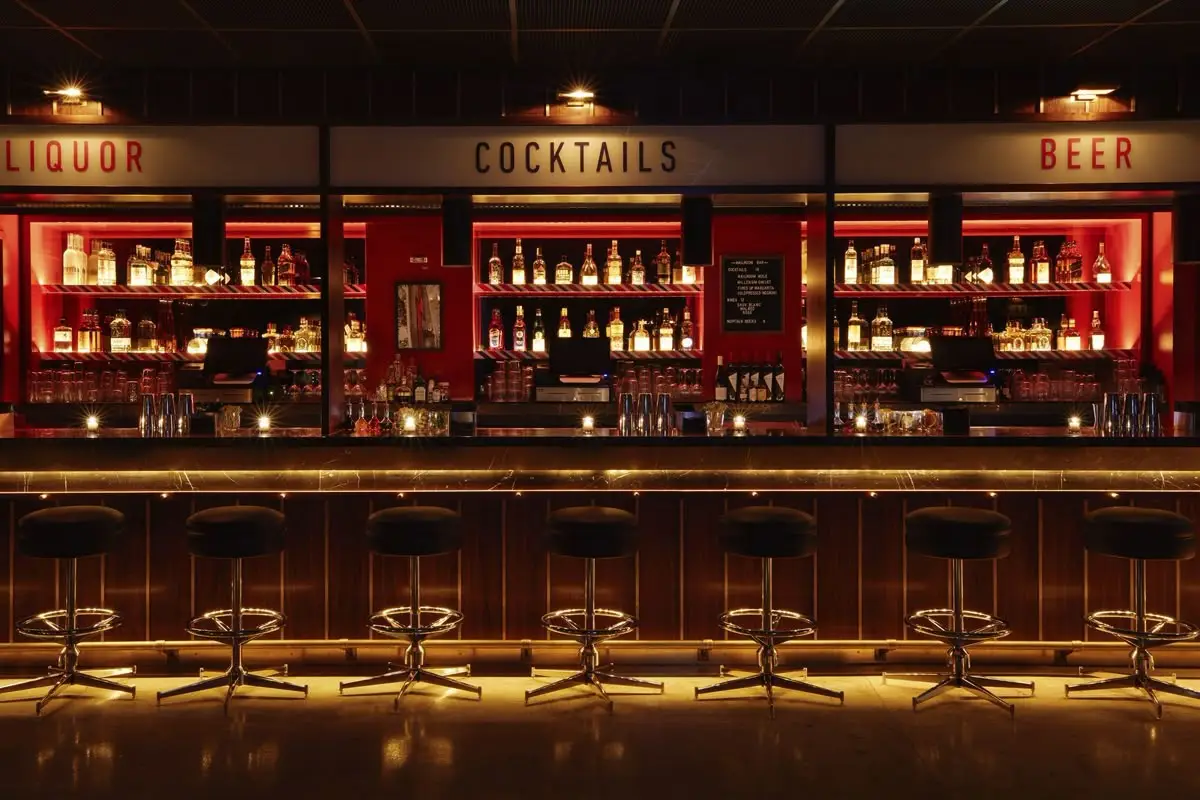
Many operators of chain restaurants, casual dining bars and boutique lounges often take style design, load-bearing performance and overall budget as the core considerations when selecting bar ìgbẹ in bulk, but easily ignore the potential damage of metal legs to wood floors. A batch of commercial metal bar stools with seemingly outstanding cost-performance may leave the carefully laid wood floors full of scratches just a few months after being put into use, which not only lowers the spatial texture, but also the subsequent repair and replacement costs far exceed the expenses saved in the early procurement. Mingmeng has been deeply engaged in furniture manufacturing for many years, always focusing on the actual use pain points of commercial scenarios in the research and development and production of bar stools, and solving various problems of adaptation between bar stools and wood floors for purchasers from product design to detailed technology.
Wood floors in restaurants are a key carrier to enhance spatial style, especially for high-end catering stores, where a lot of costs have been invested in the selection and construction of wood floors. The structural characteristics of metal bar stools determine that their overall weight is highly concentrated at the bottom of four slender legs, with the ground contact area only about one-third of that of ordinary dining chairs. From a physical engineering perspective, when a 75kg adult sits on a slender bar stool, the local pressure exerted by the stool legs on the ground is 3-5 times that of ordinary wide-legged dining chairs. On a relatively soft medium like wood flooring, this high pressure combined with the shear force during dragging is the root cause of paint cracking. Different from the low-frequency use in household scenarios, bar stools in commercial places are dragged repeatedly dozens of times every day. If a large number of chairs placed in batches have protection defects, the entire floor will quickly suffer large-area wear. Local repairs cannot achieve uniform color, and overall renovation will suspend store operations, causing dual losses that trouble many operators.
Many purchasers wonder why the bar stools newly purchased with foot pads lose their protection effect in just three months. Most PVC foot pads equipped with low-price bar stools on the market are fixed with ordinary adhesive. Affected by long-term ground friction, indoor temperature difference and humidity, the adhesive will quickly harden and become brittle, and the edges will warp and fall off directly. The more hidden problem is that the grooves on the surface of the foot pads are easily embedded with fine sand and dust. When dragged, these hard particles are like micro sandpaper, and the scratch damage to wood floors is even more serious than that of bare metal legs. Such seemingly small details are precisely the hidden hidden dangers that are most easily overlooked when purchasing bar stools in bulk. It is worth mentioning that in the 2026 catering space, the high-frequency operation of sweeping robots requires bar stool foot pads to have extremely high stability, to prevent the robot from rolling in loose foot pads during cleaning and causing secondary scratches, which is also a new detail that cannot be ignored when purchasing owo bar ìgbẹ today.
To fundamentally prevent bar stools from scratching wood floors, selecting protective foot pads suitable for commercial scenarios is the core. Foot pads of different materials have obvious differences in durability, noise reduction effect and adaptation scenarios. The specific comparison can be referred to the table below:
| Foot Pad Material | Awọn anfani pataki | Adaptation Scenarios | Replacement Cycle | Coefficient of Friction (CoF) and Noise Level |
|---|---|---|---|---|
| Heavy-duty Felt | Excellent mute effect, soft texture without damaging paint | Quiet lounges, high-end western restaurants | 1-2 months | Noise level <30dB (extremely quiet), low coefficient of friction |
| Industrial Nylon Glides | Wear-resistant and durable, suitable for high-frequency dragging | Chain fast food restaurants, internet-famous dining bars | 4-6 months | Noise level 50dB (medium), extremely low coefficient of friction (easy to slide) |
| Thermoplastic Rubber Sleeves | Moisture and corrosion resistant, strong cushioning | Casual dining bars in humid environments | 6-8 months | High coefficient of friction (good anti-slip performance), suitable for uneven ground |
| Universal Leveling Foot Pads | Automatically adjust stress, avoid single-point heavy pressure | Catering spaces with uneven ground | Long-term use (only regular inspection required) | Medium coefficient of friction, noise level 40dB (low), moderate anti-slip performance |
| Transparent PU Wrapping Technology | Integrated molding without falling off, beautiful and highly protective | High-end customized catering stores | More than 12 months | Medium to high coefficient of friction, noise level 35dB (quiet), balancing anti-slip and mute performance |
In addition to selecting appropriate foot pads, finalizing process details in advance during the production stage of custom bar stools in bulk is far more efficient than later remedies. Welding burrs at the bottom of chair legs are the primary culprit for scratching floors. When producing commercial bar stools, Mingmeng carries out three fine grindings on each chair leg to ensure the bottom is smooth and edgeless, eliminating scratch risks from the source. At the same time, the built-in thread pre-embedding process is adopted, abandoning traditional adhesive foot pads. In the later stage, protective accessories of different materials can be freely replaced according to store needs without drilling to transform chair legs, which not only ensures product integrity, but also improves the flexibility of later maintenance.
For managers of catering stores, establishing a standardized maintenance process can effectively extend the service life of bar stool foot pads and reduce floor loss. Arrange staff to check whether the foot pads are loose or fallen off after closing every day, and clean the embedded sand in time; conduct a comprehensive inspection of all bar stool foot pads every week, and polish worn edges; conduct in-depth testing every month, and uniformly replace hardened and cracked foot pads. If the wood floor is accidentally scratched slightly, it can be repaired with a touch-up pen of the same color, and then polished with special wood wax oil. Small traces can be quickly covered to avoid scratches from expanding and affecting the overall appearance.
30-Second Quick Pitfall Avoidance Checklist for Commercial Bar Stool Procurement:
- Check the connection method: Reject adhesive bonding, and prioritize thread-screwed or snap-on sleeve types.
- Feel the pipe mouth treatment: Touch the metal leg pipe mouth with your finger pad to check if there is Deburring treatment.
- Test material hardness: Ask if the foot pads are made of TPR (Thermoplastic Rubber) or High-Density Felt.
- Check accessory supply: Whether the manufacturer provides continuous supply of standardized consumables (foot pads) for the next 3-5 years.
Frequently Asked Purchasing Questions
Q: When purchasing bar stools in bulk, how to quickly judge whether the product is suitable for wood floor scenarios?
A: In addition to checking the material of the foot pads, focus on the grinding process at the bottom of the chair legs. Commercial bar stools with smooth burr-free surfaces and reserved threaded interfaces are more suitable for wood floor stores and can reduce later maintenance troubles. All bar stools produced by Mingmeng undergo strict deburring treatment and reserve threaded interfaces, which can be directly adapted to various protective foot pads.
Q: For chain restaurants with extremely large passenger flow, which bar stool protection scheme has the highest cost-performance ratio?
A: It is recommended to match industrial nylon glides with universal leveling foot pads, which can not only cope with high-frequency dragging, but also solve the problem of uneven ground. Mingmeng can customize exclusive bar stool styles and protection configurations according to the unified style of chain stores, and provide long-term foot pad supply services.
Q: Can we directly require the manufacturer to carry out integrated protective treatment when customizing bar stools?
A: Absolutely. Mingmeng supports full-process customization from design to production, and can integrate protective designs such as PU wrapping and threaded foot pads into product production, so that each bar stool can adapt to wood floor scenarios when leaving the factory, saving subsequent transformation steps for purchasers and meeting the use needs of high-frequency operation of sweeping robots.
Truly high-quality commercial bar stools not only have beautiful appearance and stable structure, but also adapt to the actual use needs of commercial scenarios. Bulk procurement ignoring floor protection seems to save early costs, but actually brings continuous later losses. Mingmeng always takes actual usage scenarios as the core, integrates detailed protection concepts into the design and production of bar stools, helps purchasers avoid various hidden dangers with mature technology and customized services, makes furniture adapt to store space for a long time, and reduces overall operating costs.


