English
 中文
 日本語
 한국어
 العربية
 Русский
 Português
 Türkçe
 हिन्दी
 Tiếng Việt
 ไทย
 Indonesia
 Melayu
 ខ្មែរ
 ລາວ
 မြန်မာ
 Afrikaans
 Hausa
 Igbo
 Sesotho
 isiXhosa
 Yorùbá
 isiZulu
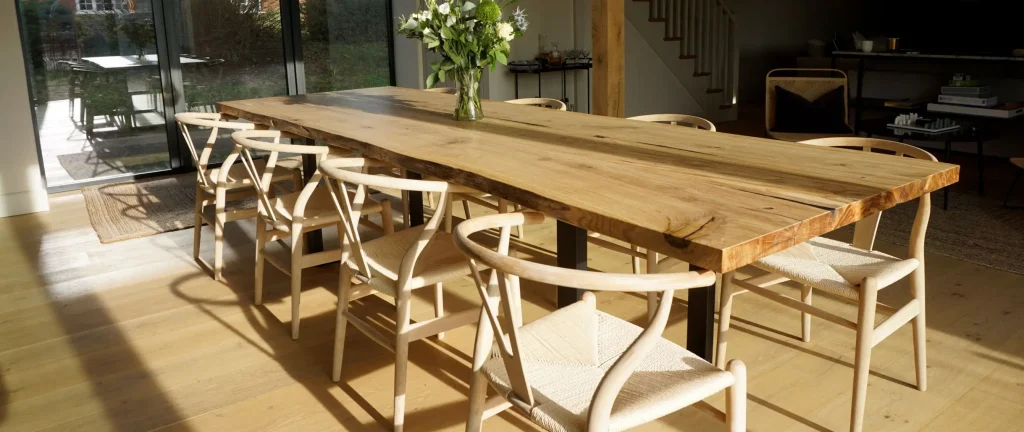
In the competitive landscape of hospitality—from boutique hotels and signature restaurants to corporate cafeterias and luxury resorts—furniture is a silent ambassador of your brand. A custom wood dining table top is not merely a surface; it is a strategic investment at the intersection of design narrative, operational durability, and guest experience. For developers, procurement managers, and FF&E (Furniture, Fixtures, and Equipment) specifiers, navigating the specification process requires balancing aesthetic vision with commercial pragmatics.
This 2026 guide is engineered for trade professionals. It provides a systematic framework for specifying custom wood dining table tops that meet stringent commercial demands, align with project budgets and timelines, and deliver lasting value in high-traffic environments.

1. The Strategic Rationale: Why Custom Tops are a Commercial Imperative
Off-the-shelf solutions often force compromises in design cohesion, size optimization, and durability standards. Specifying a custom wood dining table top provides critical advantages:
- Brand Integrity & Uniqueness: Creates a distinctive, ownable aesthetic that reinforces your property’s identity.
- Ntlafatso ea Sebaka: Maximizes cover density and traffic flow by tailoring dimensions exactly to your floor plan and booth configurations.
- Kakaretso ea Litšenyehelo Tsa Botho (TCO): While initial investment is higher, a properly specified custom top with a commercial-grade finish and structure offers a far longer service life, reducing replacement frequency and cost per year.
- Compliance & Safety: Ensures compliance with local fire codes (e.g., Class 1 Flame Spread rating) and ADA requirements for clearances and edge details from the outset.
2. Phase 1: Design & Concept Development
Begin with a clear brief that aligns all stakeholders.
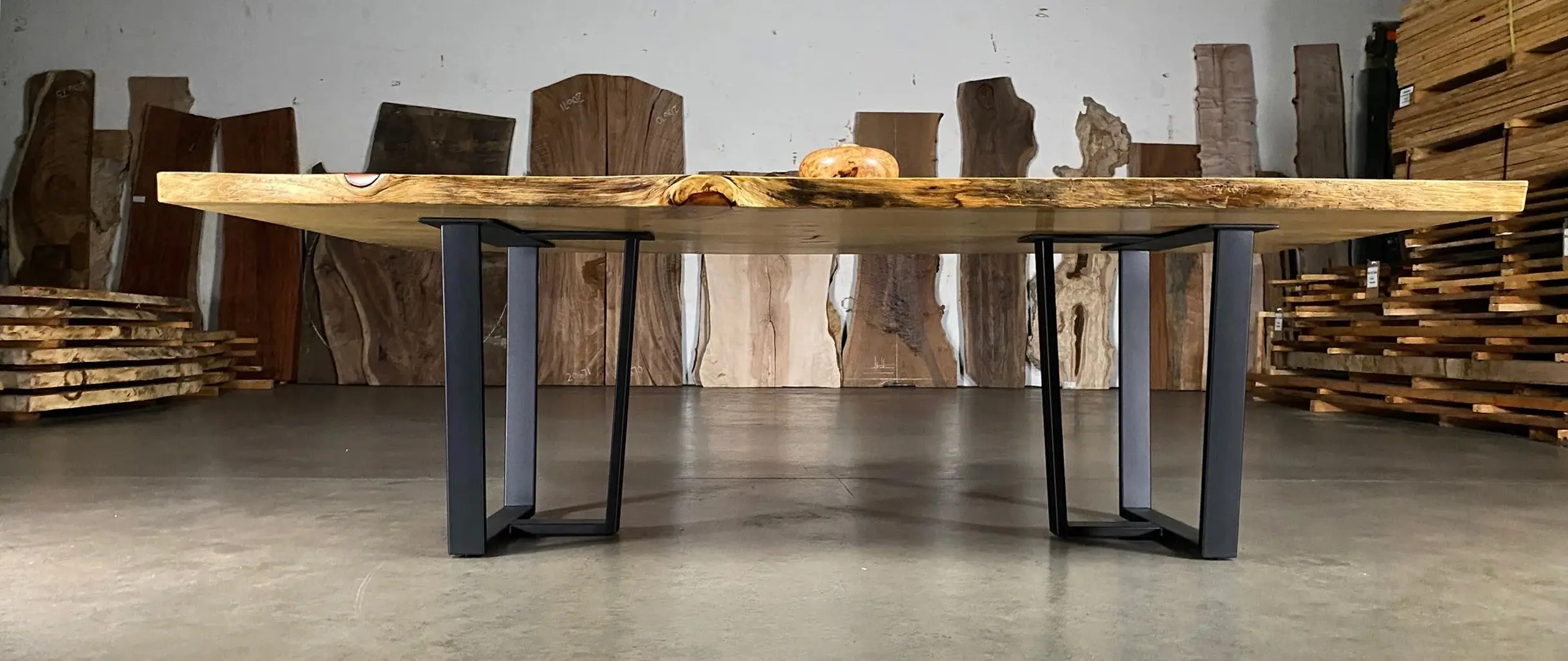
- Define the Narrative: Is the intent rustic, sleek, organic, or monumental? The wood species, edge profile, and base pairing will follow this lead.
- Layout Integration: Provide CAD drawings of the dining area. Determine exact dimensions, including overhangs, cut-outs for bases, and required clearances for chairs and service.
- Litlhoko tsa tšebetso: Identify expected use: fine dining (lower abrasion), all-day café (high spills, heat), or banquet hall (requires mobility and stacking/storage). This dictates material and finish choices.

3. Phase 2: Material Selection: Performance, Aesthetics & Sustainability
The core material determines character, durability, and maintenance protocol.
| Wood Species / Type | Janka Hardness [¹] | Best For Commercial Use In: | Key Specification Notes for 2026 |
|---|---|---|---|
| White Oak (Quarter-Sawn) | 1360 lbf | High-end restaurants, hotel lobbies. Prized for stability and pronounced ray fleck. | Hlalosa FSC e netefalitsoeng. Request quarter-sawn or rift-sawn lumber for maximum stability to prevent warping. |
| American Black Walnut | 1010 lbf | Boutique settings, luxury suites. Offers rich color and luxury appeal. | Understand it is a softer hardwood. Mandate a ultra-durable, abrasion-resistant commercial finish. |
| European Oak | 1360 lbf | Robust, timeless appeal for gastropubs and resorts. | Dense grain. Excellent for wire-brushed or textured finishes that hide minor wear. |
| Hard Maple | 1450 lbf | Extremely high-traffic cafeterias, brewery halls. | One of the hardest domestic species. Ideal for a natural, lighter look with high durability. |
| Accoya® (Modified Wood) | E fetohang | Poolside bars, rooftop terraces, high-moisture zones. | Not a species, but a treatment. Spec its unparalleled dimensional stability and Class 1 durability (50+ year lifecycle). |
| Reclaimed / Character Grade | E fetohang | Projects with a strong sustainability and story-telling focus. | Critical: Supplier must provide documentation on source and processing. Must be kiln-dried and certified free of contaminants. |
Sustainability Specification: In 2026, documentation is non-negotiable. Require Chain of Custody certificates (FSC/PEFC) and information on low-VOC, plant-based finish systems.

4. Phase 3: Technical Specifications: The Anatomy of Durability
The details in your specification sheet prevent failures.
- Core Construction: For tops over 48″ wide, specify engineered panel cores (multi-ply, cross-banded substrate) to prevent cupping. Solid wood tops require breadboard ends or strategic joinery for stability.
- Edge Profiles: A 3/4″ roundover or chamfer is standard for safety and feel. For a robust look, specify a double bullnose or waterfall edge.
- The Finish System: This is your primary armor. The 2026 standard is a multi-step, catalyzed conversion varnish or epoxy-polyurethane hybrid. Require:
- Minimum 5-coat system (sealer, build coats, topcoat).
- Chemical, heat, and abrasion resistance test data (ASTM standards)[²].
- Ease of repair protocol for the finish.
- Attachment & Support: Detail the mounting method to the base (e.g., threaded inserts, cleats) to prevent movement and sagging.
5. Phase 4: Integrated Design: Matching Tops with Restaurant Table Bases
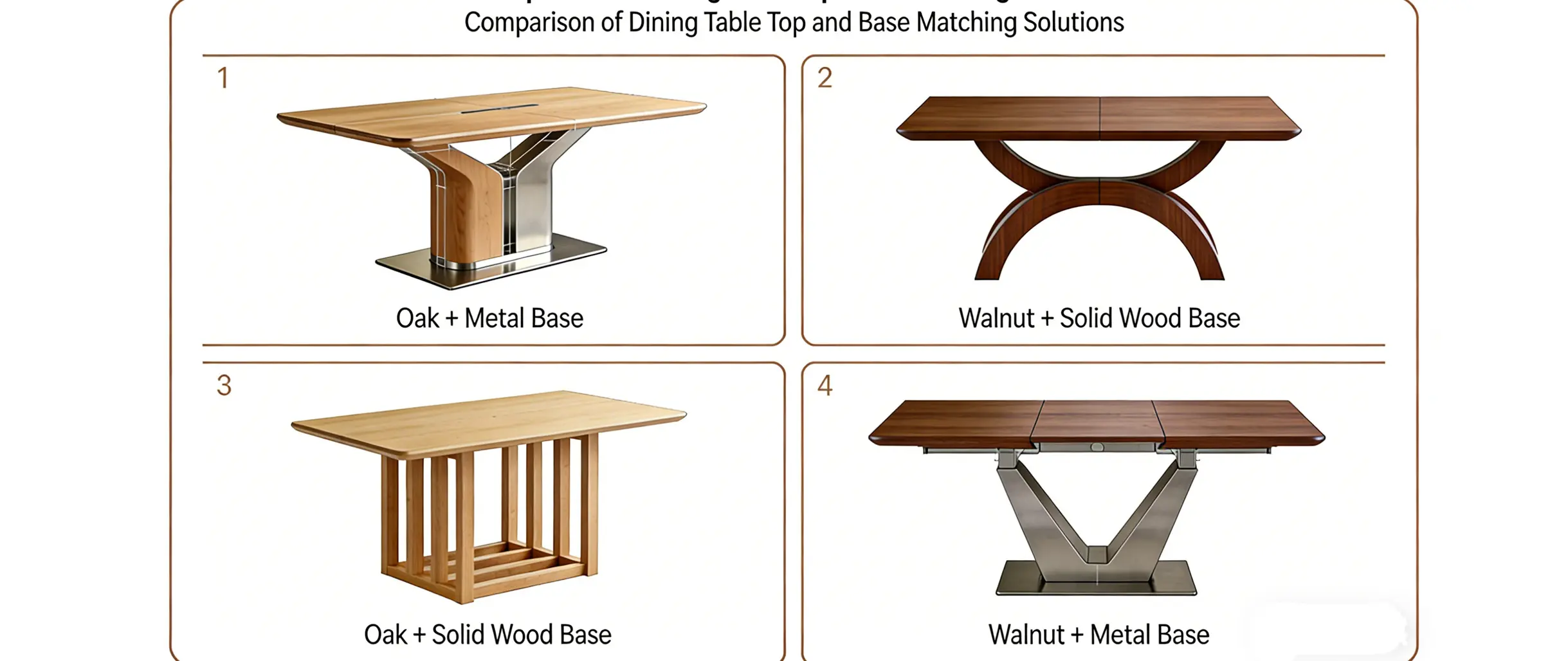
A perfect table top requires a perfectly specified base. The pairing affects stability, aesthetics, and maintenance. Consider these recommended pairings for common commercial scenarios:
| Application Scenario | Recommended Wood Top Character | Ideal Table Base Style & Link | Rationale for Pairing |
|---|---|---|---|
| Fine Dining Restaurant | Sleek, thin profile (1.75″) in Walnut or quarter-sawn Oak with a minimalist finish. | Central Pedestal Base: Explore our Aura Single Pedestal for unobstructed legroom and a clean aesthetic. | The pedestal eliminates leg interference, enhancing guest comfort. The sleek lines complement a refined top. |
| High-Turnover Café/Bistro | Durable, high-pressure laminate (HPL) over ply core or solid Maple with an ultra-resistant finish. | Four-Legged Frame with Crossbar: Our Terra Heavy-Duty Table Base offers maximum stability and resistance to lateral movement from frequent use. | The crossbar adds crucial rigidity. Four-point grounding prevents wobble on uneven floors. |
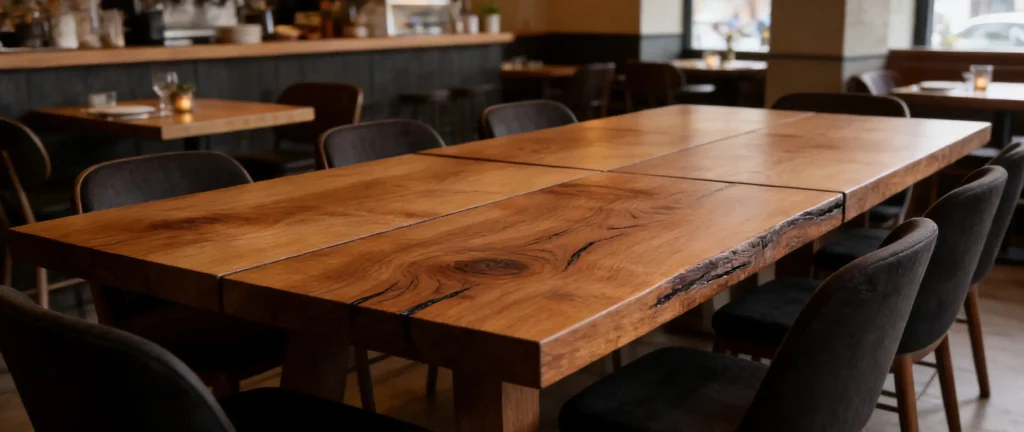
| Hotel Lobby Lounge | Live edge or character-grade wood, serving as a visual focal point. | Industrial or Geometric Metal Frame: Pair with our Forge Collection X-Frame Base to provide a strong visual counterpoint that anchors the organic top. | The contrast highlights the natural wood. The open frame design maintains an airy feel in social spaces. |
| Banquet Hall / Flex Space | Lightweight engineered top with durable veneer. Must be easy to lift and store. | Folding Leg Assembly: Specify our Nexus Folding Table Base system for quick breakdown and vertical storage. | Functionality is key. Folding bases transform fixed tables into flexible assets, maximizing space utility. |
| Outdoor Dining Area | Modified wood (Accoya®) or marine-grade polymer with wood grain visual. | Weather-Resistant Powder-Coated Cast Aluminum: The Alfresco Collection bases are designed to withstand the elements without corroding. | Both top and base are specified for all-weather endurance, ensuring a cohesive and long-lasting outdoor set. |
Malebela a Pro: Always request a load capacity rating for your chosen setsi sa tafole sa reschorente and ensure it exceeds the expected load of the top plus typical use (e.g., a guest leaning on it). The connection hardware between the top and base should be specified to allow for wood’s natural seasonal movement[³].
6. Phase 5: The Procurement Process: Partnering with the Right Fabricator
Your fabricator is a technical partner. Vet them with these questions:
- “Can you provide a sample panel with our exact finish on our specified wood?”
- “What is your standard and maximum lead time for a 50-top order?”
- “What is your commercial warranty on the finish and structural integrity?” (Look for 3-5 years minimum).
- “Do you carry product liability insurance, and can you provide a certificate?”
7. Phase 6: Installation, Warranty & Lifecycle Management
- Pre-Installation: Schedule a pre-installation meeting. Verify substrate readiness (level floors).
- Installation Day: Supervise the use of proper equipment and protection of surrounding finishes.
- Warranty & Care: Obtain a clear warranty document and a commercial care & maintenance guide for the operations team. Using the correct commercial furniture cleaners is essential to uphold the finish warranty.
8. 2026 Outlook: Emerging Trends in Commercial Wood Design
- Hyper-Traceable Materials: Demand for blockchain-verified wood provenance, linking the table directly to a sustainably managed forest.
- Bio-Integrated Finishes: Development of self-healing, plant-based coating systems that offer enhanced durability with a lower environmental footprint.
- Adaptive & Tech-Integrated Tops: Exploration of integrated wireless charging, subtle LED perimeter lighting, and even dynamic surface texture changes for multi-functional spaces.
9. Conclusion
Specifying a custom wood dining table top is a definitive act of professional hospitality design. It requires translating a creative vision into a bulletproof technical document that ensures beauty, function, and longevity. By methodically progressing through concept, material science, technical detailing, and integrated component selection, you secure not just a furniture component, but a foundational element of the guest experience that will perform flawlessly for years.
Ready to translate your vision into a precise specification? Ikopanye le MingMeng Contract Design team to collaborate on your next project and receive our detailed 2026 Commercial Wood Top Specification Template.

Trade Specification FAQs
1. What is the realistic lead time for a bulk order of custom table tops?
For a standard specification, plan on 12-16 weeks from finalized drawings and deposit to site delivery. This includes material sourcing, production, finishing/curing time, and logistics. Complex orders or unique materials may extend this to 20 weeks.
2. How do we handle inevitable damage and repair in a commercial setting?
A high-quality commercial finish is repairable. Specify that your supplier provides a touch-up kit with the order. For minor scratches, on-site buffing and blending are possible. Deep damage requires a professional field technician. Clarity on repair service should be part of the supplier agreement.
3. Can we use our own Client’s Own Material (COM) for a wood slab?
Proceed with extreme caution. Reputable fabricators may accept COM, but will require rigorous inspection and kiln-drying certification. The warranty will typically be limited or voided, as they cannot guarantee the integrity of material they did not source. The financial saving is often outweighed by the risk of failure.
4. What are the key differences between a “commercial” and a “high-end residential” finish?
A commercial finish is engineered for chemical resistance (alcohol, disinfectants, sunscreen), thermal shock (hot plates, cold glasses), and abrasion (cutlery, cleaning). It has a higher film build and is tested to rigorous ASTM standards. A residential finish prioritizes aesthetics and feel over this level of engineered protection.
5. What is the single most important line item on a specification sheet?
The detailed finish system description. It must name the specific product brand (e.g., Milesi, Chemcraft, Renner), the type (catalyzed varnish, oil-modified urethane), the number of coats, and the performance standards it meets (e.g., ANSI/BIFMA X5.11 for chemical resistance). Vague terms like “durable clear coat” are unacceptable.
(Footnotes):
[¹] Janka Hardness Test: A standard measure of the resistance of wood to wear and denting. Higher values indicate greater hardness. Source: ASTM D143.
[²] Relevant ASTM standards may include D2571 (chemical resistance), D1308 (stain resistance), and D4060 (abrasion resistance via Taber test).
[³] Wood is hygroscopic and expands/contracts with changes in ambient humidity. Fixed, non-adjustable attachment points can lead to cracking. Proper hardware allows for this movement.