
 English
 中文
 日本語
 한국어
 العربية
 Русский
 Português
 Türkçe
 हिन्दी
 Tiếng Việt
 ไทย
 Indonesia
 Melayu
 ខ្មែរ
 ລາວ
 မြန်မာ
 Afrikaans
 Hausa
 Igbo
 Sesotho
 isiXhosa
 Yorùbá
 isiZulu
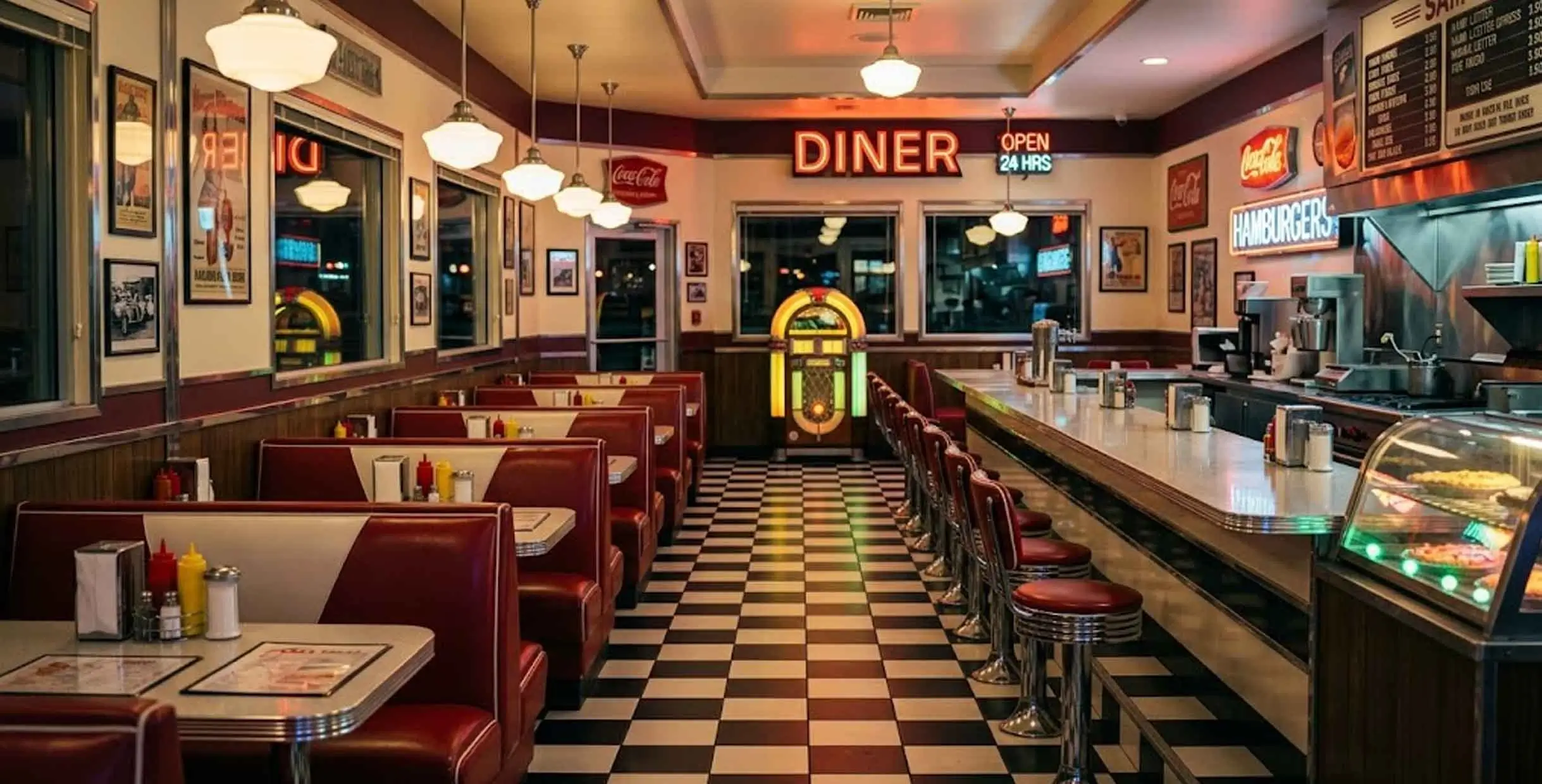
Two years ago, a guy from Ohio called me. He was reopening a historic diner on Route 40 — the old highway that used to carry families and truckers coast to coast. “I don’t want modern,” he said. “I want the exact look my grandpa remembers. Red vinyl, chrome trim, tables that wobble just a little but never break.”
That project became one of our favorite collaborations at Mingmeng Furniture. We shipped him 24 diner style table and chairs sets, 16 V-back booths, and a 40-foot counter with stainless steel edging. The place opened last spring and has been packed every weekend since.
This guide is for restaurant owners who want that same 50s retro furniture look — but need it to survive daily commercial use. I’ll walk you through the three design elements that define the style, the material specs that separate genuine commercial grade from cheap reproductions, and exactly what to ask any retro diner furniture supplier before you buy.
Looking for more retro inspiration after this? Check out our main guide: Enhance Your Restaurant With Retro Table and Chairs.
The Three Non-Negotiables of Authentic 1950s Diner Furniture
If you’re shopping for 1950s diner furniture, you’ve seen the cheap versions. Thin vinyl that cracks after three months. Chrome that rusts around the welds. Booths that look right in photos but feel wrong when you sit down.
Here’s what the real thing requires — and what we spec for our own retro café seating and tables projects.
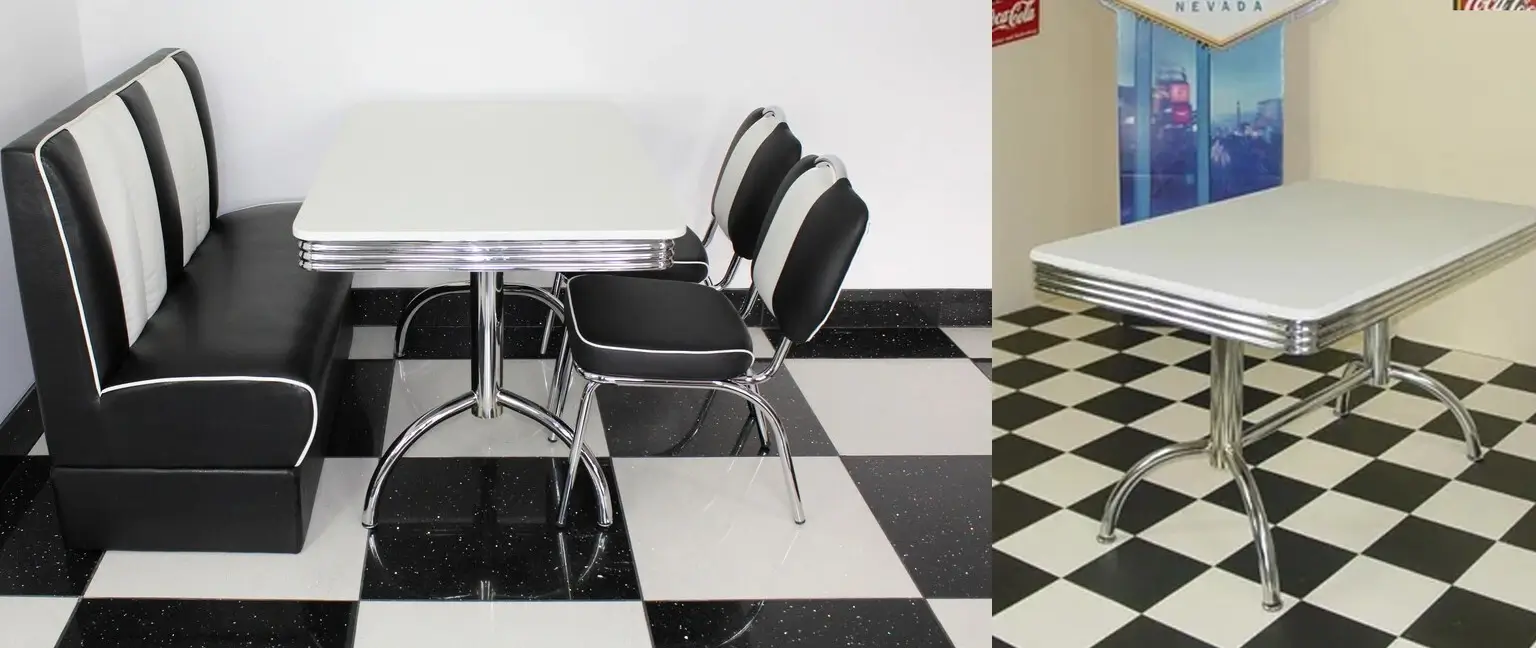
1. V-Back Booths (That Actually Support Your Back)
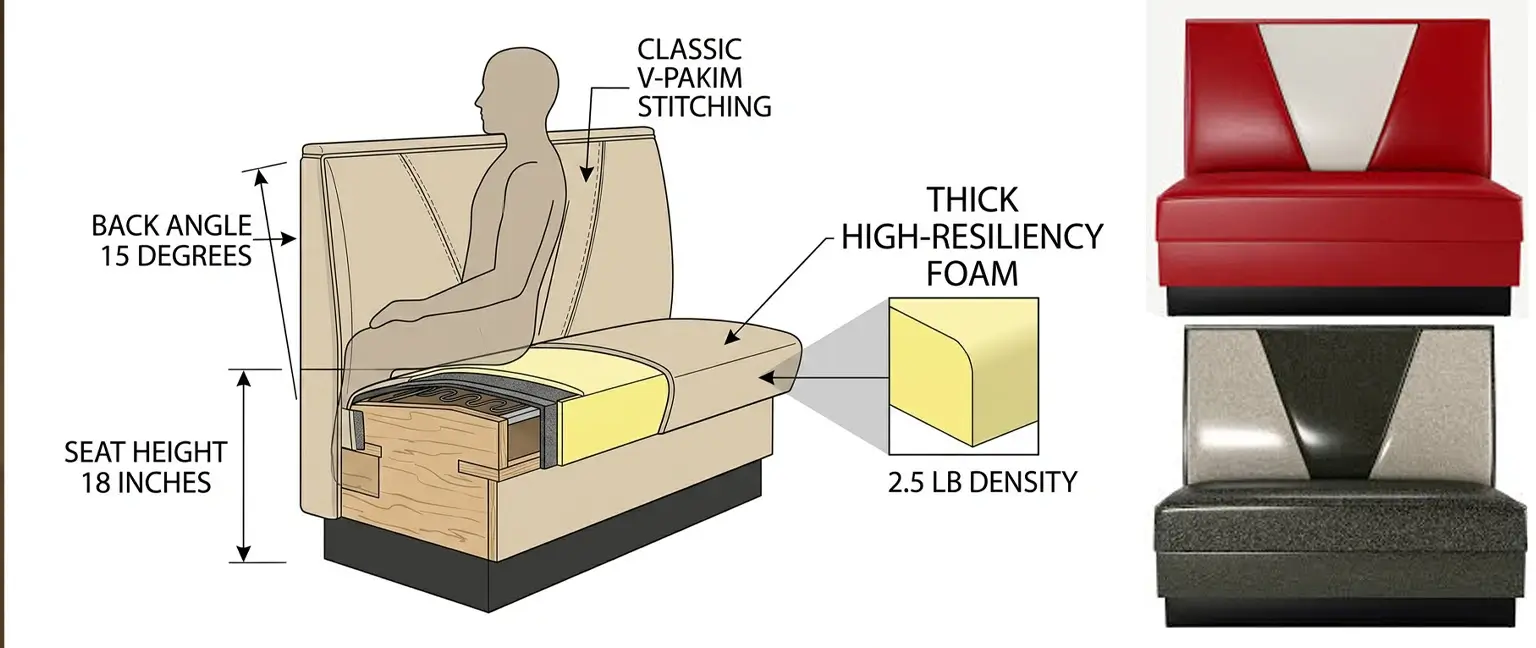
The classic V-back booth isn’t just for looks. The V-shape creates two separate seating areas per booth, so couples or small groups feel less crowded. But commercial use means people slide in and out constantly — the backrest takes a beating.
What to demand:
- Backrest frame: 1.5mm thick steel tube, not 1.2mm residential grade
- Foam density in backrest: minimum 2.2 lb/cubic foot for comfort without collapse
- Seat foam: 2.5–3.0 lb/cubic foot, high-resiliency (HR) foam
- Plywood backer: 12mm thick, double-doweled to frame
A Nashville barbecue chain ordered 40 booths from a discount supplier last year. The foam on the backrests flattened within 4 months. Why? The supplier used 1.5 lb foam — fine for a home basement bar, worthless for a restaurant. We replaced them with our standard 2.5 lb spec. Two years later, still firm.
2. High-Gloss Aluminum or Chromed Steel Edge Banding
That shiny trim on diner tables and counters isn’t just decoration. It protects the table edge from constant wiping, plate slides, and elbows. But cheap suppliers use thin aluminum (0.8mm or less) or plated steel that chips.
Our spec for diner style table and chairs that last:
- Aluminum edge banding thickness: 1.2mm minimum, anodized finish to prevent oxidation
- Chromed steel for legs and bases: triple-plated (copper, nickel, chrome) with a clear powder coat top layer
- Corner joints: seamless welded and hand-polished, not screwed-on corner caps
Quick test: Run your fingernail along the edge banding seam. If you feel a sharp lip or gap, moisture and cleaning chemicals will get underneath. In six months, that edge will lift. We always grind and polish every joint flush — adds 15 minutes per table but triples the lifespan.
3. Commercial-Grade Vinyl That Looks Vintage but Cleans Like Armor
That classic red or turquoise vinyl is what customers touch, spill on, and slide across. The look needs to be retro. The performance needs to be 2026.
Specs that matter for 50s retro furniture in high-traffic settings:
- Material: Marine-grade PVC (vinyl), not polyurethane or bonded leather
- Martindale abrasion test: >100,000 cycles (residential is 20,000–30,000)
- Flame resistance: Must meet КАЛ 117-2013 (California Technical Bulletin) — ask for the test report
- Tensile strength: Minimum 250 lbs/inch (prevents tearing from sharp belt buckles or purse hooks)
- UV resistance: Colorfast after 500 hours of Xenon arc testing (important if near windows)


We once supplied a retro café seating and tables package to a burger joint in Las Vegas. Their old supplier’s vinyl started cracking after 8 months — the Martindale rating was only 15,000 cycles. Our standard commercial vinyl runs 120,000 cycles. Four years later, that Vegas location is still on the original upholstery.
Why Commercial Grade Matters More for Diner Furniture Than Any Other Style
Here’s the truth that home decor blogs won’t tell you: diners have higher turnover than almost any other restaurant type. A family of four sits down, orders, eats, leaves — all within 30–45 minutes. That booth gets sat 15–20 times per day. A chair gets dragged out and pushed in 50+ times daily.
Residential 1950s diner furniture reproductions are built for 3–4 uses per week. They’ll fail in under a year. Commercial grade, properly spec’d, lasts 8–10 years.
Here’s a comparison table based on our real orders:
| Компонент | Residential Grade | Commercial Grade (Mingmeng Spec) | Expected Life (Daily Use) |
|---|---|---|---|
| Виниловая обивка | Martindale 20k, no CAL 117 | Martindale 100k+, CAL 117-2013 | 8–10 years |
| Seat foam | 1.8 lb density, polyether | 2.8 lb HR foam, high-resiliency | 6–8 years |
| Table edge banding | 0.8mm aluminum, glued | 1.2mm anodized, heat-sealed | 10+ лет |
| Chrome leg plating | Single-plate (just chrome) | Triple-plate + powder coat clear | 5–7 years (no rust) |
| Booth frame steel | 1.0mm tube | 1.5mm welded tube | 15+ years |
A Portland milkshake bar owner told me after switching to our booths: “My old ones looked great for 6 months. Then the vinyl started peeling and the chrome got pitted. I spent more time on repairs than on my milkshake machine.” Don’t be that owner.
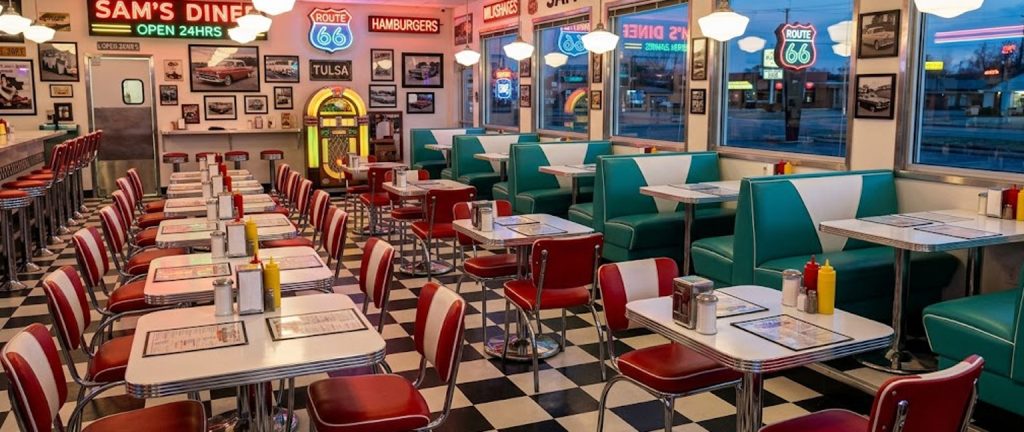
Real Project: Restoring a 1950s Diner on Route 66
We worked on a project in Tulsa last year. The building was original from 1954. The owner wanted to keep the retro diner furniture feel but needed everything to meet current fire codes and durability standards.
What we provided:
- 22 diner style table and chairs sets with chrome legs and red vinyl seats
- 14 V-back booths in turquoise and white two-tone
- All vinyl met CAL 117-2013 and included a fire retardant additive without changing the color
- Custom stainless steel table bases with extra weight (35 lbs each) so they don’t slide on tile floors
Lead time: 14 days for samples, 45 days for bulk production, 35 days sea freight to Long Beach, then trucking to Tulsa. Total 94 days from deposit to installation. The owner planned his construction around it and had zero delays.
Cost breakdown (approximate, for budgeting): Each booth landed at $890. Comparable US-made custom booths were quoting $1,400–1,800. Each chair and table set landed at $210. Local dealers wanted $350–450 for similar styles. He saved about $18,000 total on 36 seating units — enough to refinish his original terrazzo floor.
FAQ — What Restaurant Owners Ask About Retro Diner Furniture
Q: Can I get the 1950s look without sacrificing comfort?
A: Absolutely. Most people assume diner furniture is hard and uncomfortable. That’s because cheap suppliers use low-density foam. Our HR foam (2.8 lb) feels firm at first but molds to your body over 30 seconds — it’s the same spec used in premium office chairs. We’ll send you a foam sample if you want to test it yourself.
Q: What’s the real difference between “diner style” and actual commercial-grade diner furniture?
A: Two things: material thickness and testing certification. Residential diner reproductions use 1.0mm steel, 1.5 lb foam, and no flammability testing. Commercial versions use 1.5mm steel, 2.5–3.0 lb foam, and meet CAL 117-2013. The price difference is 30–50% more upfront but saves you from replacing everything in 18 months.
Q: Do you offer custom colors? I want a seafoam green that’s not in your catalog.
A: Yes, as long as you meet MOQ (usually 50 pieces per color for upholstery changes). We can match any Pantone or send you physical vinyl swatches. For one-off booths, check our standard color line — we keep 12 retro shades in stock at all times, including cherry red, turquoise, buttercup yellow, and seafoam.
Q: How do I maintain the chrome finish on chairs and table bases?
A: Use a mild dish soap and microfiber cloth. Never use abrasive cleaners or steel wool — they’ll scratch the clear coat. For daily wiping, a damp cloth is enough. Our triple-plating plus powder coat clear layer is far more resilient than standard chrome; most clients report zero rust after 5 years even in humid coastal locations.
Q: Do you ship assembled booths, or do I need to assemble on site?
A: Booths ship knocked down (base, backrest, seat cushion separate) to protect them during freight. Assembly takes about 20 minutes per booth with basic tools. We provide a video guide and paper instructions. Chairs and tables ship fully assembled except for legs that unscrew for compact packing — two minutes to screw them back on.
Q: What’s your minimum order for retro café seating and tables?
A: For stock colors and standard sizes, 20 pieces total (mix and match). For custom vinyl color or custom dimensions, 50 pieces per SKU. We’ve worked with single-unit diners and 50-location chains — just tell us your project size and we’ll tell you what’s possible.
Ready to Bring Back the 1950s — Without the 1950s Problems?
The vintage look is memorable. Your customers will take photos. But the furniture underneath needs to be built for 2026’s volume, safety codes, and cleaning routines.
We’ve been supplying 1950s diner furniture to US restaurants for over 15 years. Every piece is made in our Foshan factory, tested to commercial standards, and shipped with clear documentation (including CAL 117-2013 certificates and Martindale test reports).
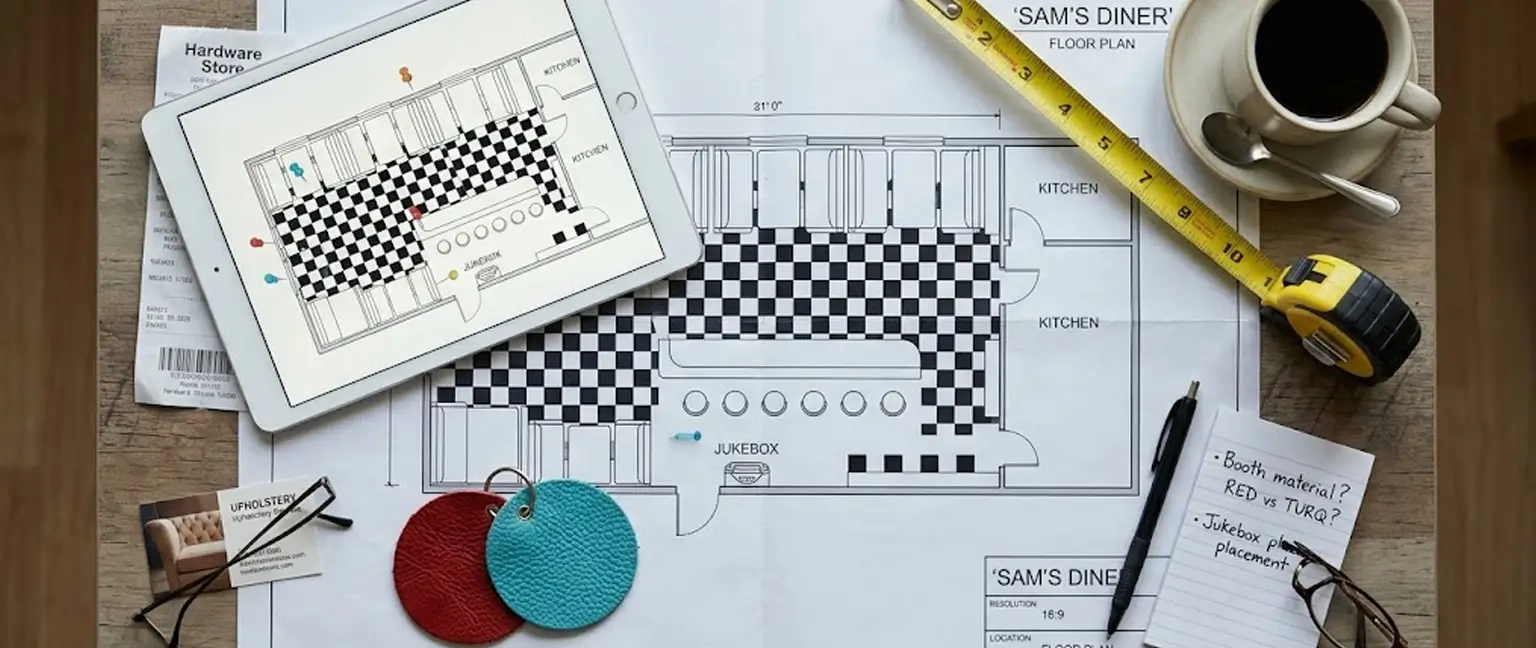
Start here: Send us a rough floor plan or just a few inspiration photos. We’ll recommend booth sizes, table heights (standard 30″ for dining, 42″ for counter), and vinyl colors that fit your brand. No hard sell. Just honest advice from people who actually make the stuff.
And if you want more retro styling ideas before you decide, visit our main guide: Enhance Your Restaurant With Retro Table and Chairs.