
 English
 中文
 日本語
 한국어
 العربية
 Русский
 Português
 Türkçe
 हिन्दी
 Tiếng Việt
 ไทย
 Indonesia
 Melayu
 ខ្មែរ
 ລາວ
 မြန်မာ
 Afrikaans
 Hausa
 Igbo
 Sesotho
 isiXhosa
 Yorùbá
 isiZulu
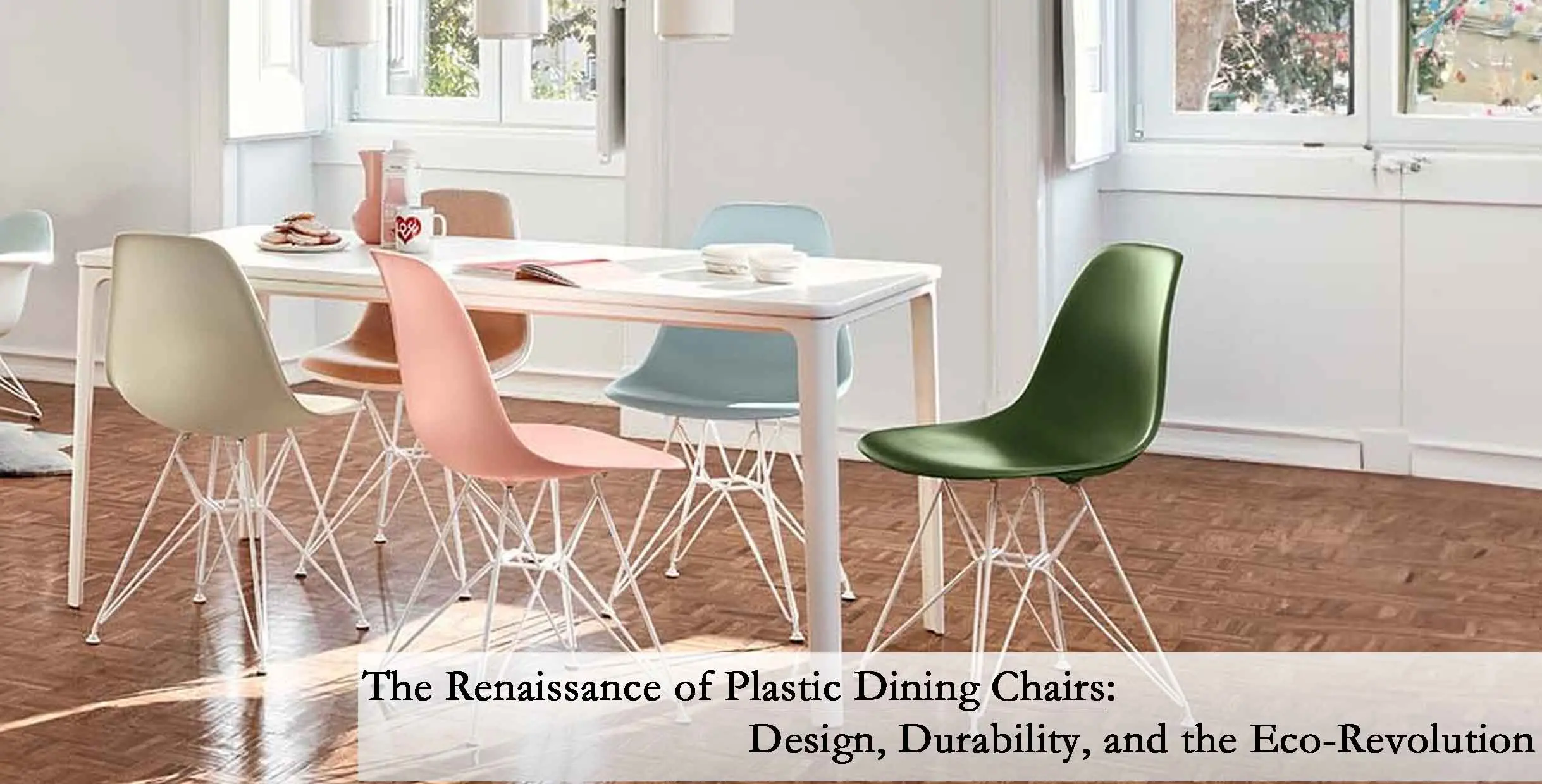
Stop thinking of “plastic” as the flimsy white chair that cracks after one summer. In 2026, plastic dining chairs have undergone a complete rebranding.
Thanks to iconic designers like Philippe Starck and the Eames duo, coupled with aerospace-grade manufacturing, plastic (or more accurately, Technopolymer) is now the material of choice for venues that refuse to compromise between high-impact durability and high-end aesthetics.
For the savvy B2B buyer, choosing plastic dining chairs is no longer a budget compromise—it’s a strategic design statement. Here is why the world’s best cafes are embracing the resin revolution.
Engineering: It’s Not Just Plastic, It’s Science
If you think all plastic is the same, think again. The difference between a $20 supermarket chair and a commercial-grade plastic dining chair lies in the molecular structure.
1. The Magic of Gas-Assisted Injection Molding
Have you ever lifted a plastic chair that looked chunky but felt surprisingly light and incredibly rigid? That’s Gas-Injection Technology.
- The Process: Nitrogen gas is injected into the mold along with the molten plastic.
- ရလဒ်- It creates hollow channels inside the legs and frame. This acts like the bones of a bird—lightweight but structurally unbreakable.
- Why Buy It: You get a chair that staff can stack 10-high with one hand, yet it supports a 350 lb (160 kg) guest without flexing.
2. Fiberglass Reinforcement
Standard Polypropylene (PP) is flexible. To make it commercial-grade, manufacturers add 15-20% Glass Fiber to the mix.
- The Test: If the surface has a slight matte texture rather than a high-gloss shine, it likely contains fiberglass. This prevents the “sagging” effect seen in cheaper chairs during hot weather.
💡 Pro Tip: Always check the specification sheet for “Glass-Fiber Reinforced Polypropylene.” This is the gold standard for Commercial Outdoor Furniture.
The Psychology of Color: Why Paint Can’t Compete
Wood needs staining. Metal needs powder coating (which chips). Plastic dining chairs are the color.
Because the pigment is mixed directly into the resin pellets before molding (Mass-Dyed), the color runs all the way through the material.
- Scratch Proof: If a customer drags a key across the seat, the scratch is the same color as the surface, making it invisible to the naked eye.
- Branding Power: Plastic offers pantone-matching vibrancy that wood cannot. Want “Tiffany Blue” or “Ferrari Red” to match your brand logo? Plastic is your only viable option.
The Green Shift: Recycled is the New Luxury
Sustainability is the #1 trend in hospitality design for 2026. Paradoxically, plastic dining chairs are leading the charge.
The Rise of “Ocean Plastic” & PCR
Top-tier manufacturers are moving away from virgin fossil fuels.
- Post-Consumer Recycled (PCR): Chairs made from recycled milk jugs and industrial waste.
- The Marketing Win: Buying Recycled Plastic Chairs gives your venue a story. You aren’t just buying furniture; you’re keeping 500 plastic bottles out of the ocean per chair. Put that on your menu, and watch customers appreciate your brand values.
The Buyer’s Decision Matrix
Not sure which type of resin suits your venue? Use this quick decision guide.
Scenario A: The “Invisible” Look
- Goal: Make a small room feel bigger.
- The Material: Polycarbonate (PC).
- Why: Often called “Ghost Chairs,” their transparency allows light to pass through, visually decluttering the space. Perfect for small urban bistros.
Scenario B: The “High-Traffic” Terrace
- Goal: Survive sun, rain, and 500 covers a day.
- The Material: Matte Polypropylene (PP).
- Why: Hides fingerprints, resists scratches, and usually comes with UV stabilizers.
Scenario C: The “Lounge” Vibe
- Goal: Comfort without cushions.
- The Material: Rotomolded Polyethylene (PE).
- Why: This process creates hollow, curvy, sculpture-like shapes (think glowing LED furniture). It’s softer to the touch and virtually indestructible.
Hygiene: The “Zero-Pore” Advantage
We cannot ignore the post-pandemic reality. Wood has pores; metal has joints that rust.
Plastic dining chairs are Non-Porous Monoblocs.
- No Seams: Most designs are molded in one piece. No screws to loosen, no cracks for crumbs to hide in.
- Bleach Friendly: You can sanitize them with heavy-duty hospital-grade cleaners without stripping a varnish or rusting a weld.
အမေးများသောမေးခွန်းများ (FAQ)
Q: Do plastic chairs fade in the sun?
Cheap ones do. Commercial plastic dining chairs must contain UV Stabilizers. However, even the best red or black chairs may fade slightly over 5 years in Arizona sun. White, beige, or pastel colors are the safest bet for extreme UV environments.
Q: Are they comfortable without cushions?
Surprisingly, yes. Because plastic can be molded into complex 3D curves, ergonomic plastic dining chairs are designed to contour to the human spine (lumbar support) better than rigid wood chairs. Look for models with a “waterfall edge” seat to reduce pressure on legs.
Q: Can plastic chairs be repaired?
Unlike wood (which can be glued) or metal (welded), a cracked plastic chair cannot be structurally repaired safely. However, because they are so affordable and recyclable, replacement is cost-effective.
Ready to Modernize Your Venue?
Embrace the versatility of resin. Whether you need stackable efficiency or a designer statement piece, our collection delivers.