
 English
 中文
 日本語
 한국어
 العربية
 Русский
 Português
 Türkçe
 हिन्दी
 Tiếng Việt
 ไทย
 Indonesia
 Melayu
 ខ្មែរ
 ລາວ
 မြန်မာ
 Afrikaans
 Hausa
 Igbo
 Sesotho
 isiXhosa
 Yorùbá
 isiZulu
Restaurant furniture trends 2026 are moving beyond simple decoration. For restaurants, cafés, hotels and hospitality spaces, furniture now plays a direct role in brand identity, guest comfort, seating efficiency, maintenance cost and long-term commercial performance.
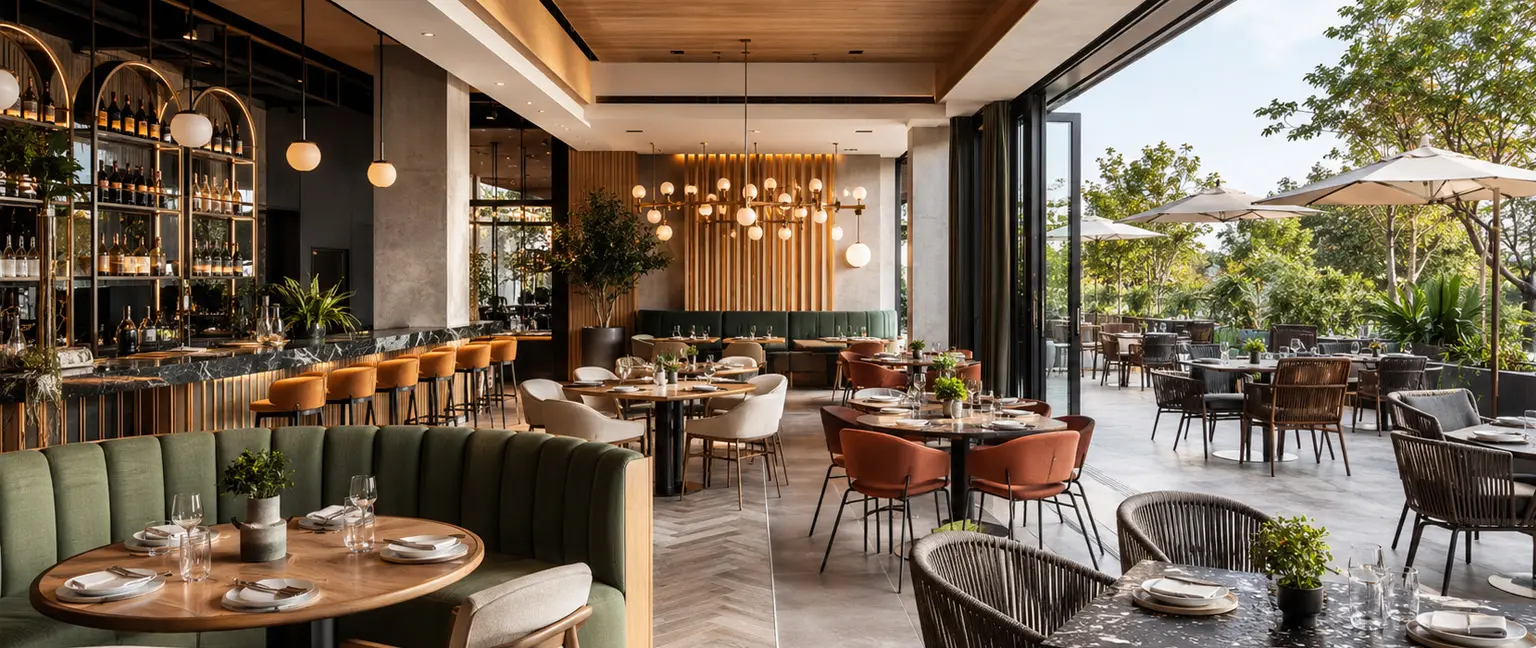
From restaurant chairs and booth seating to durable dining tables, bar stools and outdoor furniture, buyers are looking for custom commercial furniture options that are not only visually attractive but also practical for daily hospitality use. The most successful restaurant spaces in 2026 will combine comfort, flexible layout planning, durable materials and brand-matched customization.
This guide explores the key restaurant furniture trends for 2026 and how restaurant owners, designers, wholesalers and project buyers can apply them to commercial dining spaces.
Why Restaurant Furniture Trends Matter in 2026
Restaurant interiors are becoming more competitive. Guests do not only judge a restaurant by food quality. They also notice seating comfort, table spacing, materials, colors, lighting and the overall atmosphere.
For project buyers, following restaurant furniture trends is not about copying every new style. It is about choosing chairs, booths, tables and finishes that support the business model of the space.
Good restaurant furniture planning can help with:
- Improving guest comfort
- Supporting better seating layouts
- Creating a stronger brand atmosphere
- Reducing replacement and maintenance costs
- Improving space efficiency
- Coordinating chairs, booths, tables and bar areas
- Supporting indoor and outdoor dining needs
- Creating a consistent look across multiple locations
In 2026, restaurant furniture should be selected around layout, comfort, durability and visual identity rather than appearance alone.
Trend 1: Custom Restaurant Chairs for Stronger Brand Identity
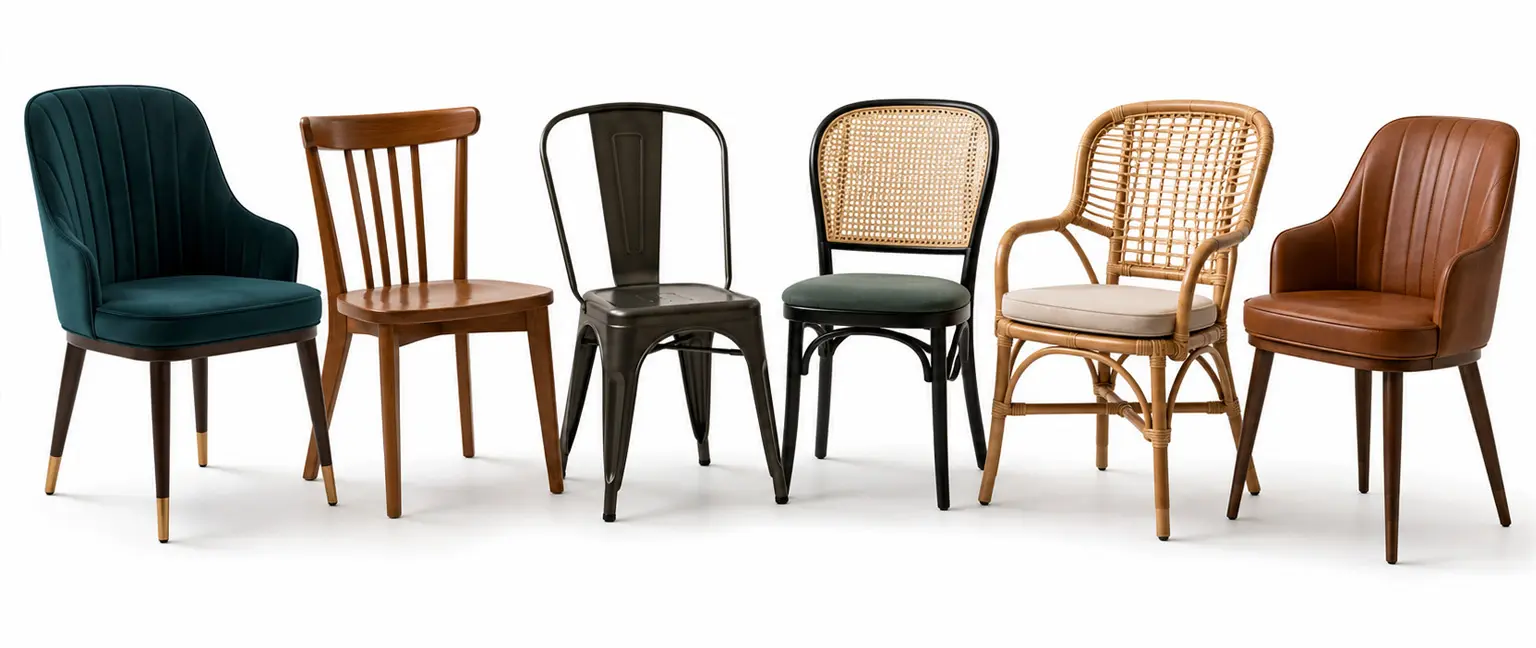
Brand-matched restaurant chairs remain one of the most important trends in commercial dining spaces. Chairs are used throughout the dining area and have a strong visual impact on the overall interior. Chairs are used throughout the dining area and have a strong visual impact on the overall interior.
In 2026, restaurants are moving away from generic seating and choosing chairs that better match their brand style. This includes upholstered restaurant chairs, wooden dining chairs, metal frame chairs, cane back chairs, rattan dining chairs and leather dining chairs.
Popular restaurant chair directions include:
- Upholstered chairs for comfortable dining spaces
- Wooden restaurant chairs for warm and natural interiors
- Metal frame chairs for industrial or modern restaurants
- Cane back and rattan chairs for vintage or relaxed café concepts
- Curved back chairs for softer, more elegant interiors
- Compact dining chairs for small restaurants and cafés
For commercial buyers, customization is important. Upholstery color, frame finish, seat material and chair size can all affect the final dining experience. A chair should not only look good in photos; it should also support daily use, easy cleaning and consistent production for bulk orders.
Trend 2: Comfortable Booth Seating for Better Space Planning
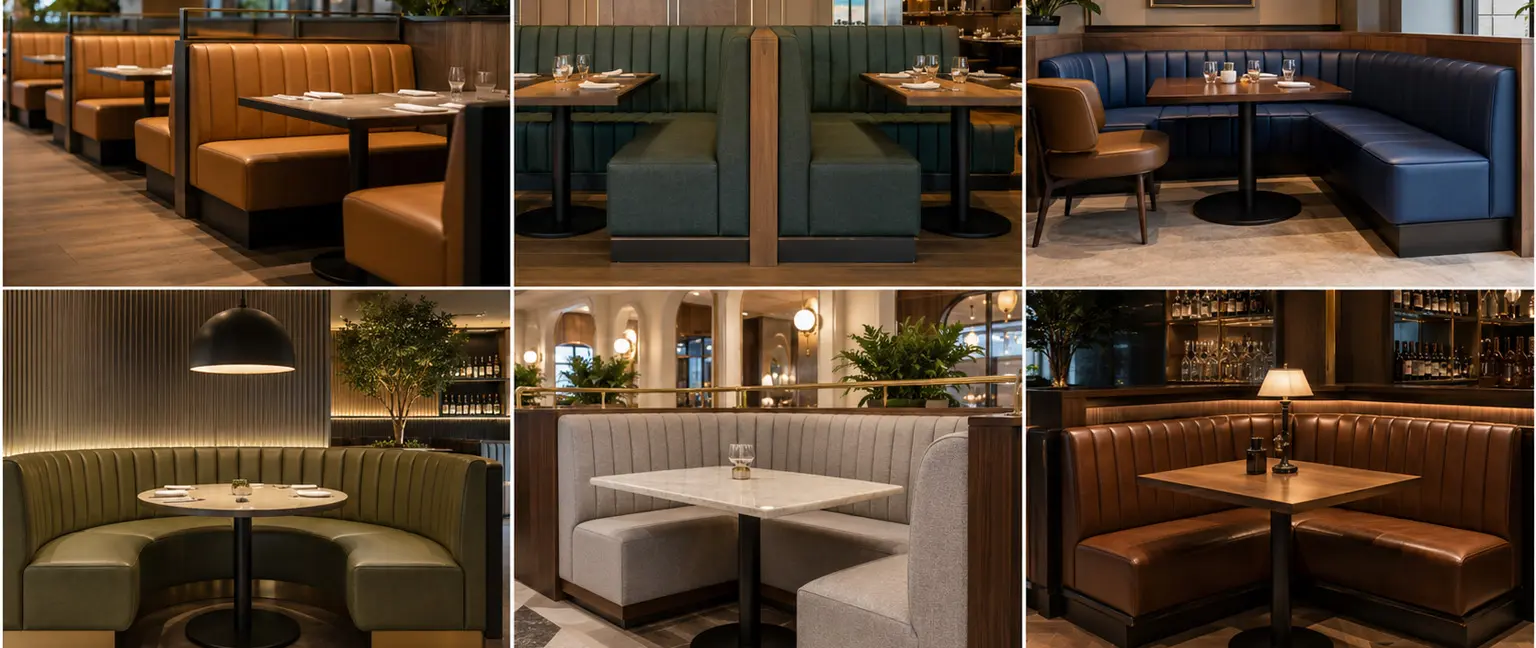
Comfortable restaurant booth seating continues to grow in importance because it supports both comfort and layout efficiency. Booths can make dining areas feel more organized, private and comfortable, especially in restaurants, cafés, hotels and casual dining spaces. Booths can make dining areas feel more organized, private and comfortable, especially in restaurants, cafés, hotels and casual dining spaces.
In 2026, booth trends are moving toward more customized forms rather than standard fixed designs. Buyers are choosing booth seating based on floor plan, wall length, aisle width, table size and brand atmosphere.
Popular restaurant booth trends include:
- Straight wall booth seating for efficient layouts
- Double booth seating for high-capacity dining areas
- L-shaped booth seating for corners and private areas
- Curved and circular booths for premium dining spaces
- Upholstered booth seating for longer guest stays
- Cane back or wood frame booths for natural design concepts
- PU leather booths for easier maintenance
Booths are especially useful for restaurants that need to maximize seating capacity without making the space feel crowded. They also help create a more stable seating plan compared with loose chairs.
For project buyers, booth seating should be planned together with tables, chair spacing and walking paths. This makes custom booth dimensions, seat height, backrest height and upholstery selection important parts of the design process.
Trend 3: Durable Restaurant Tables and Table Bases
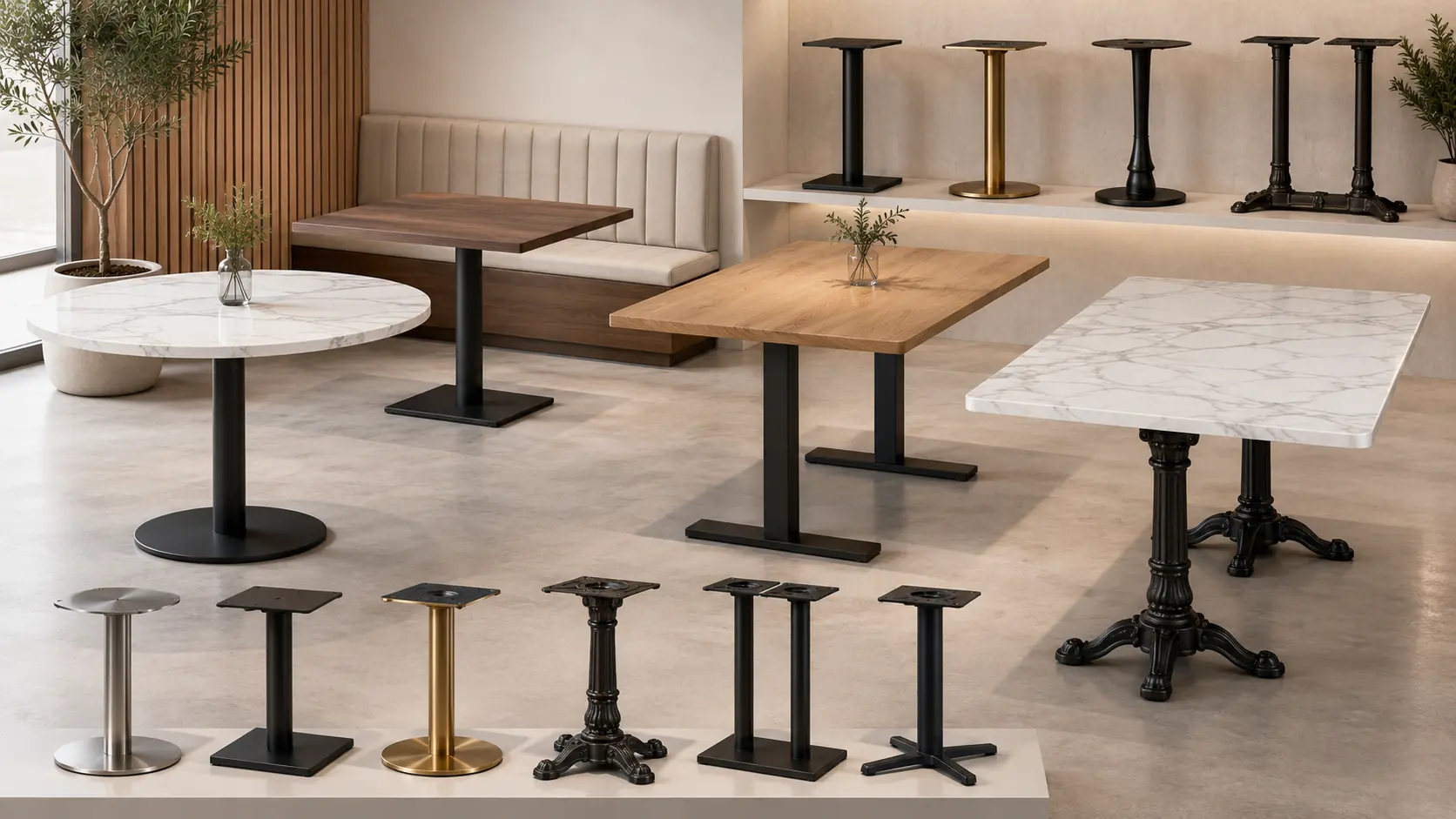
Durable restaurant tables are becoming more material-focused in 2026. Buyers are paying more attention to tabletop durability, surface maintenance, edge design and table base stability. Buyers are paying more attention to tabletop durability, surface maintenance, edge design and table base stability.
A restaurant table must match the seating layout, support daily cleaning and remain stable during high-frequency commercial use. This is why many buyers are now selecting restaurant tables based on material performance as well as appearance.
Popular table and tabletop trends include:
- Round café tables for flexible small-group seating
- Rectangular dining tables for efficient restaurant layouts
- Compact square tables for cafés and casual dining spaces
- Wood-look tabletops for warm interiors
- Laminate tabletops for practical daily use
- Sintered stone tabletops for premium dining concepts
- Marble-look tabletops for luxury restaurant interiors
- Metal and cast iron table bases for stronger support
- Stainless steel table bases for modern commercial spaces
Restaurant table base stability is also becoming more important. A good table base affects stability, legroom and cleaning convenience. For restaurants with tight layouts, table base shape can influence how comfortably guests sit and how easily staff move around the dining area. A good စားပွဲအခြေစိုက်စခန်း affects stability, legroom and cleaning convenience. For restaurants with tight layouts, table base shape can influence how comfortably guests sit and how easily staff move around the dining area.
Trend 4: Bar Stools and Counter Seating for Flexible Dining Areas
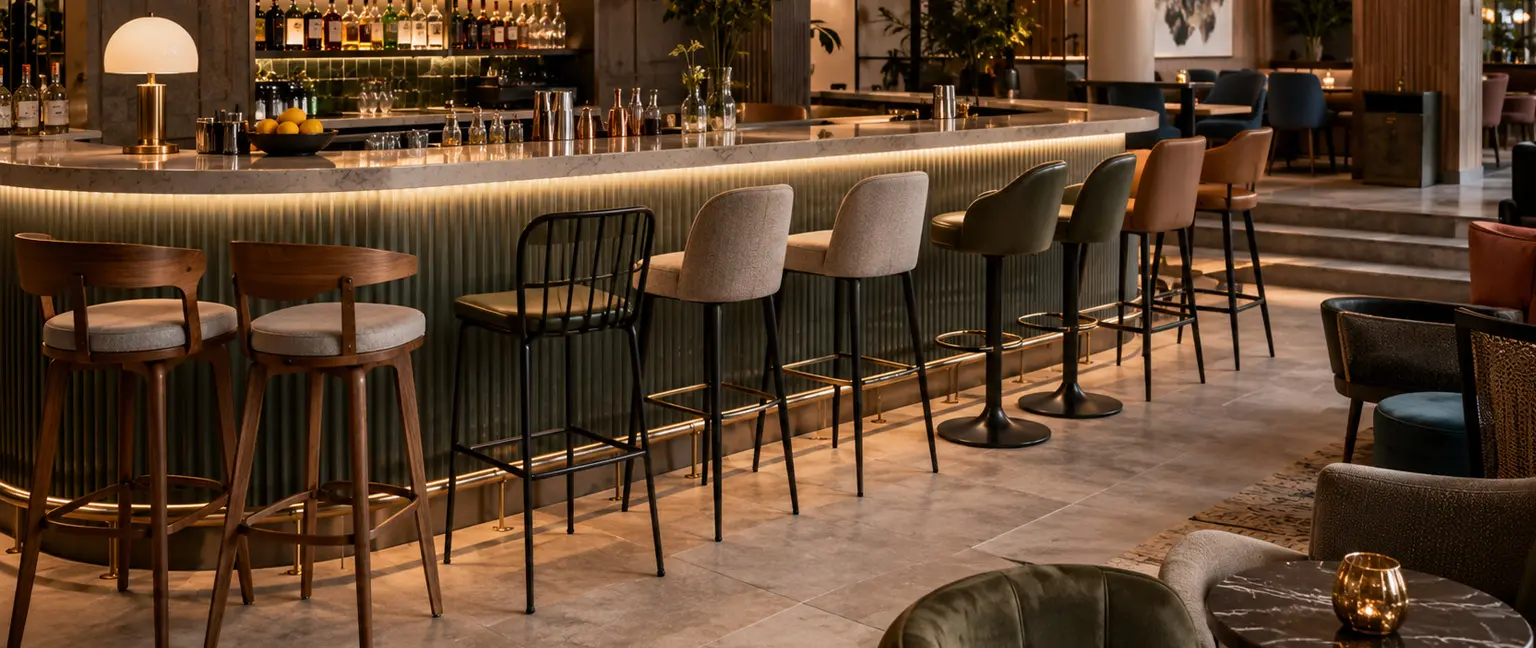
Flexible commercial bar stools are no longer limited to bars. In 2026, more cafés, restaurants, hotels and casual dining spaces are using bar-height seating to create flexible areas for quick meals, coffee breaks, waiting areas and social dining.In 2026, more cafés, restaurants, hotels and casual dining spaces are using bar-height seating to create flexible areas for quick meals, coffee breaks, waiting areas and social dining.
Commercial bar stool trends include:
- Wooden bar stools for warm café and bistro interiors
- Metal bar stools for industrial and modern spaces
- Upholstered bar stools for comfort-focused hospitality areas
- Swivel bar stools for flexible counter seating
- Bar stools with backs for longer guest stays
- Leather or PU leather bar stools for easy maintenance
- Cane back bar stools for vintage and relaxed interiors
Bar stools should be selected based on counter height, seat comfort, footrest design and layout requirements. For hospitality projects, consistent material and color coordination between dining chairs, booth seating and bar stools can make the whole space feel more professional.
Trend 5: Outdoor Restaurant Furniture for Patios and Terraces
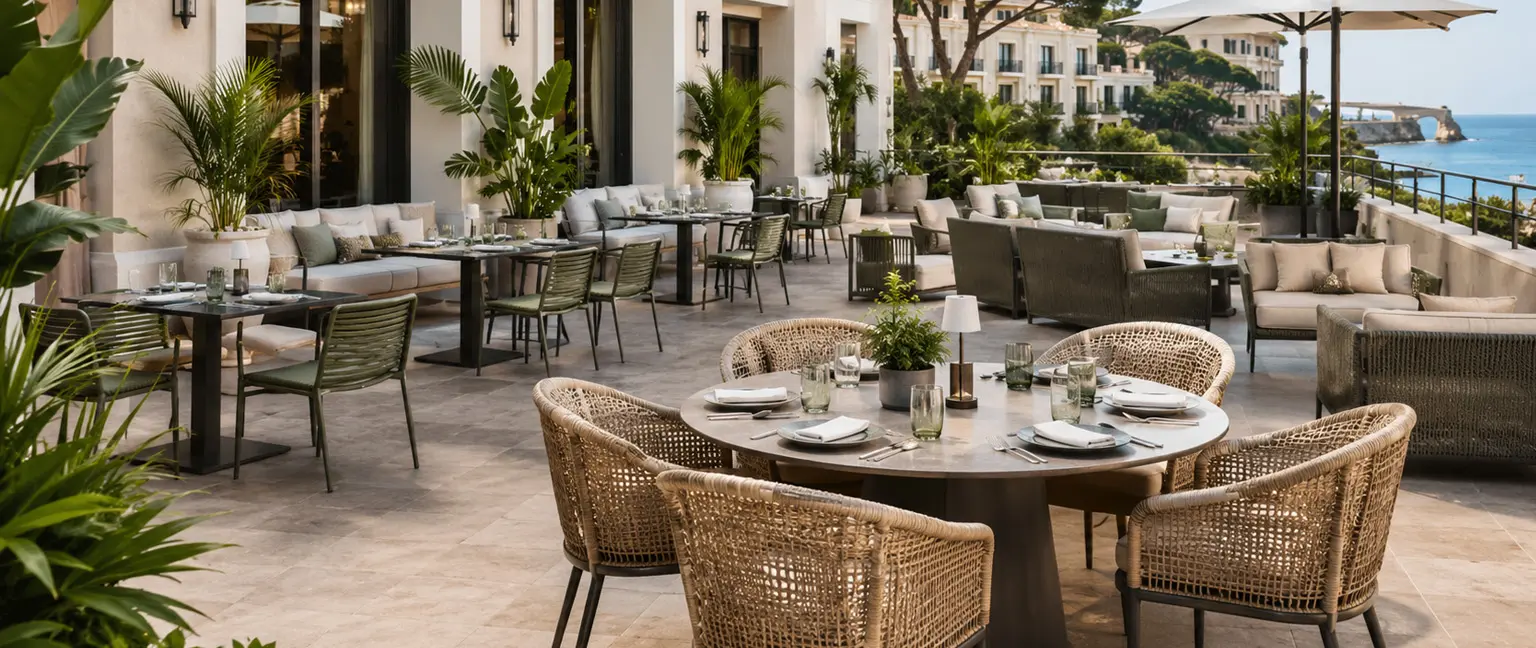
Outdoor dining remains an important direction for restaurants, cafés, hotels and resorts. In 2026, outdoor restaurant furniture is becoming more refined, moving from simple patio furniture to coordinated hospitality furniture systems.
In 2026, refined outdoor restaurant furniture is becoming more important for patios, terraces, cafés, hotels and resorts, moving from simple patio pieces to coordinated hospitality furniture systems.
- Outdoor café tables for patio seating
- Aluminum alloy outdoor chairs and tables
- Rattan outdoor chairs for relaxed dining areas
- Metal outdoor tables for commercial use
- Compact outdoor dining sets for cafés
- Outdoor bar tables and stools for terraces
- Neutral colors that match natural surroundings
- Easy-clean materials for daily hospitality use
For outdoor areas, material choice is critical. Furniture should be selected according to the project environment, climate, usage frequency and maintenance needs. Aluminum, metal, rattan-style materials and outdoor-suitable tabletops are commonly used in hospitality projects.
Outdoor spaces also need good layout planning. Tables and chairs should support comfortable dining while leaving enough circulation space for guests and service staff.
Trend 6: Easy-Maintenance Materials for Commercial Use
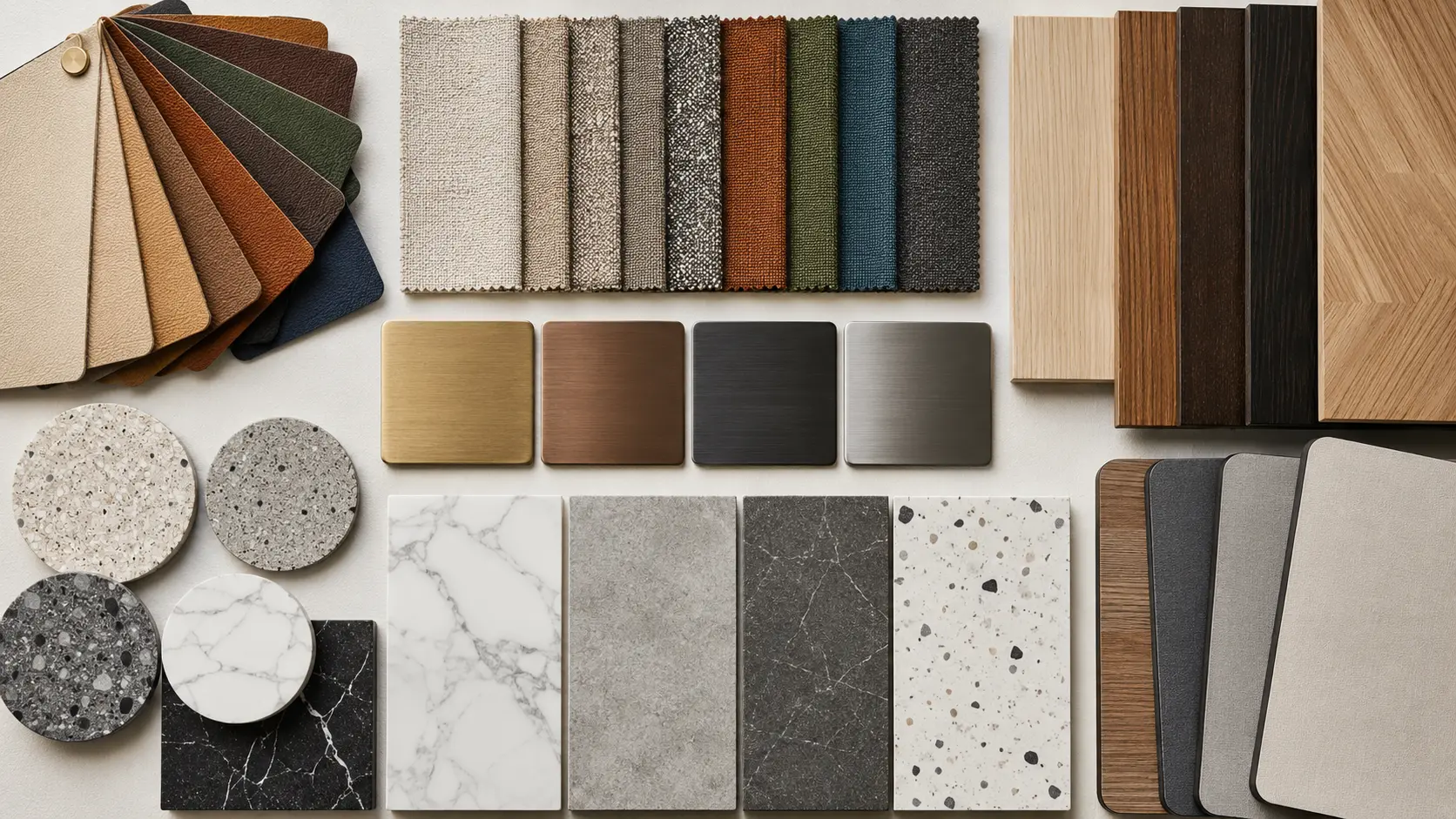
In 2026, restaurant furniture materials are becoming more practical. Buyers are no longer choosing materials only for appearance. They also consider cleaning frequency, durability, replacement cost and long-term maintenance.
Common commercial restaurant furniture materials include:
- Solid wood for warm and natural interiors
- Plywood for shaped chair structures
- Stainless steel for modern and durable frames
- Aluminum alloy for outdoor furniture
- Carbon steel for strong metal structures
- PU leather for easy-clean upholstered seating
- Fabric upholstery for softer interior effects
- Cane and rattan details for natural or vintage styles
- Laminate tabletops for practical daily cleaning
- Sintered stone for premium tabletop applications
- Marble-look finishes for luxury dining spaces
For restaurants and cafés, material selection should match actual use. A high-traffic fast-casual restaurant may need easy-clean surfaces and durable metal frames, while a boutique café may focus more on upholstery texture, warm wood tones and visual comfort.
The best material strategy is not always the most expensive one. It is the one that fits the restaurant’s usage frequency, cleaning routine, brand positioning and budget.
Trend 7: Modular and Custom Furniture for Chain Restaurants
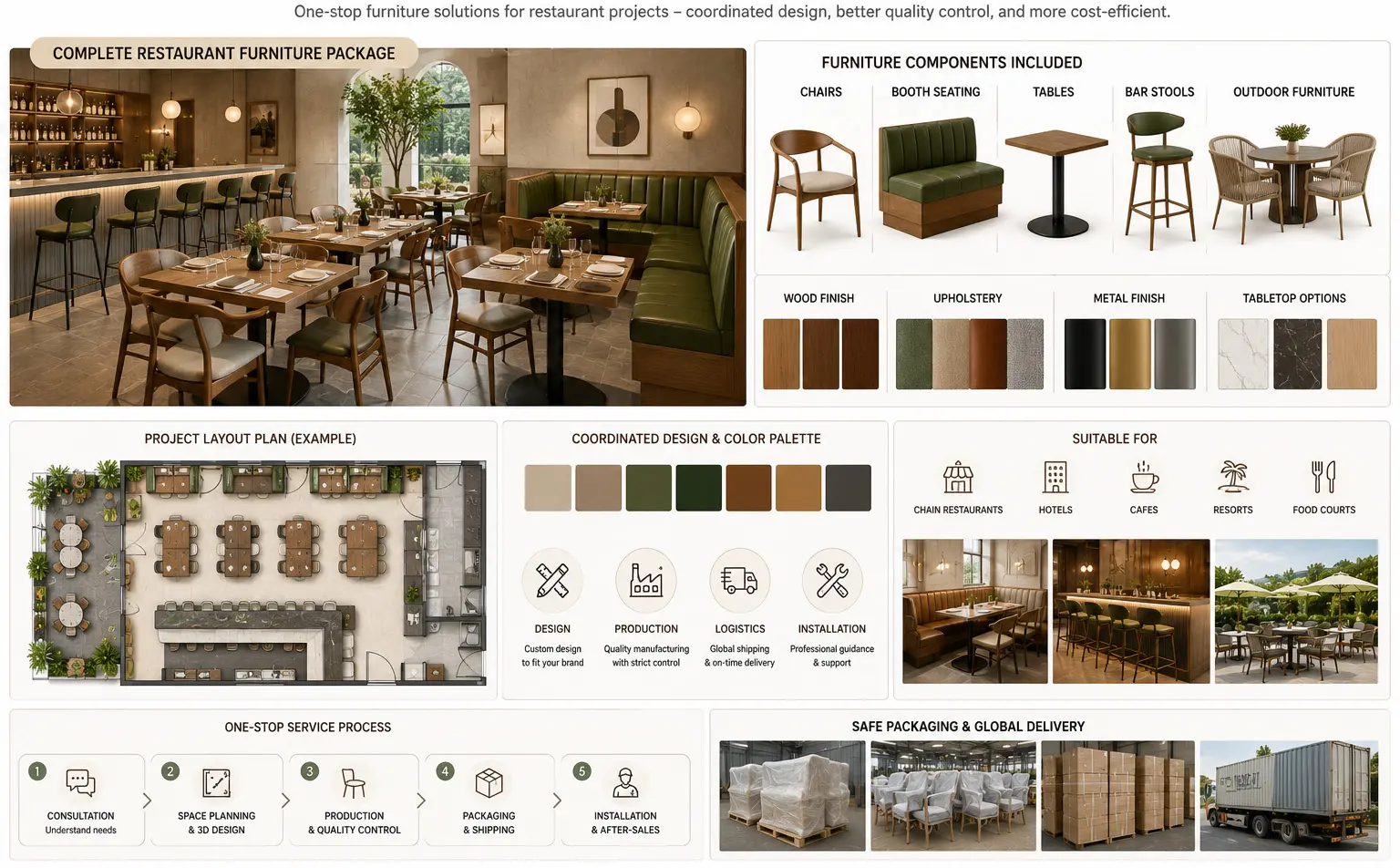
Modular and custom restaurant furniture is becoming more important for chain restaurants and multi-location hospitality brands. These buyers need furniture that can be repeated across different spaces while still allowing adjustments for each location.
Common custom furniture needs include:
- Custom chair upholstery colors
- Custom booth seating dimensions
- Custom table sizes
- Custom wood and metal finishes
- Custom bar stool heights
- Custom outdoor furniture combinations
- Mixed container orders with multiple SKUs
- Consistent furniture standards across several stores
This trend is especially important for chain cafés, hotel dining areas, franchise restaurants and hospitality operators. Instead of buying unrelated products from different suppliers, buyers can create a coordinated furniture package that includes chairs, booths, tables, bar stools and outdoor furniture.
Custom furniture also helps reduce design inconsistency between locations. When the same materials, colors and product specifications are used across multiple stores, the brand becomes more recognizable.
Trend 8: Softer Shapes, Curved Lines and Biophilic Interiors
Restaurant furniture design in 2026 is moving toward softer shapes and more comfortable visual language. Curved backrests, rounded booth seating, soft upholstery, natural textures and warm materials are becoming more common.
This trend is connected to biophilic and hospitality-focused interiors. Restaurants want spaces that feel more relaxed, comfortable and memorable. Furniture plays a key role in creating that atmosphere.
Popular design elements include:
- Curved booth seating
- Rounded chair backrests
- Soft upholstered dining chairs
- Natural wood finishes
- ကြံနှင့် ကြိမ်အသေးစိတ်
- Warm neutral upholstery
- Green, beige, brown and wood-tone color palettes
- Rounded tabletops
- Mixed textures such as wood, fabric, metal and stone-look surfaces
These elements help create a softer dining environment without making the space feel overly decorative. For commercial projects, the goal is to balance comfort, visual identity and operational practicality.
Trend 9: Complete Furniture Packages Instead of Single Items
Another important restaurant furniture trend is the shift from single-product purchasing to complete furniture package planning. Buyers increasingly want chairs, booths, tables, bar stools and outdoor furniture to work together in one coordinated design.
A complete restaurant furniture package may include:
- Dining chairs
- Booth seating
- စားသောက်ဆိုင် စားပွဲများ
- တက်ဘလက်များ
- စားပွဲစွပ်
- ဘားထိုင်ခုံများ
- ဘားစားပွဲများ
- Outdoor chairs
- ပြင်ပစားပွဲများ
- Canteen or staff dining furniture
This approach helps project buyers reduce sourcing complexity and improve consistency. It also makes it easier to control colors, finishes, materials and packaging requirements across the entire order.
For new restaurant openings, renovation projects and chain restaurant rollouts, complete furniture planning can save time and reduce communication issues between suppliers.
How MingMeng Supports Restaurant Furniture Trends in 2026
MingMeng Furniture supports restaurant, café, hotel and hospitality projects with a wide range of custom commercial furniture options. Our product range includes restaurant chairs, booth seating, dining tables, table bases, bar stools, outdoor furniture and related project furniture.
Project buyers can customize size, upholstery, color, frame material, tabletop finish, booth layout and packaging based on project needs. OEM and ODM support is available for buyers who need custom furniture specifications, brand-matched products or bulk production for commercial projects.
MingMeng can support:
- Restaurant furniture product selection
- Custom restaurant chairs
- စိတ်ကြိုက် စားသောက်ဆိုင် တဲများ
- Restaurant tables and table bases
- Bar stools and bar furniture
- ပြင်ပစားသောက်ဆိုင်ပရိဘောဂ
- Upholstery and finish customization
- Project-based furniture combinations
- Export packaging and delivery support
For buyers planning a new restaurant, café, hotel dining area, bar or outdoor patio, choosing furniture around 2026 trends can help create a space that is more comfortable, practical and visually consistent.
Conclusion: Choose Restaurant Furniture Around Layout, Comfort and Brand Style
Restaurant furniture trends in 2026 show a clear direction: commercial dining spaces need furniture that is comfortable, durable, customizable and visually aligned with the brand.
The most important trends include custom restaurant chairs, comfortable booth seating, durable restaurant tables, flexible bar stools, outdoor furniture, easy-maintenance materials, modular customization and complete furniture package planning.
For restaurants, cafés, hotels and hospitality projects, the best furniture solution is not simply the newest style. It is the right combination of layout planning, material selection, guest comfort and long-term commercial usability.
By understanding restaurant furniture trends 2026, project buyers can choose chairs, booths, tables and materials that better match commercial dining layouts and brand positioning.
Contact MingMeng Furniture to request product options, customization support or a bulk quotation for your restaurant furniture project.