

 English
 中文
 日本語
 한국어
 العربية
 Русский
 Português
 Türkçe
 हिन्दी
 Tiếng Việt
 ไทย
 Indonesia
 Melayu
 ខ្មែរ
 ລາວ
 မြန်မာ
 Afrikaans
 Hausa
 Igbo
 Sesotho
 isiXhosa
 Yorùbá
 isiZulu
When we speak with restaurant owners, designers, and procurement managers, one issue comes up repeatedly: chairs that look appealing at first but fail quickly in real commercial environments. In our own production planning and export experience, weak structures and poor material choices often lead to early replacement, higher costs, and customer complaints. industrial dining chairs are designed to avoid exactly these problems by focusing on durability, structure, and long-term usability.
Industrial dining chairs are commercial-grade seating solutions built with metal-dominant frames, durable finishes, and functional design. They are engineered for high-traffic spaces, offering long service life, easy maintenance, and a raw aesthetic that fits restaurants, cafés, bars, and mixed-use hospitality environments.
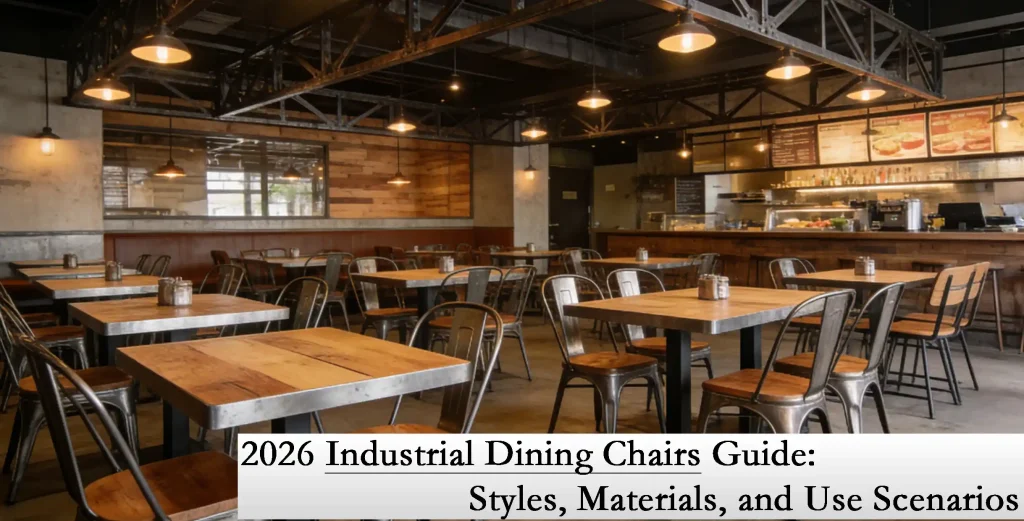
This guide explains what truly defines industrial dining chairs, how different styles serve different spaces, which materials last the longest, and how to match chairs to real commercial use scenarios.
What Defines the Industrial Aesthetic in Dining Chairs?
Many buyers like the look of industrial dining chairs but struggle to clearly define what makes a chair genuinely industrial rather than simply decorative. The risk is selecting seating that looks rugged but lacks the structural integrity required for commercial use.
The industrial aesthetic in dining chairs is defined by exposed structure, honest materials, and utilitarian geometry, prioritizing strength and function while maintaining a timeless, commercial-ready appearance.
At its core, the industrial style originates from early factories and workshops, where furniture was designed as a tool. Chairs were built to last, not to hide their construction. That philosophy remains relevant today.
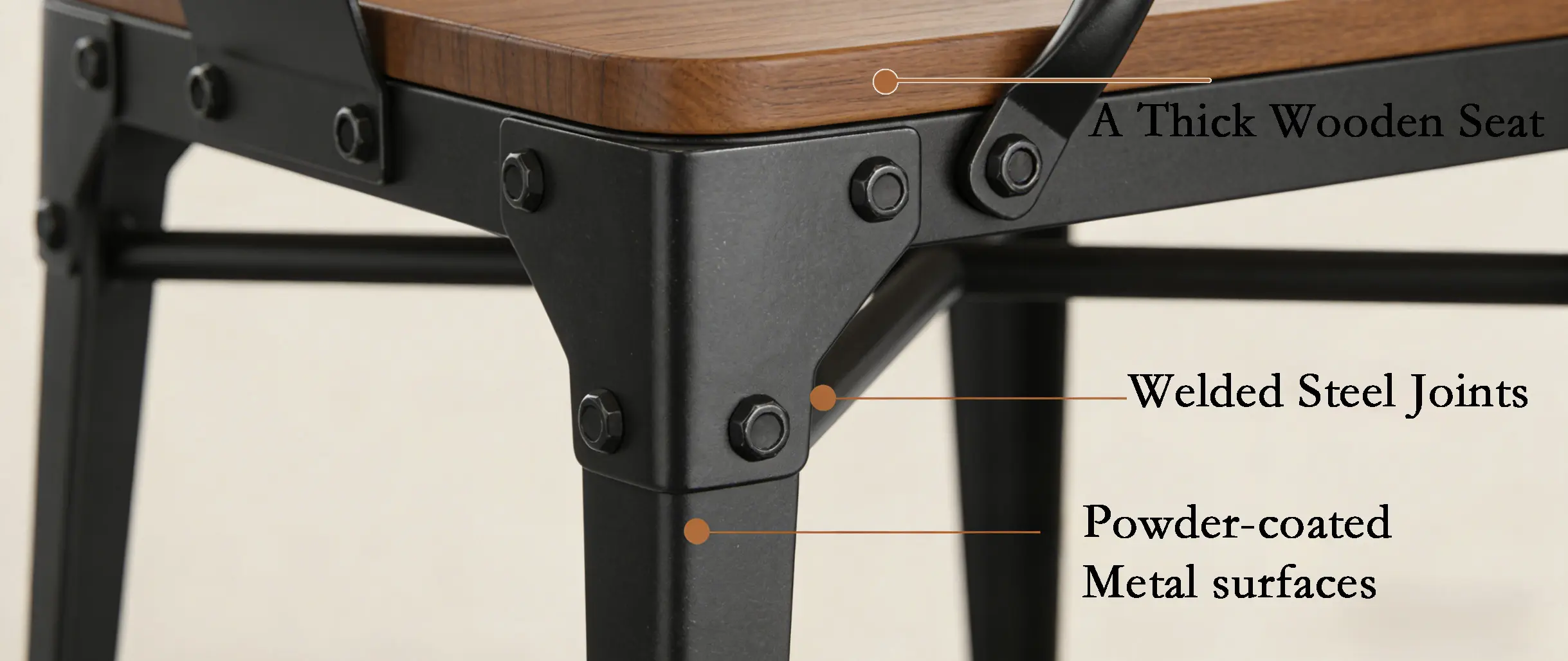
Key features include visible welds and joints that highlight strength, raw or textured materials such as powder-coated steel and solid wood, and simple geometric forms that emphasize function over decoration. Comfort is achieved through thoughtful ergonomics—seat contouring and proper back angles—rather than excessive padding that wears out quickly.
Core Styles of Industrial Dining Chairs Explained
Not all industrial dining chairs communicate the same message or perform equally in different environments. Understanding the main style categories helps buyers make decisions that align with both brand identity and operational needs.
Industrial dining chairs generally fall into four main style categories: modern industrial, vintage industrial, rustic industrial, and utilitarian industrial.
| စတိုင် | Key Visual Characteristics | Best For Atmospheres |
|---|---|---|
| Modern Industrial | Sleek, powder-coated metal frames (often black or dark grey), paired with lighter wood seats or thin upholstery. Clean lines and a refined finish. | Upscale gastropubs, boutique hotel cafes, modern office lunchrooms. |
| Vintage/Retro Industrial | Cast iron or heavy-gauge steel frames with rivet details, often in bronze or patinated finishes. May include distressed leather seats. | Craft cocktail bars, specialty coffee roasters, restaurants in historic buildings. |
| Rustic Industrial | Combination of raw, dark metal (like blackened steel) with reclaimed or live-edge wood slabs for seats and backs. Shows natural imperfections. | Farm-to-table restaurants, brewery taprooms, rustic-chic event spaces. |
| Utilitarian (Workshop) | Inspired by old factory stools and workshop furniture. Features simple, angular steel tube construction, perforated metal seats, and adjustability. | Casual fast-casual eateries, pizza shops, communal kitchen counters, and back-of-house break rooms. |
Choosing the correct style improves visual consistency and reduces long-term operational friction.
Materials That Matter in Industrial Dining Chairs
In commercial projects, material quality directly determines how long industrial dining chairs will perform without issues. Chairs that appear similar online can behave very differently after months of daily use.
High-quality industrial dining chairs rely on durable metal frames, dense wood or engineered seating surfaces, and protective finishes designed for abrasion, moisture, and repeated loading.
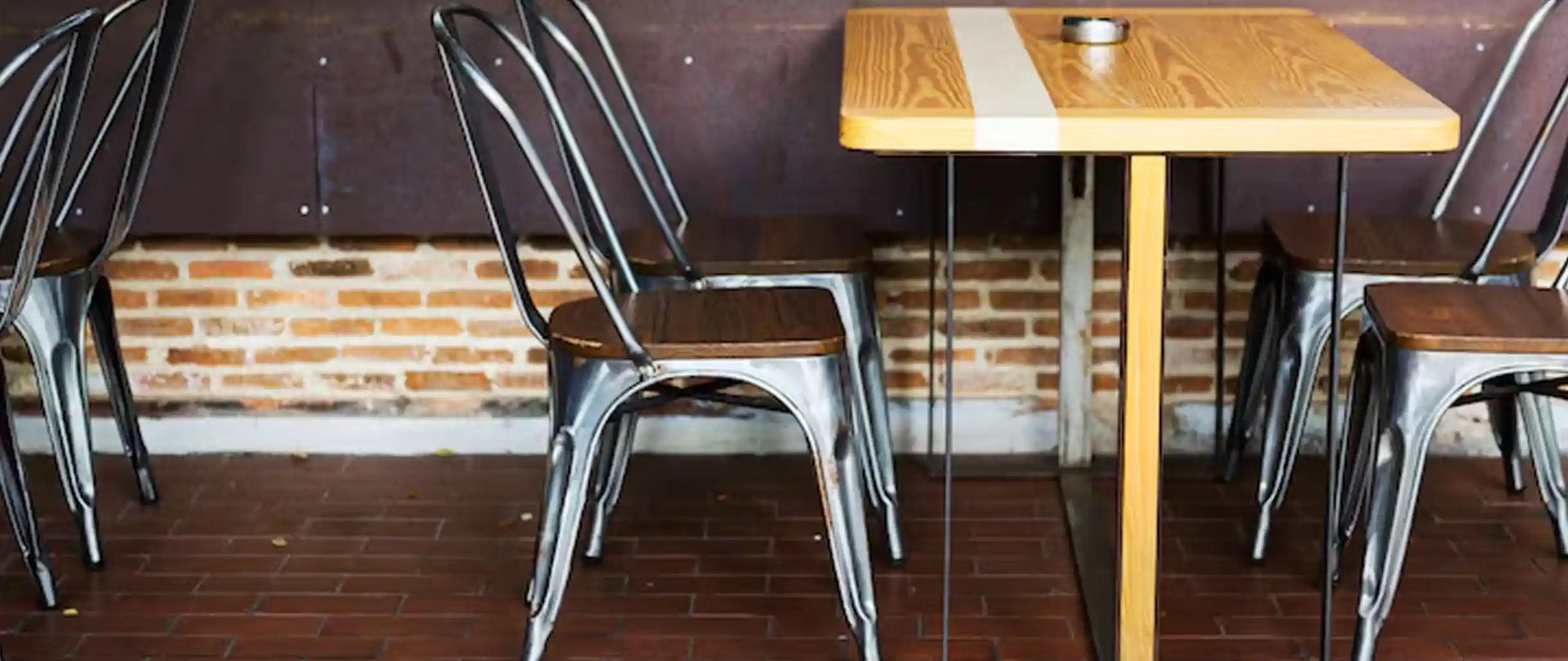
Powder-coated steel is the most common and reliable frame material because it resists chipping and corrosion better than standard paint. Aluminum frames are lighter and naturally rust-resistant, making them suitable for humid or semi-outdoor areas. Cast iron provides excellent stability but is best used indoors due to its weight.
For seats and backs, solid hardwood adds warmth and can be refinished over time, while molded plywood offers ergonomic shaping with excellent strength-to-weight performance. Fully welded joints at stress points and adjustable leveling glides are small details that significantly impact durability and user experience.
Best Use Scenarios for Industrial Dining Chairs
The performance of industrial dining chairs depends heavily on where and how they are used. Matching chair design to the correct environment improves both customer comfort and operational efficiency.
Industrial dining chairs perform best when selected according to traffic intensity, seating duration, cleaning frequency, and layout flexibility.
Rustic or vintage industrial chairs work well in breweries and taprooms, where durability and visual authenticity matter. Modern industrial chairs are popular in urban cafés and co-working spaces because they balance comfort and flexibility, often with stackable designs. Gastropubs benefit from modern industrial chairs with light upholstery to support longer dining times. Fast-casual restaurants and food halls typically choose utilitarian industrial chairs because they are easy to clean, lightweight, and cost-efficient.
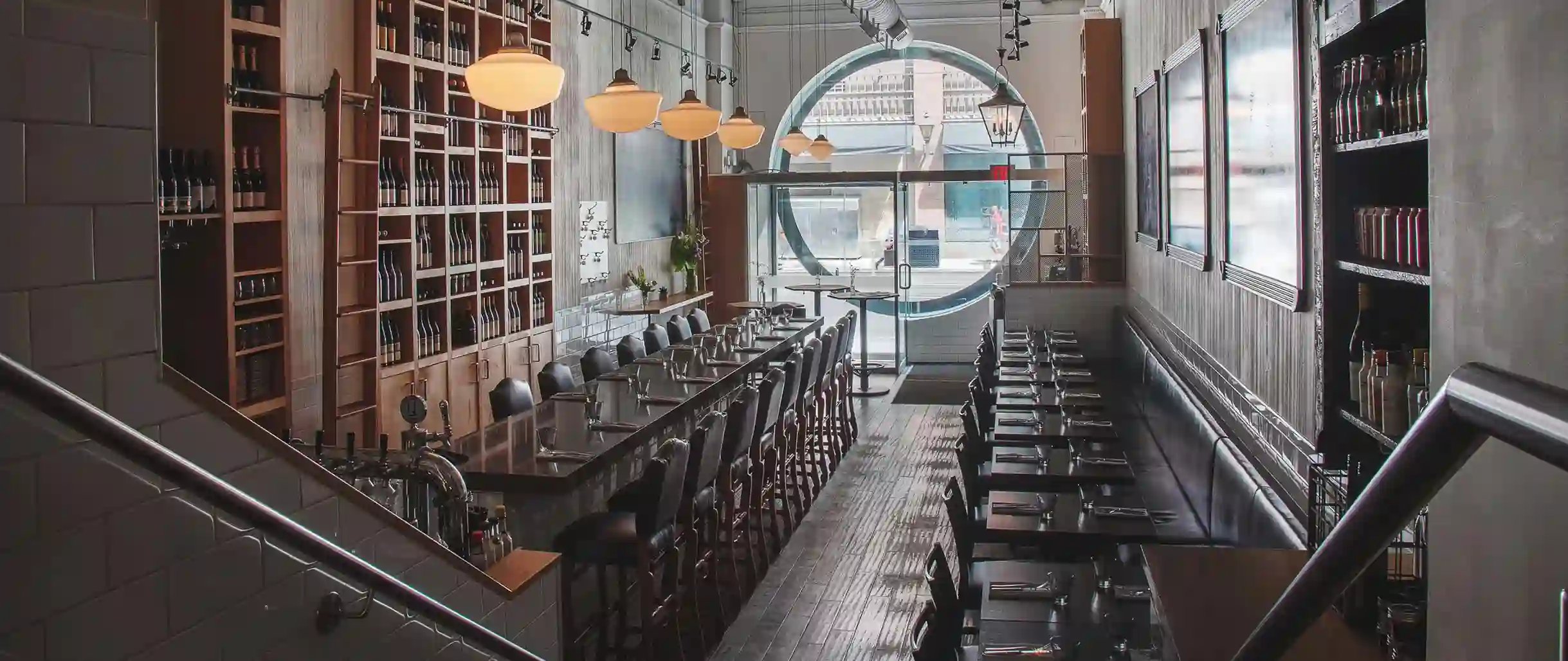
Selecting chairs based on actual usage conditions reduces maintenance costs and extends service life.
A Buyer’s Checklist for Durable Industrial Dining Chairs
Visual style alone is not enough when sourcing industrial dining chairs for commercial use. Buyers should evaluate technical specifications to avoid hidden risks.
Durable industrial dining chairs should feature thick-gauge steel frames, reinforced welded joints, chip-resistant finishes, tested weight capacity, and a clear commercial warranty.
Key items to confirm include steel tubing thickness (preferably 16-gauge or stronger), clean welds at high-stress joints, even powder-coating, a minimum static load rating of 300 pounds, and a commercial warranty of at least two years. These factors strongly correlate with lower failure rates and better supplier accountability.
Some thoughts
Industrial dining chairs are not just a stylistic choice—they are a long-term operational investment. When buyers align style, material quality, and usage scenarios, these chairs deliver consistent performance while reinforcing brand identity. By focusing on structure, durability, and real-world functionality, commercial spaces can rely on industrial dining chairs that perform reliably year after year.


