

 English
 中文
 日本語
 한국어
 العربية
 Русский
 Português
 Türkçe
 हिन्दी
 Tiếng Việt
 ไทย
 Indonesia
 Melayu
 ខ្មែរ
 ລາວ
 မြန်မာ
 Afrikaans
 Hausa
 Igbo
 Sesotho
 isiXhosa
 Yorùbá
 isiZulu
Getting Mexican restaurant interior design right starts with rejecting the costume-party version of “Mexican decor” — sombreros, plastic cactus, and serapes that stain within a month — in favor of a real regional material language paired with commercial-grade furniture.
Most owners planning a Mexican restaurant make the same mistake before they buy a single chair: they confuse theme with design. They picture sombreros on the wall, a plastic cactus in the corner, and serape blankets draped over every banquette — and call it “Mexican decor.” Then they open, the serapes stain within a month, the residential-grade chairs wobble by week six, and the space reads as a costume party rather than a restaurant anyone returns to.
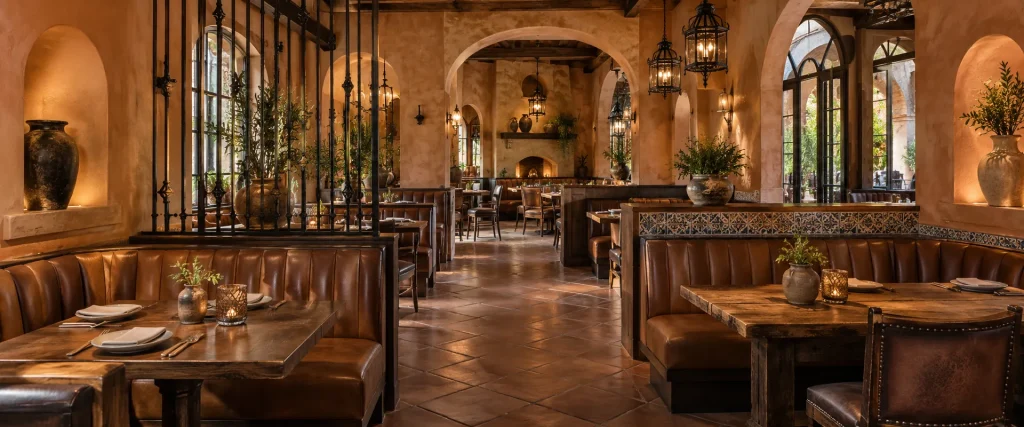
Authentic Mexican restaurant interior design is not a costume. It is a regional material language — terracotta, forged iron, solid wood, glazed tile, and saturated color used with structural intent. The restaurants that get it right (the Oaxacan comedor, the Baja marisquería, the Mexico City cantina) are not decorated like Mexico. They are built from Mexican material traditions, and they pair that warmth with 業務用レストラン家具 that survives mole, lime, and a 200-cover Saturday.
This guide walks through the color and material decisions, the furniture specification (booths, wood tables, metal chairs, bar seating), and the zone layout that separate a Mexican restaurant that feels real from one that feels like a Halloween pop-up — plus where to customize for your specific concept.
Why “Mexican Decor” Fails as a Single Style
The first decision is geographic, not decorative. “Mexican restaurant” covers at least four distinct design traditions, and each dictates different materials and furniture:
- Interior colonial / hacienda (central Mexico): Thick stucco walls, cantera stone, heavy wood, wrought iron, muted earth tones with deep-red and indigo accents.
- Oaxacan / southern (Oaxaca, Chiapas): Black clay (barro negro), woven textiles, brighter turquoise and magenta, lighter wood, hand-painted detail.
- Baja / coastal (Baja, Pacific): Whitewashed walls, turquoise and coral, weathered wood, open-air patio emphasis, galvanized and powder-coated metal furniture.
- Cantina / urban (Mexico City, Guadalajara): Tiled floors, brass and copper, leather banquettes, Tolix-style steel chairs, moody low light.
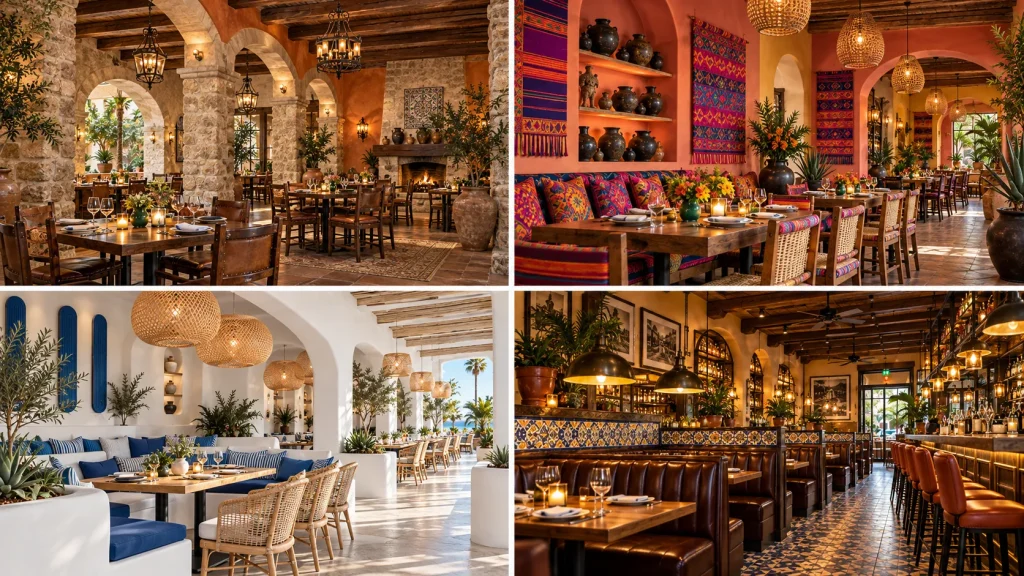
The mistake is blending all four into one space. Pick one region as your material anchor, then let the furniture and color serve it. A coastal Baja concept with heavy hacienda wood and dark stone will feel wrong; an Oaxacan comedor with cold galvanized steel and no textile warmth will feel sterile.
プロのヒント: Write down your single regional anchor on the brief before specifying furniture. Every material and seating choice should pass one test: “Does this belong to that region?”
Section 1: The Color & Material Palette
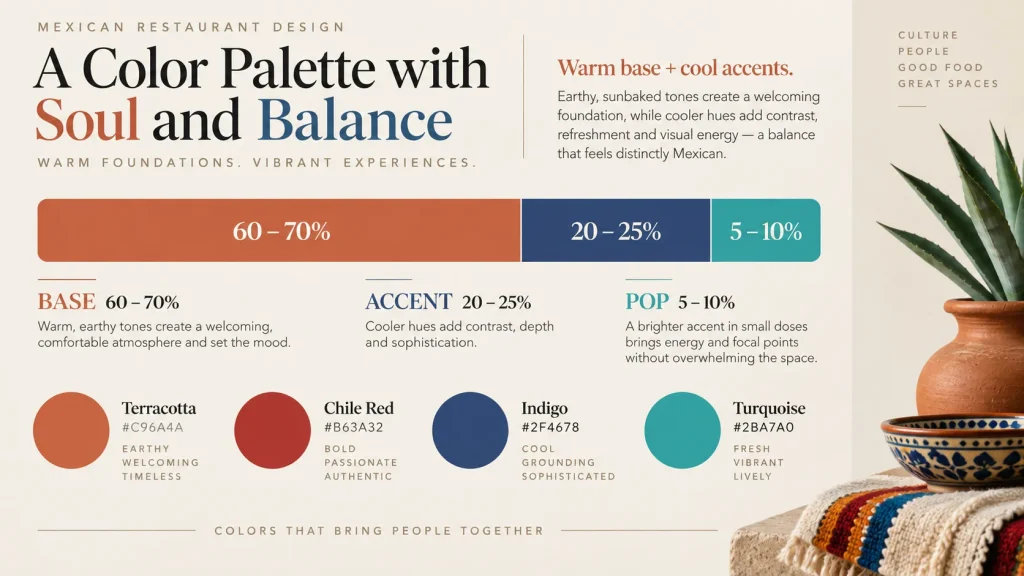
Mexican restaurant color is warm by default, but warmth without contrast reads flat. The working palette is built in layers:
Base (60–70% of surface): Terracotta, barro (clay), ochre, warm sand stucco. These are your walls, floors, and large furniture frames.
Accent (20–25%): Deep chile red, burnt orange, indigo/cobalt (Talavera blue), prickly-pear green. Used on banquettes, tile inlays, and metal chair powder-coat.
Pop (5–10%): Bright turquoise, magenta, or goldenrod. Reserved for small surfaces — a tiled bar front, painted chair backs, papel picado trimming.
Materials that carry the palette:
| 材料 | Where it goes | なぜ効果があるのか | Commercial caveat |
|---|---|---|---|
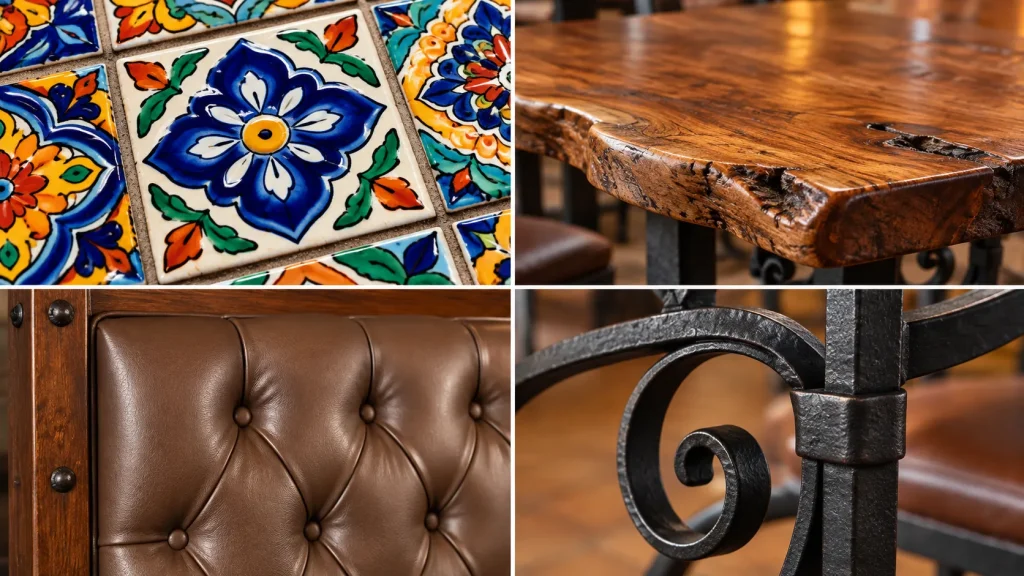
| Solid wood (mesquite, pine, reclaimed) | Tables, beams, shelving | Warmth, region authenticity | Must be catalyzed-lacquer finished, not raw oil |
| Forged / powder-coated iron | Chairs, light fixtures, baker’s racks | Colonial + cantina tradition | Powder-coat beats raw wrought iron for rust |
| Talavera / glazed tile | Bar front, table insets, wainscot | Signature color + wipe-clean | Grout must be sealed; avoid unglazed |
| Leather / vinyl | Booth seating, bar stools | Cantina warmth, stain resistance | Vinyl/PU only in dining — fabric stains |
| Stucco / cantera / adobe | Walls, arches | Structural authenticity | Not a furniture item; sets the stage |
The single most common failure: a fully warm room with no cool or dark anchor. Without indigo, black clay, or forged iron to ground it, the space looks like a nursery, not a restaurant. Always include at least one dark or cool material (iron, black-clay tile, deep indigo textile) at 15–20% weight.
Section 2: Booth Seating — The Anchor of the Dining Room
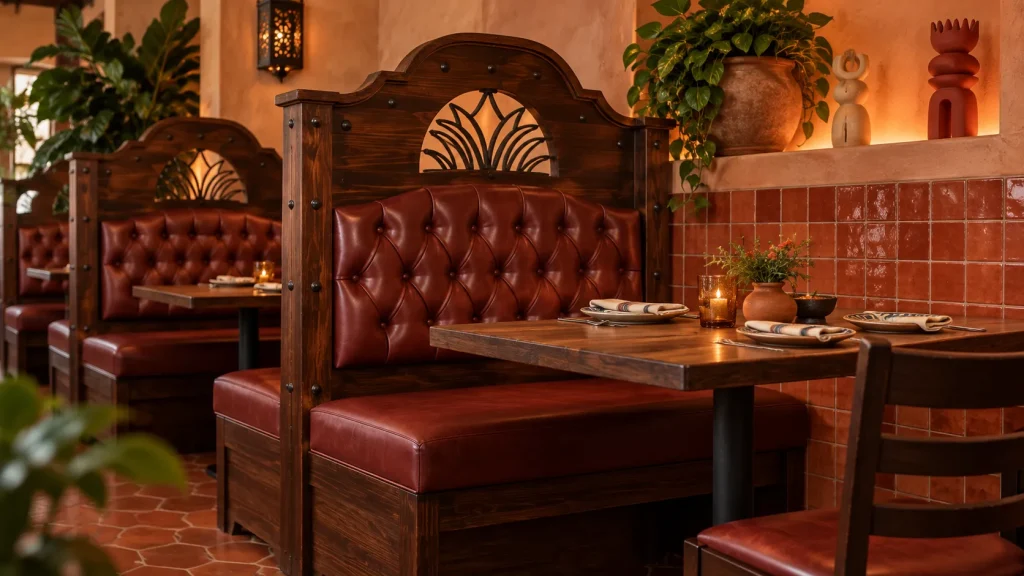
Mexican restaurants reward groups. Families, celebrations, and long leisurely meals mean booth and banquette seating outperforms open tables for both dwell time and revenue per linear foot. A restaurant booth in a Mexican concept should spec:
- 深さ: 24″ seat depth standard; 26–28″ for full-back leather banquettes (cantina style).
- 室内装飾品: Commercial-grade vinyl or PU leather in chile-red, burnt-orange, or indigo. Never fabric — mole, guacamole, and lime-based sauces permanently stain textile, and Mexican menus are sauce-dense.
- フレーム: Kiln-dried hardwood with HR foam (density ≥ 30 kg/m³). Tufted or channel-back styling reads as cantina-authentic.
- ベース: Fully upholstered base or wood-clad base; exposed metal base clashes with the warm palette unless powder-coated black.
Layout math: A double-sided banquette unit is 48″ wide total, paired with a 36″–42″ table, seating 4 per unit. In a 600 sq ft dining zone, 6–8 booth units plus a few 2-tops typically seat 32–44. Behind-booth aisle: minimum 42″ so servers can deliver large platters (fajita skillets, molcajete bowls) without pivoting into guests.
よくある間違い: Building booths into the wall with no service aisle behind them. In a Mexican restaurant the kitchen sends hot cast-iron and stone to the table — servers need a clear 42″ path or you get spills and burns.
Section 3: Wood Tables — Solid, Sealed, and Region-Appropriate
The table is where Mexican material authenticity shows or fails. Choosing the right レストランのテーブル is also important for balancing durability, seating capacity and the regional design language of the space. Resin-and-veneer “rustic” tables read cheap under real terracotta walls. Spec:
- トップ: Solid wood (mesquite, pine, or reclaimed) with a catalyzed lacquer finish — the non-porous seal that resists lime juice, oil, and salsa penetration. Live-edge slabs suit Baja/coastal; plank tops suit hacienda.
- 身長: Standard dining 29″–30″ for 2-tops and 4-tops. Use 30″ square or 36″ round for 4-top; 48″–60″ for 6-top family tables.
- Edge: Eased or round-over edge, not sharp — Mexican service includes passed plates and shared centro platters; sharp edges chip and bruise.
- ベース: Cast iron or wood pedestal. A commercial restaurant furniture program should pair each top size to a base rated for the load (75–150 lb per BIFMA).
For coastal concepts, sealed reclaimed wood with a whitewashed top reads authentic and hides wear. For hacienda concepts, darker stained mesquite with a hand-rubbed (sealed) finish.
Section 4: Metal Chairs — The Tolix Tradition, Done Commercial-Grade
The galvanized and powder-coated steel chair (the Tolix / cantina silhouette) is the most recognizably Mexican seating form after the booth. Spec it correctly and it lasts decades; spec it as residential and it fails in a year.
- フレーム: Powder-coated steel, 16–18 gauge, rated to ビフマ M7.1 for commercial seating (minimum 250 lb static, 100k+ cycle test).
- 仕上げる: Powder-coat in turquoise, cobalt, burnt-orange, or classic galvanized silver. Powder-coat resists rust and chip better than paint; for coastal patios, specify ASTM B117 salt-spray tested frames.
- シート: Perforated or solid steel; add a wood or molded seat pad for comfort on long dwell times.
- 積み重ね可能性: Confirm 8–10 high stack for event reconfiguration (Mexican restaurants frequently host parties).
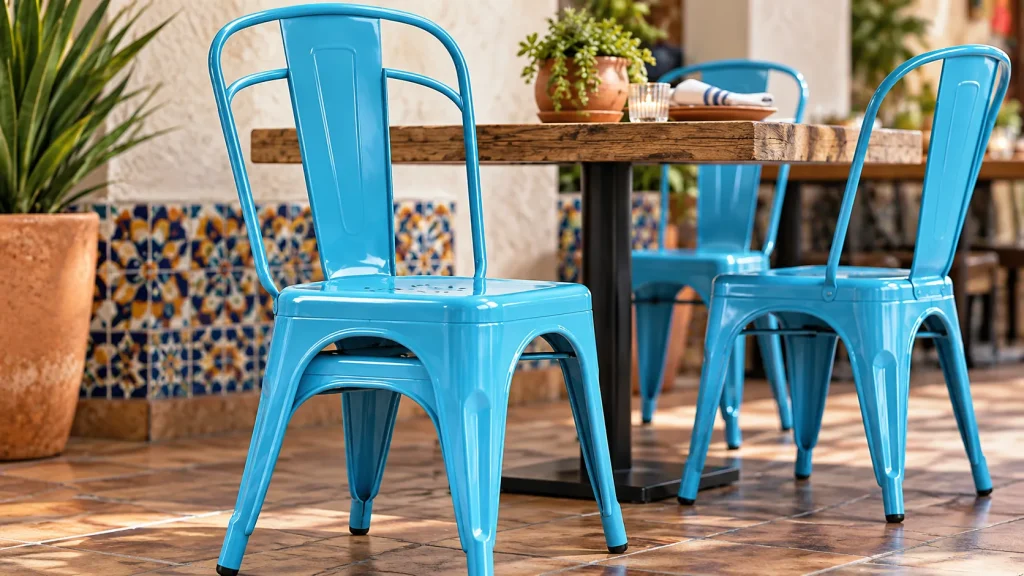
重要なポイント: Residential “bistro” steel chairs are 20-gauge and unrated. In a 150-cover restaurant they loosen at the weld within 6–12 months. Commercial 16-gauge powder-coat is the only correct spec.
A commercial cafe chair in powder-coated steel with a wood seat bridges cantina authenticity and daily-volume durability — and it stacks for private-event resets.
Section 5: The Bar Area — A Revenue Zone, Not an Afterthought
Mexican restaurants live at the bar. Mezcal, tequila, and agua fresca service mean the bar is a high-margin seating and standing zone that most layouts under-size.
- Bar counter height: 40″–42″ (standard commercial bar). Pair with bar stools at 28″–30″ seat height.
- バースツール spec: Metal frame (powder-coat to match chairs) or wood with vinyl seat; 360° swivel optional; footrest ring required for comfort.
- High-top / posado tables: 40″–42″ tall, 24″–30″ top, for standing-and-leaning guests. Use a weighted base (22–25 lb) so they don’t tip.
- Back bar: Forged iron or wood shelving with integrated tile; display bottles as the color pop.
- Mezcalería nook: A small seated bar (4–6 stools) with low light reads as Oaxacan authenticity and drives premium-spirit margin.
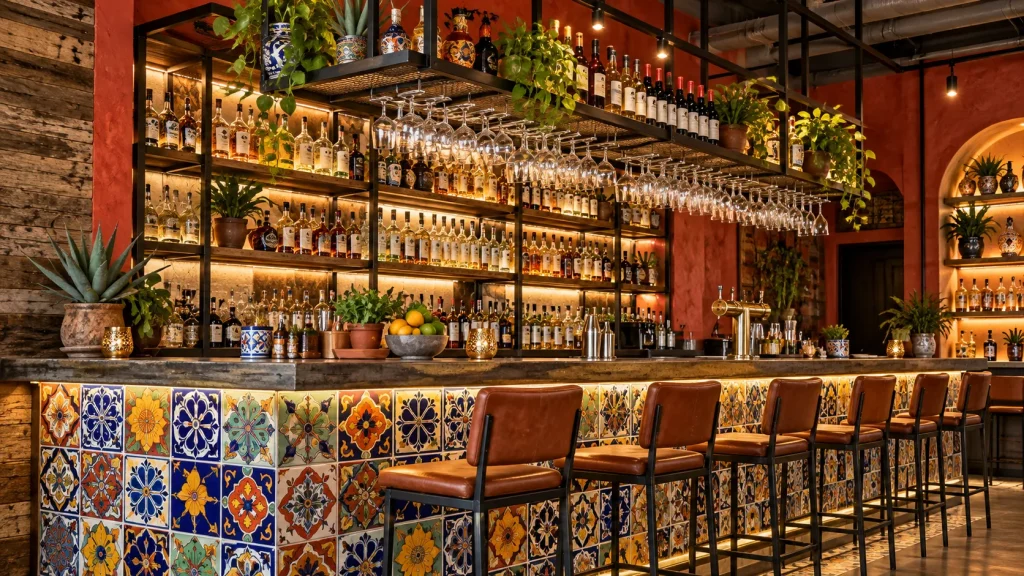
Layout math: A 10-stool bar plus 4 high-tops seats ~18 standing/leaning guests in ~200 sq ft — among the highest revenue-per-square-foot zones in the building. Size it at 15–20% of total floor area, not the 5% most owners allocate.
Section 6: Zoning the Floor — Dining, Bar, Patio
Mexican restaurant interior design works as three linked zones, not one open room. These principles also connect with broader レストランの座席レイアウト planning, where circulation, seating capacity and furniture placement affect the efficiency of the overall dining space:
- Dining room (50–55%): Booth-forward along perimeter walls, wood tables and metal chairs in the center for flexible 2/4/6-tops. Warm, medium light (2700K–3000K).
- Bar / mezcalería (15–20%): Defined by a tiled bar front and lower light; high stools and posado tables.
- Patio / courtyard (20–30% if climate allows): String lights, potted nopal and citrus, powder-coated outdoor chairs and sealed wood tables. Weather-resistant materials non-negotiable (HDPE lumber or marine-grade polymer for any non-metal outdoor piece).
循環: 36″ minimum clear aisle for ADA compliance on all paths; 42″ behind booths; 60″ on entry-to-dining and dining-to-restroom main routes for two-way server traffic with loaded trays.
プロのヒント: Use a color or material shift (tile change, beam, arch) to mark each zone. Mexican interiors are spatial, not just decorated — arches and half-walls do more than wall art.
Section 7: Common Mexican Restaurant Design Mistakes
1. Theme-park overload.
Plastic sombreros, fake cactus, serape on every surface. Within a month the textiles stain and the space reads as costume. Use 2–3 authentic material signals (tile, iron, wood, real textile on banquettes) and stop.
2. Residential furniture in a commercial room.
Home-grade wood tables and bistro chairs cannot take Mexican service volume, grease, or lime. They loosen, stain, and chip in under a year. Every piece must be commercial-grade (BIFMA-rated, catalyzed finish, powder-coat).
3. All-warm, no anchor.
A room with only terracotta and ochre looks flat. Add forged iron, black clay, or indigo at 15–20% to give depth.
4. Fabric upholstery anywhere in dining.
Mole, carnitas grease, and guacamole-lime permanently mark fabric. Vinyl/PU leather only.
5. Undersized bar.
Allocating 5% to the bar leaves premium-margin mezcal and tequila revenue on the floor. Size bar + posado at 15–20%.
6. Unglazed or unsealed tile.
Talavera is beautiful but porous. Unglazed tile absorbs salsa and oil; unsealed grout stains permanently. Specify glazed tile and sealed grout only.
Section 8: How MingMeng Furniture Supports Your Mexican Restaurant Project
MingMeng Furniture is a Guangzhou-based manufacturer of commercial restaurant furniture for Mexican restaurants, cantinas, and hospitality venues, serving buyers across the USA, Australia, Singapore, and India. Our product range includes restaurant booths, solid wood and live-edge tables, powder-coated metal chairs, bar stools, and outdoor seating — all built to commercial-grade specifications for high-volume, sauce-dense service environments.
What we provide for Mexican restaurant projects:
- Regional material matching: Booth vinyl in chile-red, burnt-orange, or indigo; powder-coated steel chairs in turquoise, cobalt, or galvanized; solid wood tables sealed with catalyzed lacquer for lime- and oil-resistance.
- Custom booth manufacturing: Single- and double-sided banquettes, tufted or channel-back, kiln-dried hardwood frame, HR foam (≥ 30 kg/m³), vinyl/PU upholstery only.
- Bar program: 28″–30″ bar stools (swivel optional), 40″–42″ posado tables with weighted bases, forged-iron or tile-clad back-bar shelving.
- Grease- and acid-resistant finishes: Catalyzed lacquer on all wood; powder-coat on all metal (ASTM B117 salt-spray tested for patio). Upholstery meets CAL-117; CRIB-5 fire-rated option available.
- BIFMA-compliant construction: Chairs rated to BIFMA M7.1; table bases 75–150 lb load rated by top size.
- プロジェクトのカスタマイズ: Non-standard dimensions, regional color matching, and logo/brand inlay on tile or metal — built to your concept brief.
一般的なプロジェクトのタイムライン: Sample approval (2–3 weeks) → Production (4–6 weeks) → Inspection & shipping (1–2 weeks). Complete Mexican restaurant furniture packages typically fulfilled within 8–12 weeks from design confirmation.
私たちのを参照してください project cases for completed restaurant, hotel, and bar installations across multiple regions and concepts. To discuss your Mexican restaurant furniture specification, reach out to our team directly. Mention this guide and we’ll provide a concept-specific specification sheet within 48 hours.
よくある質問
What colors work best for a Mexican restaurant interior?
Build in three layers: a warm base (terracotta, ochre, sand stucco) at 60–70%, accents (chile red, burnt orange, indigo, prickly-pear green) at 20–25%, and a small pop (turquoise, magenta) at 5–10%. Always include one dark or cool material — forged iron, black clay, or deep indigo — at 15–20% so the room has depth instead of reading flat.
What furniture is most authentic for a Mexican restaurant?
Booth and banquette seating (cantina leather style), solid wood tables with catalyzed-lacquer finish, powder-coated Tolix-style steel chairs, and a defined bar with 28″–30″ stools. These four forms cover hacienda, Oaxacan, Baja, and cantina traditions when finished in region-appropriate materials and color.
Are metal chairs durable enough for daily restaurant use?
Only commercial-grade ones. Specify 16–18 gauge powder-coated steel rated to BIFMA M7.1 (250 lb static, 100k+ cycle). Residential 20-gauge bistro chairs loosen at the weld within 6–12 months under 150-cover volume. Powder-coat also resists rust better than paint and is required for coastal patios (ASTM B117 salt-spray tested).
Why can’t I use fabric upholstery in a Mexican restaurant?
Mexican menus are sauce- and acid-dense — mole, carnitas grease, guacamole with lime permanently stain fabric and absorb odor. Commercial-grade vinyl or PU leather is the only correct dining upholstery; replacement cost of fabric chairs typically runs 3–4× higher due to accelerated staining.
How much space should the bar take in a Mexican restaurant?
15–20% of total floor area, including posado high-tops. Mexican restaurants drive significant margin through mezcal, tequila, and agua fresca at the bar; most owners under-allocate at ~5% and leave revenue unused. A 10-stool bar plus 4 high-tops seats ~18 guests in ~200 sq ft — among the highest revenue-per-square-foot zones in the building.
What wood finish resists lime and oil stains on tables?
Catalyzed lacquer — a non-porous industrial seal — not raw oil or wax. It blocks lime juice, salsa, and cooking oil penetration and is refinishable for long-term maintenance. Specify it on every solid-wood table in a Mexican concept.
Last updated: 2026-09-23. Furniture dimensions and fire code references based on CAL-117, ASTM B117, and BIFMA commercial furniture guidelines. Specifications are typical industry standards; verify with local fire code and ADA requirements for your project.


