

 English
 中文
 日本語
 한국어
 العربية
 Русский
 Português
 Türkçe
 हिन्दी
 Tiếng Việt
 ไทย
 Indonesia
 Melayu
 ខ្មែរ
 ລາວ
 မြန်မာ
 Afrikaans
 Hausa
 Igbo
 Sesotho
 isiXhosa
 Yorùbá
 isiZulu
What We’ve Learned from 300+ Restaurant Projects
Oleh Furnitur MingMeng — Commercial Seating Specialists, Est. 2015 · 300+ Restaurant Projects

What We Learned from 300+ Restaurant Projects
At MingMeng Furniture, one project stands out as a lesson many restaurant entrepreneurs learn too late.
A U.S. restaurant chain client chose fully upholstered bar stools — they looked premium and matched the brand perfectly. Within three months of opening, two problems appeared: customers were staying longer (slowing table turnover), and visible wear was already increasing maintenance costs.
We adjusted the setup to metal-frame stools with thin upholstered seats. Turnover improved immediately, and long-term maintenance costs became predictable.
| 💡Key insight: A bar stool isn’t just seating — it directly affects how your business runs. We often pair stool selections dengan modular booth seating to maximize revenue per square meter. |
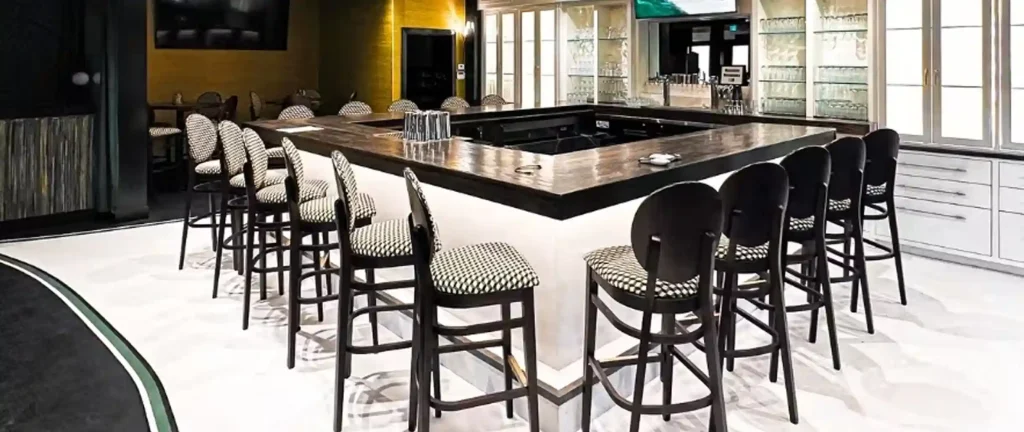
Key Specs Buyers Need to Know First
Before choosing a style, get clarity on the practical details that affect your project timeline and cost:
- 10 pieces per style MOQ (Minimum Order Quantity):
- 30–45 hari Production lead time:
- Totalnya 60–75 hari Door-to-door shipping to the USA:
- Size, color, material, finish — all available Customization options:
- BIFMA X5.4 or equivalent Commercial durability standard:
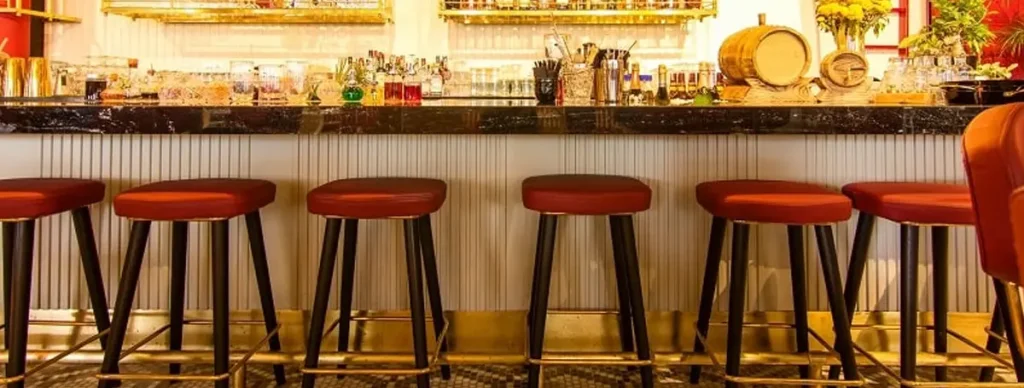
Height: The First Thing to Get Right
Most buyers start with style. We always start with dimensions. If the height doesn’t match your counter, no design detail can fix the discomfort.
| Counter Type | Tinggi Penghitung | Tinggi Tempat Duduk | Typical Setting |
| Tinggi Penghitung | 90–95 cm | 60–65 cm | Café bar, casual dining |
| Tinggi Batang | 100–105 cm | 70–75 cm | Cocktail bar, restaurant bar |
If the height doesn’t match, comfort drops immediately — and no design detail can fix that.
Metal vs Solid Wood: which one works better?
Metal Bar Stools — Best for High-Traffic Environments
- Superior structural durability under daily commercial use
- Easy to clean, low ongoing maintenance
- Lower cost, more predictable long-term ROI
- Best for: fast-casual restaurants, bars, breweries
Solid Wood Bar Stools — Best for Atmosphere-First Venues
- Warmer visual appeal, stronger brand identity
- Higher cost, requires more maintenance over time
- Best for: cafés, bistros, fine-casual dining
Upholstered Bar Stools — Best for Lounges & Controlled Environments
- PU/vinyl: specify ≥30,000 Martindale abrasion resistance for commercial use
- Fabric: more comfortable, less suitable for greasy or high-spill areas
- Seat cushion depth 3–5 cm: comfortable without encouraging overly long stays
| ☞ Simple rule: Need efficiency → go metal. Need atmosphere → go wood or mixed materials. |
Layout & Spacing for Revenue Impact
In commercial spaces, layout decisions have direct impact on how many covers you can serve per shift:
- Pairing stools with booth seating creates zone variety that extends dwell time in off-peak periods
- 60–65 cm center-to-center between stools (ADA-accessible standard)
- Backless stools save approximately 20% more space per unit
- Swivel stools improve social interaction at bar counters and shared tables
Best Bar Stool Types by Venue
Based on real project experience, these types are the most practical:
Backless Metal Bar Stool — Fast-Casual / High-Turnover Venues
Space-saving, easy to stack and reposition. No back support encourages shorter visits, supporting faster table turnover in high-traffic environments. Best choice for quick-service restaurants, food halls, and brewery taprooms.

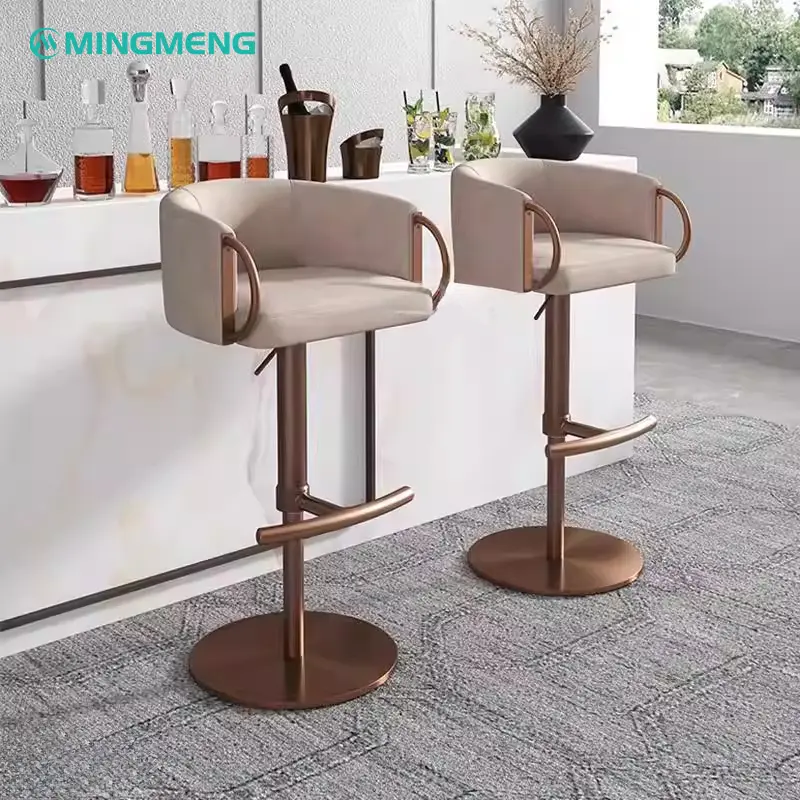
Low-Back Upholstered Swivel Stool — Cafés & Casual Dining
Balances comfort with efficiency. The 360° swivel makes them versatile at both open counters and bar islands. A reliable default for café operators who need something that works for both quick coffee visits and longer brunch sittings.
Industrial Wood + Metal Stool — Craft Beer Bars & Vintage Restaurants
Strong visual identity with manageable maintenance. The mixed-material construction suits brewery taprooms, vintage-style diners, and farm-to-table concepts. Often paired with reclaimed wood tabletops.
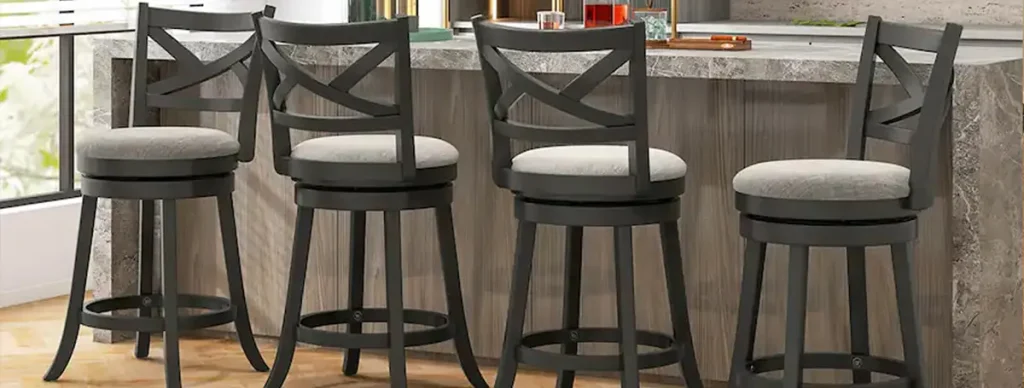

Velvet / Premium Upholstered Stool — Cocktail Bars & Upscale Lounges
Best for venues where the stool itself is part of the brand experience. Velvet and premium fabrics in bold colorways signal quality to guests before they sit down. Requires more stringent cleaning protocols.
Where Most Buyers Get It Wrong
- Prioritizing price over durability spec — a cheaper stool that fails in 8 months costs more than a commercial-grade unit lasting 5 years.
- Using residential furniture in commercial spaces — residential stools handle occasional use. Commercial stools handle dozens of different users daily.
- Ignoring floor protection — unprotected metal legs scratch floors immediately. Rubber feet or felt pads are a minor spec that saves significant maintenance cost.
- Ordering without testing a sample — color rendering varies between screen and physical product. Always request a material sample or physical stool before placing a bulk order.
Sourcing strategy: why many choose manufacturers directly
For bulk purchases, working directly with a manufacturer often leads to better results.
- More controlled costs
- Consistent design across the space
- Full customization options
- More predictable lead times
At Mingmeng Furniture, we often help clients plan not just bar stools, but also booth seating and tables together, so the entire space works as one system.
Comparison Table
| Fitur | Metal Bar Stool | Solid Wood Bar Stool | Upholstered Stool |
|---|---|---|---|
| Daya tahan | ⭐⭐⭐⭐⭐ | ⭐⭐⭐⭐ | ⭐⭐⭐⭐ |
| Pemeliharaan | Mudah | Sedang | Sedang |
| Kenyamanan | Sedang | Sedang | Tinggi |
| Biaya | Lebih rendah | Lebih tinggi | Sedang |
| Penggunaan Terbaik | Fast-paced restaurants | Cafés / dining | Lounge / casual |
Pertanyaan Umum
Q: What is the best bar stool height for a restaurant counter?
For standard bar counters (100–105 cm), a seat height of 70–75 cm is recommended. For lower café-style counters (90–95 cm), use stools with a 60–65 cm seat height. Measure your counter before ordering — this single spec affects every guest’s comfort.
Q: How much space should I leave between bar stools?
60–65 cm center-to-center is recommended for comfort and standard accessibility. Backless stools can allow for tighter spacing (around 50 cm) if space is limited.
Q: Which bar stool material lasts longest in commercial use?
Metal frames generally perform best in high-traffic environments. For upholstered seats, specify PU or vinyl with ≥30,000 Martindale abrasion resistance for commercial-grade durability.
Q: Are upholstered stools suitable for busy restaurants?
Yes, with the right spec. Choose PU or vinyl with ≥30,000 Martindale rating. Keep cushion depth to 3–5 cm — thick cushions encourage longer stays, which can hurt turnover in fast-casual settings.
Q: Can bar stools be customized for my restaurant concept?
Yes. MingMeng supports full customization — size, color, upholstery fabric, wood finish, and metal frame color — with a minimum order of 10 pieces per style. All materials meet E1/E0 environmental standards. Hubungi kami for a free quote within 24 hours.
One thing worth thinking about
At the early stage, most entrepreneurs focus on design and visual appeal.
After opening, they realize that small functional details have a bigger impact on daily operations.


